

Table of Contents
- What Transfer-Proof Lipstick Really Means for Wear Time
- How to Make Lipstick Last Longer: Prep, Apply, Set
- Lipstick That Lasts Through Eating and Drinking
- How Long Does Transfer-Proof Lipstick Last by Activity?
- Troubleshooting Uneven Wear, Cracking, and Inner-Lip Fading
- How to Remove Transfer-Proof Lipstick Without Irritation
- Conclusion: Setting Realistic Expectations for All-Day Wear
- Frequently Asked Questions
Last Updated: October 8, 2026
What Transfer-Proof Lipstick Really Means for Wear Time
Transfer-proof lipstick is a lip color formulated to resist rubbing off onto cups, clothing, or skin after it sets. Most formulas need a few minutes to dry down into a flexible film. Once set, that film is what keeps color in place.
Here's the honest answer most brands won't give you: how long does transfer-proof lipstick last on lips? In practice, expect four to eight hours of solid wear. That's the realistic range. Advertised claims of "16-hour" or "all-day" wear assume ideal conditions: no oily meals, no lip licking, no friction.
At Charmstyle Beauty Cosmetics, we build our lip products around that gap between marketing claims and real life. Our lightweight, wearable formulas are made for everyday confidence, not lab conditions.
The two biggest variables are formula type and how you prep your lips. Get those right and you'll see the longer end of that range.
Advertised vs. Realistic Wear: What to Expect
Advertised wear times describe best-case performance. Realistic wear depends on what you eat, drink, and do. A matte liquid lipstick might survive a full workday with one touch-up. The same product may need reapplication after a greasy lunch.

Think of advertised wear as a ceiling, not a promise. Most people land closer to the middle of the range.
Transfer Resistance vs. Color Fading vs. Stain Longevity
These three terms get used interchangeably. They shouldn't be.
- Transfer resistance: how well color stays off cups, clothes, and skin
- Color fading: how much vibrancy the pigment loses over time
- Stain longevity: how long a tint lingers after the top layer wears off
A lipstick can resist transfer but still fade. A lip stain may leave color behind while transferring easily. Knowing which one matters to you changes what you buy.
How to Make Lipstick Last Longer: Prep, Apply, Set
The single biggest factor in wear time isn't the formula. It's your prep. Dry, flaky lips break down any film within hours. Smooth, hydrated lips hold color far longer.
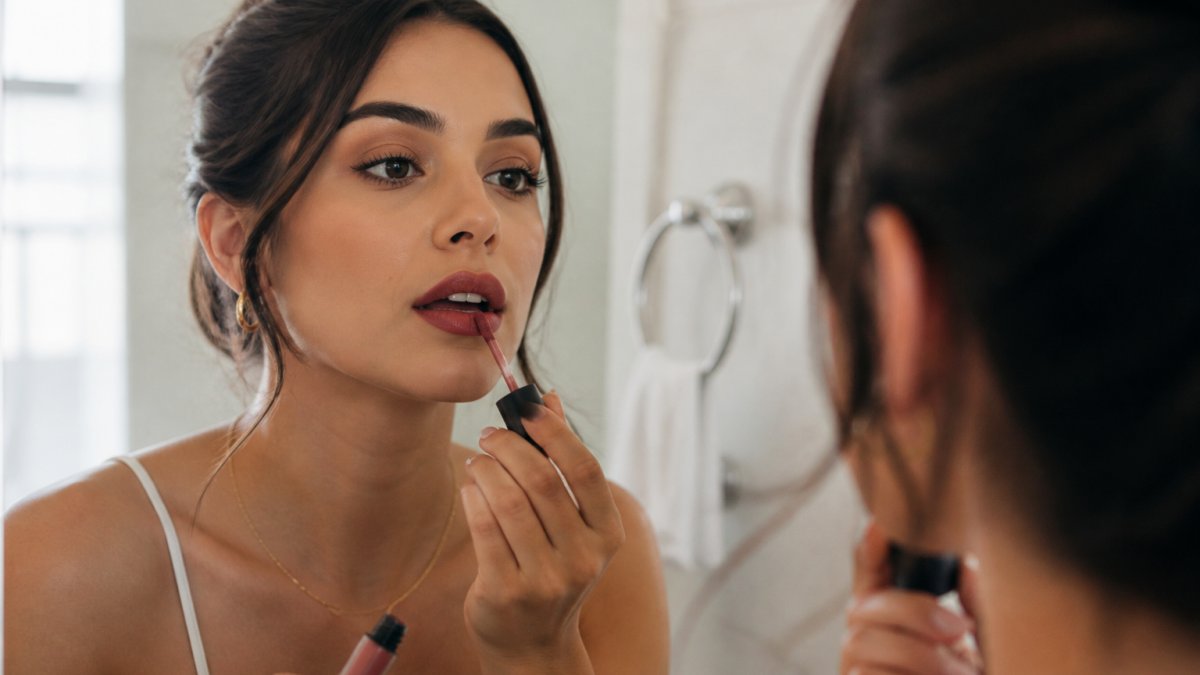
Lip Preparation for Maximum Wear
Start with clean, dry lips. Then follow this routine:
- Gently exfoliate with a soft brush or damp cloth
- Apply a thin layer of lip balm
- Wait five minutes for the balm to absorb
- Blot off any excess with a tissue
- Avoid waxy balms right before application
A common mistake is skipping the blot. Leftover balm stops the formula from setting properly.
Transfer-Proof Lipstick Application: Step-by-Step
For transfer-proof lipstick application, thin layers beat thick ones every time.
- Outline lips with a liner close to your shade
- Apply one thin coat with the applicator
- Let it set for 60 to 90 seconds
- Blot gently with a tissue
- Add a second thin coat if you want more depth
- Keep lips apart until the film dries down
Lipstick That Lasts Through Eating and Drinking
No formula is fully bulletproof against an oily meal. Oil breaks down the film that holds color in place. Water-based drinks are far gentler than anything greasy.
For lipstick that lasts through eating, follow a simple strategy:
- Choose matte or liquid formulas for meals out
- Drink through a straw when you can
- Blot your lips before eating, not after
- Avoid touching your lips with a napkin
- Carry a matching liner for quick touch-ups
Coffee and tea are mild offenders. Salad dressing, pizza, and anything fried are the real tests. If you know you're having an oily meal, plan for one touch-up.
How Long Does Transfer-Proof Lipstick Last by Activity?
Wear time shifts with what you're doing. The table below separates the three outcomes that get blurred together, transfer resistance, color fading, and stain longevity, because they fail at different rates.
| Activity | Transfer Resistance Holds | Color Looks Even | Stain Remains After | Main Cause of Breakdown |
|---|---|---|---|---|
| Desk work, no meals | 6-8 hours | 5-7 hours | 8-10 hours | Natural lip moisture, minor friction |
| Coffee and light snacks | 4-6 hours | 3-5 hours | 6-8 hours | Warm liquid, cup friction |
| Watery meal (soup, salad, no oil) | 3-5 hours | 3-4 hours | 5-7 hours | Moisture and utensil contact |
| Full oily meal | 2-4 hours | 1-3 hours | 4-6 hours | Oil dissolving the film |
| Workout or sweating | 1-3 hours | 1-2 hours | 3-5 hours | Moisture, rubbing, towel contact |
| All-day event, mixed | 4-6 hours plus touch-ups | 3-5 hours | 7-9 hours | Combined factors |
The pattern is clear. Oil, moisture, and friction are the three enemies. Control those and your wear time stretches.
Why Oily Food Hits Harder Than Watery Food
Transfer-proof films are typically built on waxes, polymers, and pigments that resist water but not oil. Water beads off the surface. Oil penetrates and swells the film from underneath, breaking the bond to your lip. That is why a glass of iced water barely dents wear time while a slice of pizza can strip the inner lip in minutes.
A useful rule: if the food leaves a sheen on your fingers, it will leave a mark on your lipstick. Fried food, salad dressing, butter, cheese, and nut oils are the highest-risk items. Broth, fruit, and plain vegetables are the lowest.
Transfer Resistance vs. Fading vs. Stain, Reading the Table
Each column tells you something different:
- Transfer resistance is how long the film keeps color off cups, clothes, and skin. This is the number the product is named for.
- Color looks even is how long the shade still reads as the same color across the whole lip. This usually fails before transfer resistance does, because the inner lip wears first.
- Stain remains is how long any pigment lingers after the film is gone. A stain can outlast the transfer-proof claim by hours, but it will not look like the original shade.
If your priority is not leaving marks on a glass, watch the first column. If your priority is looking put-together in photos, watch the second. If your priority is not being bare-lipped at the end of the night, watch the third.
A Practical Day-Planning Shortcut
Match your formula and touch-up plan to your heaviest activity, not your average one:
- Oily meal on the calendar? Apply a matte liquid formula, blot before eating, and carry a matching liner for a 30-second touch-up after.
- Workout planned? Expect the film to fail; a lip stain layered under a thin coat of transfer-proof color gives you color that survives the session.
- All-day event with mixed food? Two thin coats in the morning, one touch-up after lunch, and a stain base to carry you through the evening.
Troubleshooting Uneven Wear, Cracking, and Inner-Lip Fading
Uneven wear almost always traces back to prep or application. Here's how to fix the most common problems.

- Cracking: lips were too dry before application. Exfoliate and hydrate first.
- Inner-lip fading: color rubs off where lips meet. Use liner on the inner edge.
- Patchiness: the formula went on too thick. Switch to thin, even coats.
- Feathering: liner wasn't used. Outline first, then fill.
- Flaking: too many layers. Remove and start fresh with two coats max.
Most of these issues disappear once your base is smooth and your coats are thin. If problems continue, your formula may not suit your lip condition.
How to Remove Transfer-Proof Lipstick Without Irritation
Long-wear formulas need a gentler removal method than a quick wipe. Rubbing hard irritates lips and can leave them raw.
For how to remove transfer-proof lipstick, use this order:
- Press an oil-based cleanser onto lips for 20 seconds
- Wipe gently with a soft cloth
- Follow with a second pass if color remains
- Avoid scrubbing, even if color lingers
- Finish with a hydrating balm
The oil breaks down the film so you don't have to scrub it off. Patience beats pressure here.
Post-Removal Lip Care
After removal, your lips need recovery. Extended wear dries the surface and strips natural oils.
- Apply a nourishing balm right away
- Skip exfoliation for 24 hours
- Avoid another long-wear formula the next day
- Drink water to support lip hydration
- Give lips a bare day once a week
Treat removal as part of the routine, not an afterthought. Your lips will thank you.
Conclusion: Setting Realistic Expectations for All-Day Wear
Here's the truth: how long does transfer-proof lipstick last on lips depends on you, not just the label. Four to eight hours is the honest range for most people. Prep, thin coats, and smart eating habits push you toward the top of it.
Our Matte Liquid Lipstick delivers bold, highly pigmented color with a smudge-resistant, hydrating formula that stays comfortable through the day. Pair it with our Scarlet Charm shade for a soft matte red, or build a full rotation with our Lipstick Bundle.

Get started with Charmstyle Beauty Cosmetics and find a lip color that keeps up with your day, not the other way around.
Frequently Asked Questions
How long does transfer-proof lipstick usually last?
Most transfer-proof lipsticks last between 4 and 8 hours on average, depending on the formula and your activities. Matte liquid lipsticks tend to stay put longer than creamy or high-shine finishes. Eating oily foods, drinking hot beverages, and frequent lip rubbing can shorten wear time. For best results, prep lips with a light balm, apply a thin coat, and let it set fully before eating or drinking.
Does transfer-proof lipstick last through eating and drinking?
It can, but not always perfectly. Water and cold drinks usually cause minimal disruption, while oily or greasy foods break down most lip formulas quickly. To help lipstick last through meals, blot after applying, avoid touching your lips, and reapply a thin layer after eating if needed. Some long-wear formulas leave a stain even after the top layer fades, so color remains visible.
How do you remove transfer-proof lipstick without irritation?
Use an oil-based makeup remover, cleansing balm, or gentle micellar water. Saturate a cotton pad and press it against your lips for 10 to 15 seconds, then wipe gently. Avoid rubbing aggressively, which can cause dryness or micro-tears. After removal, apply a hydrating lip balm or mask to restore moisture. If you use a long-wear liquid lipstick, a dual-phase remover works best.
Can transfer-proof lipstick dry out your lips?
Some formulas can, especially matte liquid lipsticks with high pigment and low oil content. To prevent dryness, exfoliate lips gently once or twice a week, apply a thin layer of lip balm before lipstick, and choose formulas with nourishing ingredients like shea butter or vitamin E. Reapply balm at night to help lips recover. If dryness persists, switch to a creamier long-wear formula or use a lip stain instead.