

Quick Summary
Severely cracked corners of mouth heal fastest when you keep the area clean, dry, and covered with a plain protective barrier several times a day, while avoiding licking and irritating products. Deep cracks that bleed, crust, or fail to close within two weeks need a doctor, since they often involve infection that requires prescription treatment.
- Clean the corners gently with lukewarm water and a mild, fragrance-free cleanser, then pat dry without rubbing.
- Apply petroleum jelly or a plain protective balm several times a day and again before bed.
- Stop licking your lips and avoid salty, acidic, or sharp foods until the cracks close.
- Stop using any new product you suspect, since irritation from cosmetics or toothpaste can cause the cracks.
- See a doctor if cracks bleed, crust, show pus, or have not healed after two weeks.
Table of Contents
- What Severely Cracked Corners of Mouth Look Like and Why They Happen
- Step 1: Sort Your Cracks by Severity Before You Treat Them
- Step 2: Clean, Dry, and Protect the Corners Right Away
- Step 3: Choose the Best Cream for Cracked Lip Corners
- How to Heal Cracked Lip Corners Fast: A Day-by-Day Timeline
- Angular Cheilitis Treatment Depends on the Cause
- B12 Deficiency and Cracked Corners of Mouth: When Nutrition Is the Cause
- Booking Your Next Step: When to See a Doctor for Cracks That Won't Heal
- Frequently Asked Questions
What Severely Cracked Corners of Mouth Look Like and Why They Happen
Last Updated: November 5, 2026
Cracked corners of mouth are small splits in the skin where the upper and lower lips meet. Doctors often call this condition angular cheilitis. When the cracks are deep, they can sting, bleed, and take longer to heal than you expect. Knowing what you are dealing with is the first step toward fixing it fast.
At Charmstyle Beauty Cosmetics, we know how frustrating this can be when you are trying to keep your everyday lip routine comfortable. This guide walks you through how to heal severely cracked corners of mouth, step by step.
Angular cheilitis is inflammation at the corners of the mouth. The skin there often looks red, puffy, or flaky. Cracks may be shallow or deep, and they can appear on one side or both.
Angular cheilitis versus cold sores and contact reactions
Angular cheilitis is easy to confuse with other problems. Cold sores usually form as small clusters of blisters, often on the lip itself rather than the corner. Contact reactions happen when a product or substance irritates the skin, and they often follow a new cosmetic, toothpaste, or lip product.
If your symptoms began right after you started using a new product, pay attention to that timing. A reaction to an ingredient can look a lot like a crack that will not heal. Stop using the suspected product and watch what happens.
Step 1: Sort Your Cracks by Severity Before You Treat Them
Severity is not just about how much it hurts. It determines whether you can safely self-treat, whether an over-the-counter product is appropriate, and how quickly you need a clinician. Use the tiers below as a triage, not a diagnosis.
- Mild: Light redness, flaking, or tightness at one or both corners. No open split, no bleeding, no crusting.
- Moderate: A visible split that stings when you open your mouth, eat, or smile. May have thin crusting at the edges but no pus, spreading redness, or swelling. Often needs a barrier plus cause-specific care, and can take one to two weeks.
- Severe: Deep fissures that bleed, thick yellow or honey-colored crusting, swelling of the corner, pain that worsens rather than improves, or a crack that has not closed after 10 to 14 days of consistent care. This tier warrants a clinical look, because deep cracks are more likely to involve Candida, Staphylococcus aureus, or an underlying nutritional or immune issue that a barrier alone will not fix.
A practical way to grade your own crack: gently open your mouth wide in a mirror. If the split stays closed and only looks red, it is likely mild to moderate. If it gapes open, bleeds, or weeps clear or yellow fluid, treat it as severe.
Watch out: Do not use the severity tier to delay care when red flags are present. Seek same-day or next-day medical attention for pus, spreading redness that extends beyond the corner, fever, facial swelling, or pain out of proportion to the visible crack, these can signal a bacterial infection that needs prescription treatment, not a lip balm.
Severity also changes what you should avoid. On severe cracks, skip exfoliating lip scrubs, flavored balms with menthol, camphor, or cinnamon, and any product that stings on contact. Those ingredients are fine on intact skin and counterproductive on an open fissure.
The table below summarises the three severity tiers and what each one means for care, using the criteria described in this section.
| Severity | Signs | Care note |
|---|---|---|
| Mild | Light redness, flaking, or tightness; no open split | Self-care usually enough |
| Moderate | Visible split that stings; thin crusting; no pus | Barrier plus cause-specific care; one to two weeks |
| Severe | Deep, bleeding fissures; thick yellow or honey crust; swelling | Clinical look; not closed after 10-14 days |
Step 2: Clean, Dry, and Protect the Corners Right Away
Start with gentle cleaning. Use lukewarm water and a mild, fragrance-free cleanser. Pat the area dry with a clean cloth. Do not rub.
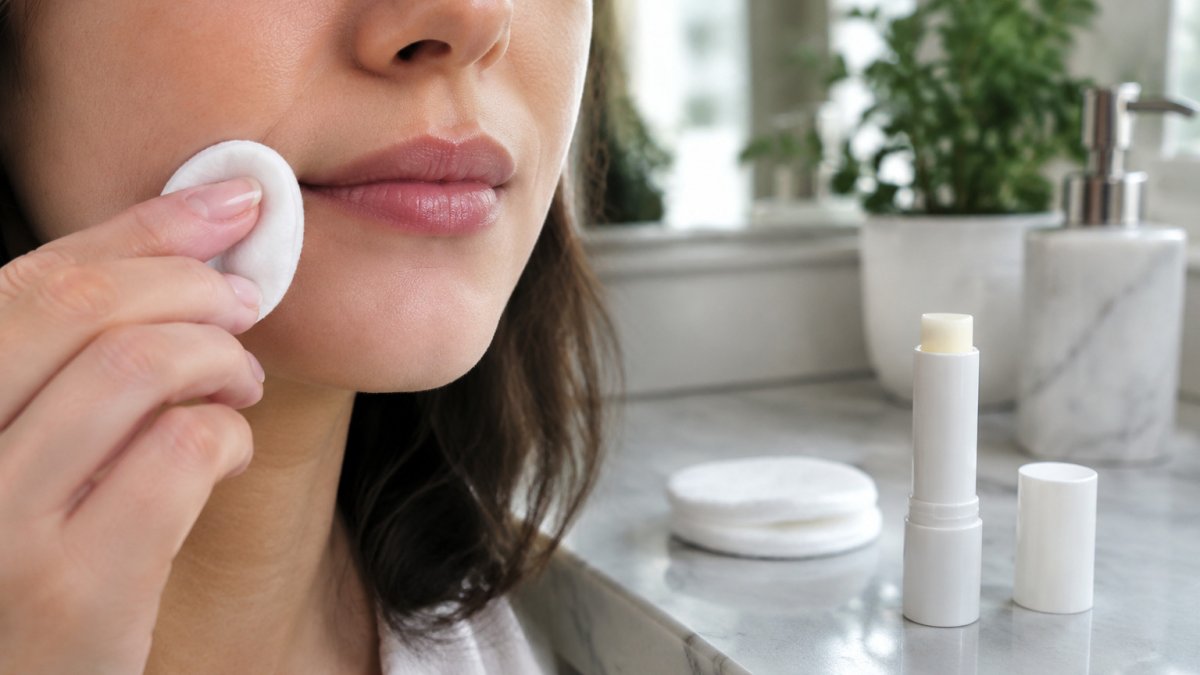
Next, protect the skin. A thin layer of petroleum jelly or a plain protective lip balm helps keep moisture in and irritants out. Apply it a few times a day, and again before bed.
Keep these habits in mind while your corners heal:
- Avoid licking your lips or corners, since saliva dries the skin
- Use a clean cotton pad instead of your fingers
- Skip sharp, acidic, or salty foods until the cracks close
Step 3: Choose the Best Cream for Cracked Lip Corners
Pick a cream based on how deep your cracks are and what you suspect caused them. A simple barrier product works well for mild dryness. For deeper cracks, your doctor may suggest an antifungal or antibiotic ointment.
When you shop for a lip product, look for gentle, hydrating formulas. Browse the lip balms and treatments collection to find options made for dry, sensitive lips. If your skin tends to react to cosmetics, you can also read how to choose the right lip primer for your skin type before adding new products to your routine.
Our Charmstyle Beauty Lip Balm is a bold, creamy formula that is hydrating and comfortable to wear. You can find it here for $10.00.

How to Heal Cracked Lip Corners Fast: A Day-by-Day Timeline
Mild cracks often start to improve within a few days of consistent care. Deeper cracks can take longer, and some need a doctor's treatment to heal fully.
- Day 1: Clean, dry, and apply a protective barrier. Stop using any product you suspect.
- Days 2-3: Reapply your barrier several times a day. Look for less stinging and less redness.
- Days 4-7: Cracks should start to close. Continue protecting the skin.
- Week 2: If the cracks have not improved, see a doctor.
Angular Cheilitis Treatment Depends on the Cause
A single cream cannot fix every cracked corner, because the drivers are different. Matching treatment to cause is what separates a two-week fix from a cycle of recurrence.
Irritant or moisture-driven (most common). Saliva trapped in the corner, lip licking, ill-fitting dentures, or a new toothpaste or lip product strip the skin barrier. The fix is mechanical: a plain occlusive like petroleum jelly or a fragrance-free barrier balm applied several times a day, plus stopping the licking and the offending product.
Fungal (Candida). Yeast thrives in the warm, moist fold at the corner. Signs include a beefy red patch, satellite pustules, or a crack that improves with a barrier then returns. Antifungal treatment, typically clotrimazole or miconazole cream available over the counter, is the targeted approach. If you wear dentures, ask your dentist about cleaning or treating the appliance, because reinfection from the denture base is common.
Bacterial (often Staphylococcus aureus). Signs include honey-colored crust, weeping, spreading redness, or tenderness beyond the crack. This pattern usually needs prescription antibiotic ointment such as mupirocin, and it is the tier where home care alone tends to fail.
Nutritional. Low vitamin B12, low iron, or low folate can produce recurrent angular cheilitis, sometimes alongside a sore tongue or fatigue. A blood test ordered by a clinician confirms it; supplementation should follow the result, not precede it.
Medication safety around the mouth. Combination antifungal-steroid creams are popular because they calm redness fast, but unsupervised use of a steroid near the mouth can thin the skin, mask a bacterial infection, and worsen certain conditions. Use only what a clinician or pharmacist recommends for your specific cause, and do not borrow a prescription cream from someone else.
Watch out: If a crack is not improving after 10 to 14 days of correct cause-matched care, or if it keeps returning within weeks of clearing, that is a signal to get evaluated for an underlying condition rather than to escalate to a stronger cream on your own.
B12 Deficiency and Cracked Corners of Mouth: When Nutrition Is the Cause
Low levels of vitamin B12, iron, or other nutrients can contribute to cracked corners of mouth.
If your cracks keep coming back, ask your doctor about a blood test.
Booking Your Next Step: When to See a Doctor for Cracks That Won't Heal
See a doctor if your cracks:
- Bleed, crust over, or do not heal after two weeks
- Show pus, spreading redness, or fever
- Keep returning despite good care
A doctor or dentist can check for infection, nutritional problems, or medication-related causes.
Frequently Asked Questions
What is the fastest way to heal a cracked lip corner?
Keep the corner clean and dry, apply a thin layer of a protective ointment such as petroleum jelly several times a day, and avoid licking or picking at it. Mild cracks often start to improve within a few days when the area stays covered and undisturbed. Deep, bleeding, or crusted cracks may need a prescription antifungal or antibiotic cream, so check with a clinician if there is no clear improvement within about a week.
Will angular cheilitis go away by itself?
Mild cases sometimes clear up on their own once moisture is reduced and the skin barrier is protected. However, angular cheilitis is often caused by yeast or bacteria, and those usually need targeted treatment to clear completely. If the cracks keep returning, are painful, or spread, a doctor or dentist should evaluate them rather than waiting them out.
What vitamin deficiency makes the corners of your mouth crack?
Low levels of vitamin B12, iron, and folate are commonly linked to cracked mouth corners. A deficiency can affect the mucous membranes and make the skin more prone to splitting. A simple blood test can check these levels, and treating the underlying deficiency often helps the cracks heal and reduces recurrence. Never start high-dose supplements without confirming a deficiency first.
When should I see a doctor for severely cracked mouth corners?
See a doctor or dentist if the cracks are deep, bleed repeatedly, are crusted, or have not improved after about one to two weeks of basic care. Seek care sooner if you have diabetes, a weakened immune system, or pain that interferes with eating. Children and older adults should also be evaluated promptly, since they can develop complications more quickly and may have denture-related or nutritional causes.
Keeping your lips comfortable is part of feeling confident every day. Once your corners have healed, browse our lip balms and treatments to keep your lips soft and protected.
