

Table of Contents
- Start With Lip Prep: How to Prep Lips for Matte Lipstick
- How to Make Glossy Lipstick Matte in 5 Steps
- How to Blot Lipstick Without Wrecking the Color
- Choosing Your Powder: Compact, Loose, or Blotting Paper
- The Best Matte Lipstick for Dry Lips
- Avoiding a Cakey, Cracked, or Dry Finish
- Touch-Ups, Removal, and Making Matte Last
- Conclusion
- Frequently Asked Questions
Last Updated: October 18, 2026
Start With Lip Prep: How to Prep Lips for Matte Lipstick
Matte lipstick shows every flaw. Dry patches, flakes, and fine lines that a gloss would hide become the main event under a matte formula. Prep is not optional, and it is where most glossy to matte attempts fall apart.
At Charmstyle Beauty Cosmetics, prep is the difference between a finish that looks intentional and one that looks like chapped lips with color on top.

Exfoliate and Hydrate Before Color
Start with gentle exfoliation: a soft toothbrush or a sugar-honey mixture massaged over lips in small circles to lift dead skin cells, then rinse.
Skip harsh scrubs on cracked lips. You will make the flaking worse.
Follow with a lip balm and let it soak in for about 10 minutes, then blot the excess. Balm left on the surface stops lipstick from gripping, and the color slides off within an hour.
- Soft toothbrush or sugar-honey scrub for flaky skin
- Hydrating balm, blotted after 10 minutes
- No picking or peeling at loose skin
How to Make Glossy Lipstick Matte in 5 Steps
You can convert the glossy lipstick already on your lips into a matte finish in five steps with a tissue and a light dusting of translucent powder.
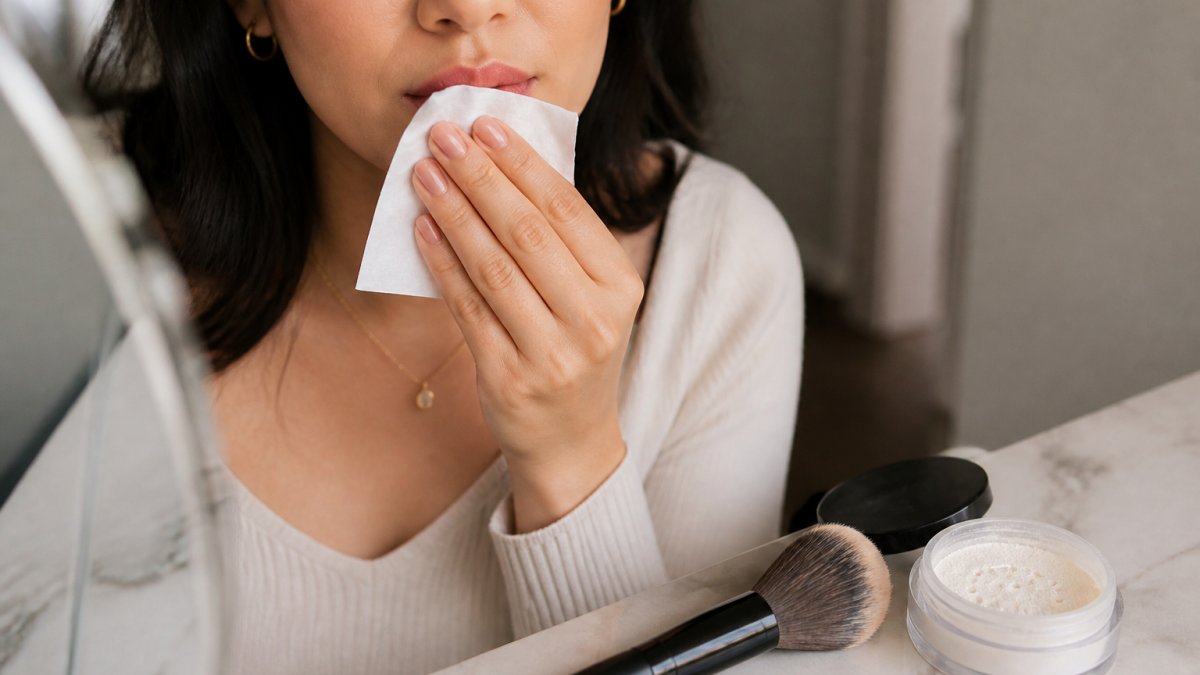
Here is the sequence:
- Blot the shine. Press a clean tissue to your lips once to lift surface gloss.
- Separate the layers. Pull the tissue apart so you have a single thin ply.
- Place the tissue over your lips. Hold it flat against the lip outline.
- Dust translucent powder through the tissue with a fluffy brush. Use a light hand.
- Peel the tissue away and check the finish. Add one more light layer if you want more matte.
The Tissue-and-Powder Method
The tissue acts as a barrier, letting powder settle onto the color in a thin layer instead of dumping it directly onto the lipstick, which creates that cakey look. A light dusting is the whole game; press too hard or load the brush and you get patchy, dry-looking lips.
This method works best on cream lipstick and standard lip gloss. On a liquid matte formula, you usually do not need it at all.
How to Blot Lipstick Without Wrecking the Color
Blotting is the step people rush, and it is why so many glossy to matte conversions look uneven.
Press, do not wipe. A blotting tissue or a single ply of a regular tissue pressed flat lifts oil and gloss from the surface while the pigment stays put.
- Press the tissue straight down, hold for a second, then lift
- Work from the center of the lip outward
- Use a fresh section of tissue for each press
If you are blotting a bold shade, one or two presses is enough. For a lighter nude, you can press a little more firmly.
Choosing Your Powder: Compact, Loose, or Blotting Paper
Three tools do the same job, and the right one depends on where you are, how much control you want, and how dry your lips already are. Each deposits a different amount of powder per pass, which decides whether you get a soft matte or a cakey one.
| Tool | Best For | Control Level | Watch Out For |
|---|---|---|---|
| Translucent compact powder | Touch-ups on the go, handbag use | Medium | Can look heavier if pressed hard |
| Loose translucent powder | A soft, even matte finish at home | High | Easy to over-apply with a damp brush |
| Blotting paper | Removing shine with no added texture | Low | Does not add matte texture on its own |
Compact powder: the forgiving default
Pressed translucent powder is the beginner-friendly pick because the binder holds the powder together, so a brush picks up a limited amount per swipe and is harder to overload.
Compact powder is also the most practical choice for a bag because it will not spill. The trade-off is that pressed formulas often contain more binder, which can feel slightly heavier on the lip than a loose powder of the same shade.
Loose powder: the most natural finish, the least forgiving
Loose translucent powder gives the airiest, most even matte finish with a fluffy brush and a light hand, because the particles settle individually. The same property makes it easy to over-apply.
Loose powder is the better choice at home when you want a soft, diffused matte for photos or a long event. It is the worse choice in a handbag.
Blotting paper: shine removal without added texture
Blotting paper removes oil and surface gloss but adds no matte texture of its own. That makes it the best mid-day tool when you want to kill shine without adding product, and the only sensible choice if your lips are already dry or flaky.
Blotting paper will not convert a glossy lip to a true matte on its own. It dulls shine but does not build the flat, velvety surface that powder through a tissue creates.
The Best Matte Lipstick for Dry Lips
The best matte lipstick for dry lips is a liquid matte formula built with hydrating ingredients, not a traditional flat matte bullet. A good one keeps lips soft while still delivering that matte finish.
This is where most drugstore mattes lose people: they look great for an hour, then your lips feel tight and you notice every line.
Our pick for dry lips is the PINK LEMONADE LIQUID MATTE LIPSTICK.

For a bolder statement, the Scarlet Charm Matte Liquid Lipstick delivers the same soft matte feel in a red hue. If you want a full look in one box, the Charmstyle Beauty Lip Kit pairs a creamy, highly pigmented red liquid matte with a hydrating, comfortable wear.

Avoiding a Cakey, Cracked, or Dry Finish
A cakey finish almost always comes from too much powder, not the matte formula itself. Use less, and build up only if you need to.
Cracking is a different problem. It usually means your lips were not hydrated before color went on, or you layered matte product over an old layer that had already dried out.
- Use a light dusting of powder, never a heavy coat
- Prep with balm and blot before applying color
- Remove old product fully before reapplying
A common mistake is powdering three or four times to chase a flatter finish. Each layer pulls more moisture out. Two light passes is plenty for most people.
Touch-Ups, Removal, and Making Matte Last
Matte color lasts longer than gloss, but it still needs care through a workday. How you touch up and remove it decides whether your lips stay comfortable or end up cracked by evening.
Touch-ups: thin layers, never a fresh coat over dry color
A matte formula sets into a film, and applying fresh product over it without prepping causes patchiness and flaking. The fix is a three-step touch-up:
- Blot first. Press a tissue or blotting paper over the lips to lift oil and any loosened pigment.
- Smooth the base. If the color has worn in the center, apply a small amount of color to the center of the lip only and blend outward with a fingertip or a lip brush.
- Skip the powder unless you are heading into a photo or a meeting. Powder on top of a touch-up is the fastest route to a cakey finish.
Reapply in thin layers, not thick ones. A thick layer feels wet, takes longer to set, and is more likely to transfer onto a cup or mask. For more coverage, let the first thin layer set for about a minute, then add a second.
Making matte last through a workday
Longevity comes from the base, not from piling on product. A few habits make a difference:
- Prep with balm and blot before color, so the formula grips hydrated but not slick lips.
- Apply color in two thin layers rather than one thick one, letting each set.
- Avoid pressing lips together or rubbing them for the first minute after application while the film sets.
A common pattern is that matte color survives a meal better than gloss but looks worse afterward if you reapply over the worn center without blotting first. Blot, then rebuild only the center.
Removal: oil-based, gentle, and complete
Removal matters as much as application. Long-wear matte formulas resist water and smudging, so a dry tissue and water will not fully remove them.
Use a gentle oil-based remover or a balm massaged over the lips, let it sit a few seconds to break down the film, then wipe with a soft cloth or damp cotton pad. Follow with a balm.
- Massage an oil-based remover or balm over the lips and let it sit briefly
- Wipe with a soft cloth, not a dry tissue
- Follow with a hydrating balm
For a softer, more comfortable everyday look, you can also layer a matte shade under the LIP Hydration Clear Gloss for a satin finish that keeps the color but adds back moisture.
Conclusion
The jump from glossy to matte is not hard, but it fails when prep gets skipped or powder gets overused. Exfoliate, hydrate, blot with a tissue, and dust translucent powder lightly.
If you want a matte finish that stays comfortable through a full day, start with a formula built for it. Charmstyle Beauty Cosmetics makes lightweight liquid mattes with hydrating ingredients and a soft, non-drying finish.
Frequently Asked Questions
Can you put matte lipstick over lip gloss?
You can, but the result is uneven. Gloss creates a slick surface, so matte color slides and settles into lines instead of gripping. If you want a true matte finish, remove the gloss first, blot your lips dry, then apply matte lipstick to clean, prepped lips. If you are mid-day and only have gloss on, press a tissue over your lips to lift the shine, dust translucent powder through the tissue, then layer your matte shade on top. The finish will hold longer than gloss alone but not as long as a clean application.
Can translucent powder make lipstick matte?
Yes. Translucent powder is the fastest way to convert glossy lipstick to matte without buying a new product. Separate your lips with a tissue, then dust a thin layer of translucent powder through the tissue with a fluffy brush. The tissue blocks clumps while letting powder pass through to absorb shine. Compact and loose powder both work; blotting paper is better for lifting oil than for setting color. One light pass is enough. Reapply in thin layers rather than one heavy coat, which is what causes a cakey finish.
Is matte lipstick more drying than glossy lipstick?
Matte formulas contain fewer oils and emollients than glosses, so they can feel drier, especially on lips that are already flaky. The fix is preparation, not avoidance. Exfoliate with a sugar and honey scrub or a soft toothbrush, apply lip balm, and let it soak in for about 10 minutes before blotting off the excess. Then apply matte color to a smooth base. If your lips are very dry, choose a matte liquid lipstick described as non-drying and hydrating, and keep a balm on hand for touch-ups between applications.
How do you keep matte lipstick from transferring?
Layering is the answer. Apply a thin layer of matte color, blot with a tissue, dust translucent powder through the tissue, then apply a second thin layer. Let each layer dry fully before adding the next. Avoid pressing your lips together right after application, and skip gloss on top, which reactivates the color. For long days, carry blotting paper rather than more product: blotting lifts oil without disturbing the color underneath, while reapplying over an oily surface is what causes smudging and transfer.