

Last Updated: November 2, 2026
Quick Summary
To identify harmful chemicals in lip products, read the ingredient list on the back panel and scan the first five ingredients, which make up the bulk of the formula. Circle anything ending in -paraben or -phthalate, plus the words fragrance or parfum, then check flagged ingredients against a reliable database and their position on the list.
- Ingredients are generally listed in descending order of concentration, with color additives listed separately at the end.
- A preservative near the bottom of the list is present in a small amount, while one in the first five is a major component.
- Phthalates rarely appear by name and often hide inside fragrance, where they act as fixatives.
- Heavy metals in lipstick typically do not appear on the ingredient label, so treat them as a contamination question.
- Many toxic ingredients checkers score hazard, not risk, so verify any flag against concentration and official guidance.
Table of Contents
- Why Lip Products Deserve a Closer Look
- How to Read Cosmetic Ingredient Labels Step by Step
- Harmful Chemicals in Lipstick: The Shortlist to Avoid
- Heavy Metals in Lipstick: What Labels Do Not Tell You
- Using a Toxic Ingredients Checker Without Falling for Hype
- Hazard Versus Exposure: Putting Health Risk in Context
- When a Lip Product Label Is Incomplete or Unclear
- Choosing a Lipstick You Can Feel Good About
- Frequently Asked Questions
Why Lip Products Deserve a Closer Look
Lipstick gets eaten. Not dramatically, but steadily: a little with every sip, every bite, every nervous habit. That makes lip products different from mascara or blush. Whatever is in the tube ends up, in small amounts, inside you.
At Charmstyle Beauty Cosmetics, we think that fact deserves more attention. This guide shows you how to identify harmful chemicals in lip products without panic or hype: read a label in under a minute, spot the ingredients worth questioning, and judge real risk instead of scary-sounding names.
How to Read Cosmetic Ingredient Labels Step by Step
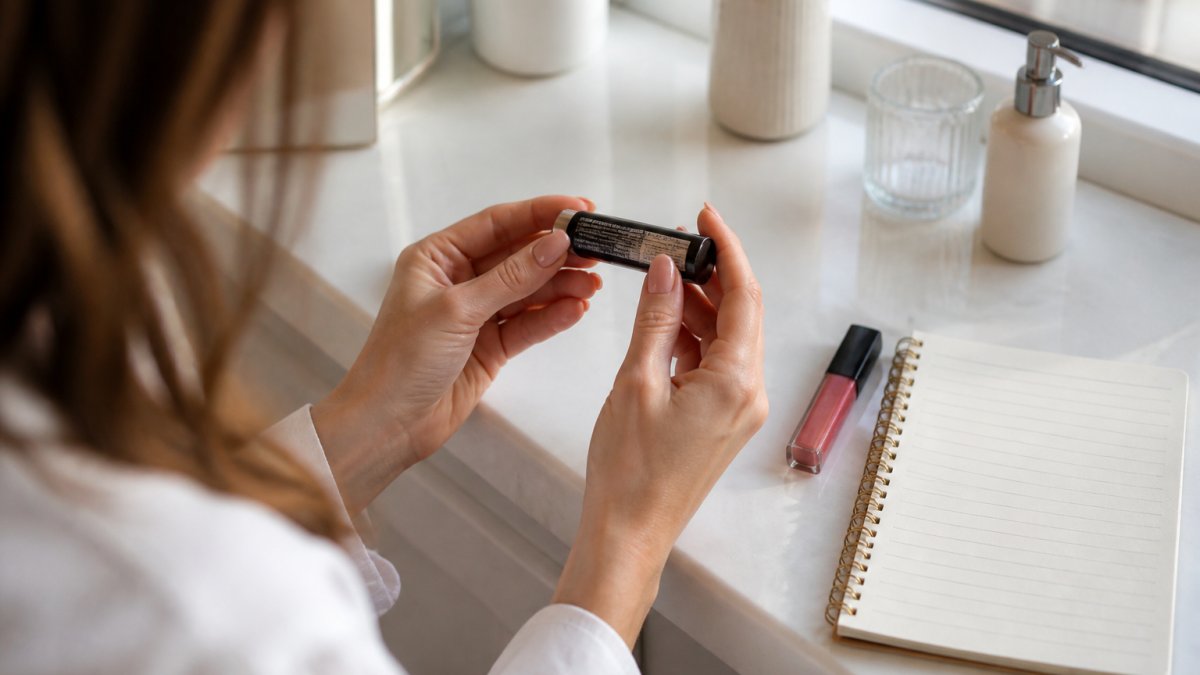
Start with the ingredient list, not the front of the package. Ingredients are generally listed in descending order of concentration, with color additives listed separately at the end.
Here is a workflow to follow:
- Find the word "Ingredients" on the back or bottom panel. No ingredient list at all? Put the product down.
- Scan the first five ingredients. These make up the bulk of the formula, where petroleum-derived ingredients, waxes, and primary preservatives usually appear.
- Check the last five. Fragrance, color additives, and trace preservatives hide here. A preservative at the bottom may still matter if you are sensitive to it.
- Circle anything ending in -paraben, -phthalate, or the words "fragrance" or "parfum." These are question marks, not automatic red flags.
- Look for "may contain" followed by color names. That is normal for lipstick, not a warning sign; color additives are regulated separately and listed after the main ingredients.
- Photograph the label before you toss the box. You will want it later for comparison, a product lookup, or a conversation with the brand.
Decoding Synonyms and Vague Label Terms
Ingredient names are not always what you expect. The same chemical can appear under several names, and some terms are catch-alls that hide more than they reveal.
- "Fragrance" or "parfum" can stand for dozens of undisclosed compounds, including phthalates used as fixatives. Fragrance components are often not listed individually on labels.
- Methylparaben, butylparaben, propylparaben are all parabens, just different versions. You may also see them written as E218, E216, and E217 in some contexts, though cosmetic labels usually use the chemical name.
- "BHA" and "BHT" are preservatives, not the same as beta hydroxy acid used in skincare. BHA here stands for butylated hydroxyanisole, a different compound entirely.
A common mistake is treating an unrecognizable word as dangerous.
Watch out: a label that lists only "natural ingredients" or "botanical extracts" without a full INCI list is not more transparent, it is less.
A Practical Verification Workflow
Once you have the ingredient list, here is how to turn it into a decision:
- Identify the top five ingredients. These define the product's base: petrolatum or mineral oil first means an occlusive formula; waxes like beeswax or candelilla wax mean a different base.
- Flag your personal no-go ingredients. A short list you build over time based on your own sensitivities or preferences, common examples include parabens, fragrance, and petroleum-derived ingredients.
- Check flagged ingredients against a reliable database. Independent ingredient databases can help, but a hazard score is not a risk score.
- Look for concentration clues. A flagged ingredient near the bottom of the list is likely present in a small amount, not irrelevant, but a different exposure picture.
- Verify vague terms with the brand. If the label says "fragrance" and you want to know whether phthalates are present, ask for a fragrance disclosure. A serious brand will answer.
This workflow takes about a minute per product once you are practiced. It will not tell you everything, no label can, but it turns a confusing panel into a usable starting point.
Here is the label-reading workflow the article recommends, step by step.
| Step | What to do | Why it matters |
|---|---|---|
| 1 | Find the word "Ingredients" on the back or bottom panel | No ingredient list at all means put the product down |
| 2 | Scan the first five ingredients | These make up the bulk of the formula |
| 3 | Check the last five | Fragrance, color additives, and trace preservatives hide here |
| 4 | Circle anything ending in -paraben, -phthalate, or "fragrance" or "parfum" | These are question marks, not automatic red flags |
| 5 | Look for "may contain" followed by color names | Normal for lipstick, not a warning sign |
| 6 | Photograph the label before you toss the box | You will want it later for comparison or a product lookup |
Harmful Chemicals in Lipstick: The Shortlist to Avoid
No single ingredient on this list is an automatic emergency. The goal is to reduce how many you layer on daily, especially if your lips are sensitive or you reapply often.
Parabens, Preservatives, and PFAS
Parabens (methylparaben, butylparaben and relatives) are preservatives that keep bacteria and mold out of the formula (the FDA). Some consumers choose to avoid them.
BHA and BHT are preservatives that keep oils from going rancid.
Phthalates, Fragrance, and Petroleum-Derived Ingredients
Phthalates rarely appear by name. They often hide inside "fragrance," where they act as fixatives. This is the single hardest ingredient group to verify from a label alone.
Fragrance is the vaguest term in cosmetics. If you are worried about irritating ingredients, learn to recognize the signs of allergic reaction on lips. It can mean a few natural oils or a blend of many synthetic compounds.
Heavy Metals in Lipstick: What Labels Do Not Tell You
Heavy metals in lipstick typically do not appear on the ingredient label.
Label reading alone may not reveal them.
CHARMSTYLE BEAUTY NUDE LIPSTICK →
What you can do:
- Treat "heavy metals" as a contamination question, not an ingredient question.
- Favor brands that publish testing information or full ingredient transparency.
- Check independent testing sources rather than relying on marketing claims.
Using a Toxic Ingredients Checker Without Falling for Hype
A toxic ingredients checker is a tool that cross-references a product's ingredient list against a database of chemicals of concern and returns a score or flag. Used badly, it manufactures fear.
Watch out: many checkers score hazard, not risk.
Use a checker to start a conversation, then verify. Compare the flagged ingredient against the concentration on the label and against official guidance.
Hazard Versus Exposure: Putting Health Risk in Context
Hazard is what a chemical can do at some dose. Exposure is how much of it actually reaches you. If you have sensitive skin, this guide to clean vegan lip makeup for sensitive skin can help you weigh your options.
The Four Factors That Shape Real Risk
When you see a scary-sounding ingredient, run it through these four questions:
- Dose. How much of the ingredient is in the product? The ingredient list order gives you a clue: a substance at the bottom is present in a small amount; one in the first five is a major component.
- Frequency. How often do you use the product? A daily lip balm is a different exposure pattern from a special-occasion lipstick.
- Route. How does the chemical enter your body? For lip products, the main routes are ingestion (you swallow a small amount) and skin absorption, both low compared to inhalation or injection.
- Evidence quality. What kind of study raised the concern? A high-dose animal study is not the same as a human study at realistic exposure levels, and a cell-culture study is even further from real-life use. When you see a headline about a chemical, check whether the study actually measured the kind of exposure you get from a lip product.
Why a Hazard Flag Is Not a Verdict
This is why we resist the "chemicals are bad" framing. The useful question is not "is this ingredient on a list?" but "how much of it am I actually getting, how often, and what does the evidence actually show at that level?"
A Practical Risk-Assessment Exercise
Here is how to apply this to a real product:
- Pick one flagged ingredient from your label. For example, a paraben near the bottom of the list.
- Estimate its position. In the last five ingredients, it is likely present at a low concentration; in the first five, it is a major component and deserves more attention.
- Check the evidence. Look for published safety assessments of the ingredient.
- Compare to your use pattern. A product you use once a week is a different exposure than one you reapply ten times a day.
- Decide based on your own risk tolerance. If the evidence at realistic exposure levels is reassuring, you may keep using the product; if you are uncomfortable, choose a formula without the ingredient. Both are reasonable choices when made with context.
When a Lip Product Label Is Incomplete or Unclear
Sometimes the label simply does not help. Maybe it is worn off, maybe the product came from a marketplace seller, maybe the list is suspiciously short.
Here is what to do:
- Check the outer packaging or the brand's website for the full ingredient list.
- Look for a batch code or manufacturer name. No manufacturer information is a real warning sign.
- Contact the brand directly and ask for the full INCI list. A serious brand answers.
Incomplete labeling is not proof of danger, but it removes your ability to check. That alone is reason enough to pass.
Choosing a Lipstick You Can Feel Good About
The practical takeaway is simpler than the internet makes it sound. For a beginner-friendly starting point, see this guide to clean beauty lip products for beginners. Read the list, know your personal no-go ingredients, and stop paying for fear.
Charmstyle Beauty Cosmetics offers lip products designed for everyday wear. Our Pink Lemonade Liquid Matte Lipstick offers a lightweight, non-drying matte finish, and our Nude Lipstick delivers rich color with hydrating wear.


Frequently Asked Questions
What toxic chemicals are commonly found in lipstick?
The chemicals most often flagged in lip products are parabens such as methylparaben and butylparaben, BHA and BHT preservatives, phthalates tied to fragrance, and PFAS used for long wear. Heavy metals including lead, cadmium, chromium, and aluminum can appear as trace contamination rather than as listed ingredients. Reading the ingredient list and checking independent testing sources helps you spot which of these apply to a specific product.
Are heavy metals in lipstick listed on the ingredient label?
Usually not. Heavy metals in lipstick typically show up as trace contamination from pigments and raw materials, so they do not appear on the ingredient list. That is why label reading alone cannot confirm or rule out lead or cadmium. Look for brands that publish third-party testing results, and treat any product with no testing information as unverified rather than safe.
Does a clean or natural label mean a lip product is safer?
No. Clean and natural are marketing terms with no single legal definition, so a product can carry them and still contain fragrance, essential oils, or preservatives some people react to. Use the ingredient list and independent testing data instead of the front-of-pack claims. If a brand cannot tell you what is in the formula or how it was tested, the claim is doing more work than the evidence.
How can I check whether a lip product has been tested for contaminants?
Start with the brand's own site and ask directly for third-party testing results on heavy metals. Then cross-check the product in an ingredient database or consumer guide that names its data source. A useful toxic ingredients checker shows where its information comes from, so you can judge the claim. If no testing information exists, treat the product as untested and decide whether that risk is acceptable for daily wear.
Sorting real risk from loud claims takes a little practice, and most shoppers never get a straight answer. Charmstyle Beauty Cosmetics makes that choice easier with lightweight, wearable lip formulas designed for daily confidence: a non-drying matte finish, hydrating creamy color, and a curated shade range that suits everyday looks. Get started with Charmstyle Beauty Cosmetics and find a lipstick you can wear without second-guessing the label.
