

Table of Contents
- Why Standard Nude Lipsticks Fail Warm Undertones
- How to Determine Skin Undertone Before You Shop
- Best Nude Lipstick for Warm Skin: Shades That Flatter
- How to Wear Nude Lipstick Without Looking Pale
- The Lip-Line Contrast Rule for Warm Undertones
- Texture and Finish: Matte vs. Glossy Nude Lipstick
- How to Test Nude Lipstick Shades Before Buying
- Frequently Asked Questions
Last Updated: September 18, 2026
Why Standard Nude Lipsticks Fail Warm Undertones
Most nude lipsticks are built around a cool, pinkish base, which is why a shade that looked perfect in the tube can turn grey, chalky, or flat on your lips. If your skin has warm undertones, a cool-based nude fights your natural coloring instead of working with it.
How to Determine Skin Undertone Before You Shop
Skin undertone is the underlying hue beneath your skin's surface, and it stays constant even as your surface tone changes with sun exposure or season. Determining it takes about two minutes and no special tools.
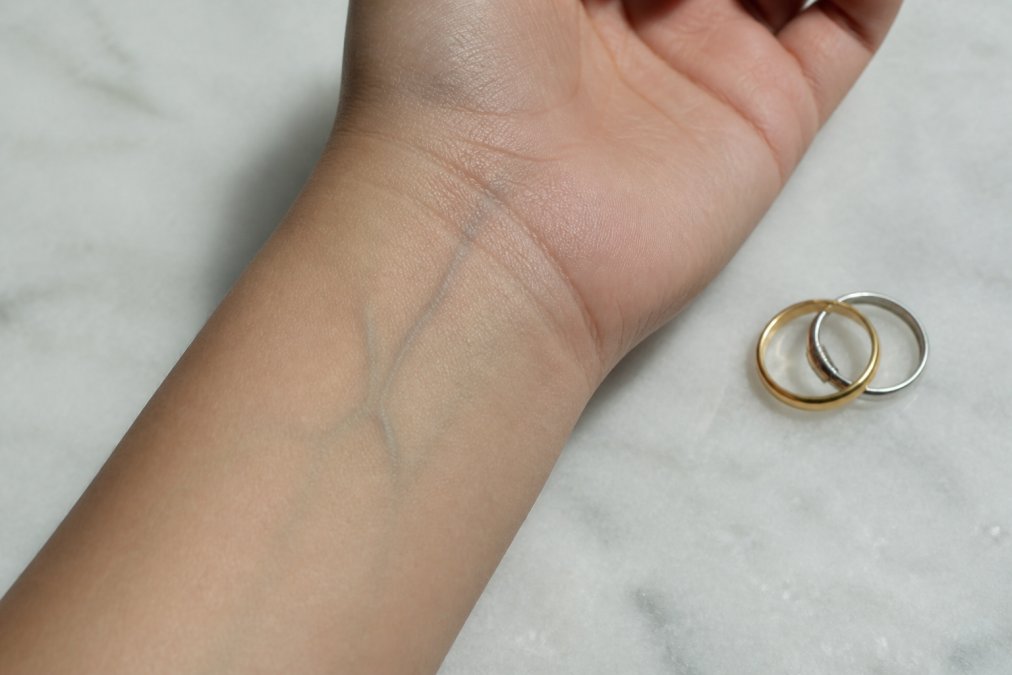
Start with these steps:
- Wash your face and wait 15 minutes. Let your skin return to its natural state.
- Find a window with indirect natural daylight. Avoid overhead bulbs, which skew color.
- Run through the two checks below and write down what you see.
- Compare your notes. Two matching signals point to a clear undertone.
The Vein Test and Jewelry Check
The vein test is the fastest way to read undertone. Look at the veins on the inside of your wrist in daylight. Greenish veins usually point to warm undertones. Blue or purple veins suggest cool undertones. A mix of both often means neutral skin tones. Refining these observations helps you more accurately identify your skin undertone as you navigate the complexities of finding a perfect nude shade.
Best Nude Lipstick for Warm Skin: Shades That Flatter
The best nude lipstick for warm skin sits in three shade families: peach, caramel, and honey. Each carries a warm base that echoes your natural coloring instead of muting it, but the family name alone will not tell you whether a tube will work. Read the pigment, depth, and saturation together.
- Peachy nudes: Soft, light, and fresh. Best for fair to light-medium warm skin. Look for pigment words like apricot, coral nude, peach beige, or soft melon.
- Honey beige: A golden middle ground. Works across most warm complexions. Pigment cues: honey, golden beige, warm sand, biscuit.
- Caramel browns: Richer and deeper. Ideal for medium to deep warm skin tones. Pigment cues: caramel, toffee, golden brown, chestnut nude.
- Warm terracotta: A brick-leaning nude for olive and golden undertones. Pigment cues: terracotta, brick nude, burnt sienna.
- Toasted almond: A brown nude with a red undertone that adds life to deeper complexions. Pigment cues: toasted almond, warm mocha, spiced nude.
Reading the Pigment, Not Just the Name
Shade names are marketing; the pigment load underneath determines whether a nude reads warm or cool. Three signals do most of the work:
- The base oxide. Warm nudes are built on yellow or red iron oxides. Cool nudes lean on blue or purple bases, which is why they turn grey on warm skin. If a product page lists "cool rose" or "mauve" as the base, it is not for you regardless of how the swatch photo looks.
- The white content. High white pigment is what produces the chalky, concealer-lips effect. A warm nude with a heavy white load will still look flat even though the hue is correct. Sheer and medium-coverage formulas hide less of your natural lip color, which keeps warmth visible.
- The saturation level. A highly saturated peach can overwhelm fair skin, while a muted caramel can disappear on deep skin. Match the depth of the shade to the depth of your skin, and match the saturation to your natural lip pigment.
Depth-Matching by Skin Tone
A useful rule of thumb: your nude should sit one to two steps deeper than your natural lip color, not lighter. That adjustment prevents most washed-out complaints.
- Fair warm skin: peach or apricot nude, one step deeper than your bare lip. Avoid anything lighter than your lip or the contrast collapses.
- Light-medium warm skin: honey beige or soft caramel. This is the widest range and the safest starting point if you are unsure.
- Medium warm skin: caramel or warm terracotta. A golden base keeps the lip from reading grey against medium depth.
- Deep warm skin: toasted almond, spiced mocha, or rich caramel. Go richer, not lighter. A pale nude on deep skin produces the strongest anaemic effect.
- Olive warm skin: terracotta and brick nudes. Olive skin carries a green cast that cool nudes amplify, so lean into red-brown warmth.
Pairing With Lip Liner
A slightly darker lip liner does more for a warm nude than any shade swap. Choose a liner one shade deeper than the lipstick in a warm brown, terracotta, or caramel tone, and trace just inside or on your natural lip line. It restores the edge a nude erases and anchors the shade so it does not drift toward grey.
How to Wear Nude Lipstick Without Looking Pale
The "anaemic look" is the most common complaint about nude lipstick, and it comes from a contrast problem, not a color problem. When your lip shade is lighter or cooler than your natural lip color, your face loses definition and looks tired.
Three adjustments fix it:
- Pick a nude one to two shades deeper than your natural lip color.
- Add a warm lip liner just outside your natural lip line.
- Choose a shade with visible warmth, not a grey or beige flat tone.
The Lip-Line Contrast Rule for Warm Undertones
The Lip-Line Contrast Rule states that your lip color should sit at a slightly higher contrast level than your skin, not match it exactly. This is the biggest gap in most nude lipstick advice, which says to "match your lips" without explaining what matching means.
Here is how to apply the rule:
- Fair warm skin: choose a nude one step deeper than your natural lip.
- Medium warm skin: a honey or caramel nude with a warm liner works best.
- Deep warm skin: go richer, not lighter. A caramel or toasted almond keeps contrast in your favor.
- Olive warm skin: lean toward terracotta and brick nudes.
Texture and Finish: Matte vs. Glossy Nude Lipstick
Finish changes how a nude reads more than most people expect: the same shade in matte and gloss can look like two different colors.
For warm undertones, a middle path works best:
- Satin: A soft sheen that adds light without heavy shine.
- Gloss: Great for fair warm skin and daytime looks.
- Matte: Best for caramel and brown nudes on medium to deep skin.
How to Test Nude Lipstick Shades Before Buying
Testing before you buy is the step most shoppers skip, and it is the one that prevents returns. A swatching method done right takes under five minutes and saves you from a drawer full of wrong shades. Most guides say to swatch without explaining where, in what light, or how to compare shades. Here is the full visual methodology.
Why the Jawline, Not the Hand
The back of your hand is usually a shade or two deeper than your face and sees more sun, so a nude that looks warm there can read cool on your lips. The jawline is the correct test site because it sits at the boundary between face and neck, where undertone is most visible.
The Step-by-Step Visual Try-On
- Prep the site. Cleanse your jawline and let the skin rest for 15 minutes. Do not test over foundation or moisturizer, which shifts the base color.
- Draw three vertical stripes. Apply one shade per stripe, spaced about an inch apart, running from the jaw down toward the neck. Three at a time is the maximum you can compare accurately.
- Label them in order. Left to right, so you can track which is which after the shades warm up.
- Check in indirect daylight first. Stand near a window facing away from direct sun. Overhead bulbs and ring lights add a green or blue cast that makes warm skin look cooler than it is.
- Wait ten minutes. Some shades shift as body heat and lip moisture interact with the pigment. The color at minute one is not the color at minute ten.
- Photograph in daylight. Take one photo of your jawline and one of your bare lips in the same light. Compare the swatches against your natural lip color, not against each other.
- Narrow to one, then apply to the lips. Lip pigment changes everything, so the jawline test is a filter, not a final answer. Apply your top pick to your actual lips and repeat the daylight check.
Reading the Result
A warm nude that works makes your jawline look brighter and more even, not duller. If a stripe makes your skin look grey or sallow, the base is too cool regardless of how the shade is described. If a stripe disappears into your skin, it is too close to your depth and will read as concealer lips. The right shade sits slightly deeper and warmer than your bare lip.
Online Shopping Without a Counter
If you cannot swatch in person, use a visual try-on method. Many brands offer virtual shade tools, and customer photos on warm skin are the next best thing. Compare the shade against your own photos rather than the model's, since model lighting is almost always cooler than real daylight. Order from a retailer with a return policy, and buy two adjacent shades so you can compare them side by side on arrival.
Frequently Asked Questions
How can I tell if my skin has warm undertones?
Check the veins on your inner wrist in natural daylight. If they appear green, you likely have warm undertones. The jewelry test helps too: gold flatters warm skin while silver can look harsh. You can also look at your natural lip color, which tends to have a peach or golden base if you are warm. These simple checks take under a minute and give you a reliable starting point before shopping for nude lipstick.
What is the difference between a peach-based and brown-based nude lipstick?
Peach-based nudes contain golden or orange pigments that blend with warm undertones, creating a fresh, lively look. Brown-based nudes lean cooler and can appear muddy or gray on warm skin. For warm undertones, peach, caramel, and honey shades work best because their base color mirrors the natural warmth in your complexion. A brown-based nude may still work if it has enough golden pigment, but pure cool browns often clash.
Should I choose a matte or glossy finish for warm skin tones?
Both can work, but the finish changes how the shade reads. Matte finishes intensify color and can make a nude look flatter or more stark. Glossy finishes add light reflection, which keeps warm nudes looking fresh and prevents that washed-out effect. A satin or creamy finish sits between the two and suits most warm undertones. If you choose matte, pick a shade one step deeper than your natural lip color to avoid looking pale.
How do I prevent a nude lipstick from looking washed out?
Choose a nude that is slightly deeper or more saturated than your natural lip color. Add a warm-toned lip liner one shade darker to define the edges and create contrast. Layer a hydrating gloss on top to add dimension and light. Avoid cool or gray-based nudes, which flatten warm skin. A peachy or caramel nude with a satin finish keeps your lips looking alive rather than disappearing into your face.
Choosing the right nude comes down to reading your undertone, matching the base color, and testing before you commit. It is a small amount of work that pays off every time you get ready. Charmstyle Beauty Cosmetics makes that easier with lightweight, wearable formulas built for everyday confidence, including warm-friendly nudes with hydrating, comfortable wear. Get started with Charmstyle Beauty Cosmetics and find the nude that finally looks like yours.