

Table of Contents
- Why Your Skin Type Changes Your Lip Primer Choice
- How to Choose a Lip Primer by Skin Type
- The Best Lip Primer for Dry Lips: What to Look For
- Lip Primer for Sensitive Lips: Ingredients to Avoid
- Lip Primer vs Lip Balm: What Each One Actually Does
- How to Apply Lip Primer for Longer-Lasting Lipstick
- Troubleshooting Wear, Feathering, and Texture
- Conclusion
- Frequently Asked Questions
Last Updated: October 17, 2026
Why Your Skin Type Changes Your Lip Primer Choice
Most people shop for a lip primer the way they shop for lipstick: by color. That is the first mistake.
Your lips have no oil glands of their own, so dryness shows up fast, but how your face produces oil overall still shapes how a formula sits.
Here is the short version:
- Oily skin needs a formula that grips and controls shine.
- Dry skin needs moisture without slip.
- Combination skin needs balance, not extremes.
- Sensitive skin needs a short ingredient list.
Get this wrong and even a great lipstick will feather, fade, or feel heavy by noon. Get it right and your color stays put through coffee, lunch, and the walk back to your desk.
How to Choose a Lip Primer by Skin Type
Choosing a lip primer comes down to matching the formula to how your skin behaves, not to what the box promises. Match the base to your skin, then the finish to your lipstick.
The table below is the fastest way to sort it out. Find your skin type, then read across.
| Skin Type | Best Formula Type | Key Trait to Look For | What to Avoid |
|---|---|---|---|
| Oily | Gel-based or mattifying | Oil control, non-greasy finish | Heavy balms, oil-based formulas |
| Dry | Hydrating, creamy | Moisturizing, no flaking | Alcohol-heavy, matte-only bases |
| Combination | Lightweight gel or lotion | Balanced hydration | Greasy or overly matte formulas |
| Sensitive | Fragrance-free, short list | Skin-friendly ingredients | Fragrance, alcohol, dyes |
| Normal | Most formulas work | Smooth application | Overly drying formulas |
One rule applies to every row: patch test first. A primer that works on a friend's lips can still irritate yours.
Oily Skin: Mattifying and Oil-Control Formulas
Oily skin needs a primer that holds back shine without turning your lips into sandpaper. Gel-based and mattifying formulas set to a soft, non-greasy finish that grips lipstick instead of letting it slide.
Look for these traits:
- Gel-based texture that dries down rather than sitting on top
- Oil-control ingredients that keep shine in check
- Non-greasy finish so color does not migrate
- Lightweight feel for all-day comfort
Skip heavy, oil-based balms: they feel lovely for ten minutes, then your lipstick travels. A mattifying base also stops matte lipstick from catching on texture.
Dry and Combination Skin: Hydrating, Non-Greasy Primers
Dry lips need hydration, but greasy hydration ruins wear time. A hydrating primer with a non-greasy finish smooths flaking and gives lipstick an even surface.
Combination skin is trickier. Your lips may feel dry while the skin around your mouth gets oily. A lightweight gel or lotion primer handles both: enough moisture to stop flaking, light enough not to feed shine.
What to prioritize:
- Hydrating ingredients that soften without residue
- A smooth, even finish so color applies without patchiness
- No heavy oils that break down lipstick
- Comfortable wear that lasts past lunch
If your lips crack in winter, treat the primer as skincare. Prep with balm, let it absorb, then prime.
The Best Lip Primer for Dry Lips: What to Look For
The best lip primer for dry lips is a hydrating formula that smooths texture and holds color without drying you out further. Moisture and grip are not opposites.
Flaky texture grabs pigment unevenly, and primer fills those tiny gaps so color glides on smooth. That is why a hydrating base matters more than a long-wear claim.
Look for:
- Moisturizing ingredients that soften rough patches
- A creamy, non-greasy texture that spreads evenly
- No alcohol high in the ingredient list, since it dries lips further
- A skin-friendly formula you can wear daily without irritation
A good routine for dry lips: exfoliate gently once or twice a week, apply balm, wait a minute, then prime. The primer locks in moisture while giving lipstick something to hold.
Lip Primer for Sensitive Lips: Ingredients to Avoid
Sensitive lips are not just dry lips with a lower tolerance.
The safest strategy is a short ingredient list with no fragrance, flavoring, drying alcohol, or essential oils.
Here is what to watch for on the label, and why each one matters:
- Fragrance and parfum. Fragrance is one of the most common causes of contact irritation on and around the lips. It can appear as "fragrance," "parfum," or a named scent component. A primer does not need scent to work, so skip it.
- Flavoring and sweeteners. Lip products often add flavor so they taste pleasant, but flavoring agents are a frequent irritant for reactive lips. If the ingredient list includes "flavor" or "aroma," treat it as a potential trigger.
- Drying alcohols. Denatured alcohol and alcohol denat. appear high in some long-wear bases because they speed dry-down. On lips, they strip moisture and can sting on cracked skin. If alcohol is in the first five ingredients, the formula is likely too drying for daily use on sensitive lips.
- Essential oils and plant extracts. Peppermint, menthol, cinnamon, citrus oils, and eucalyptus feel cooling or plumping, but they are common sensitizers. "Natural" does not mean non-irritating.
- Dyes and strong pigments in a base layer. A primer does not need color. Added dyes increase the ingredient load without improving grip, so a plain, uncolored base is the lower-risk choice.
- Long, complex ingredient lists. Every additional ingredient is another chance for a reaction. A primer with 15 ingredients is easier to clear than one with 45.
A practical label check: read the first five ingredients, since they make up most of the formula. If fragrance, alcohol, or a cooling agent appears there, put it back.
CHARMSTYLE BEAUTY FACIAL PRIMER →
Patch testing matters more for lips than almost any other product, because a reaction there is hard to hide.
If your lips are already cracked or irritated, treat the primer step as skincare first. Heal the barrier with a plain balm, then choose the shortest, plainest primer you can find and build color on top. A simple base that feels comfortable beats a complex one that irritates.
Lip Primer vs Lip Balm: What Each One Actually Does
A lip primer and a lip balm are not the same product, even though both go on bare lips.
Here is the difference in plain terms:
- Lip balm: softens, hydrates, and shields dry lips. It sits on the surface and can make lipstick slide.
- Lip primer: smooths texture and grips color. It is built to hold makeup in place.
- Lip liner: defines the edge and helps stop feathering. It is not a base.
- Concealer: can neutralize natural lip tone before color, but it dries lips over time.
Use them together in the right order: balm to hydrate, blot, primer, liner, then lipstick. The balm does the skincare, the primer does the grip.
A common mistake is using balm as a primer. It feels good, but the waxy layer keeps color from setting, and it is often why lipstick fades by mid-morning.
How to Apply Lip Primer for Longer-Lasting Lipstick
Applying lip primer well takes about a minute: prep, prime, blot, then color. Skip a step and wear time drops.
Here is the routine we recommend:
- Exfoliate gently. Buff away flakes with a soft cloth or a sugar scrub. Rinse and pat dry.
- Hydrate. Apply a thin layer of balm and let it absorb for a minute.
- Blot. Press a tissue to your lips to remove excess balm.
- Prime. Apply a small amount of primer, starting at the center and working outward.
- Wait. Give the primer 30 to 60 seconds to set before color.
- Line the edges. Use lip liner to define your shape and stop feathering.
- Apply lipstick. Build color in thin layers rather than one heavy coat.
- Blot and reapply. Press with a tissue, then add one more light layer for staying power.
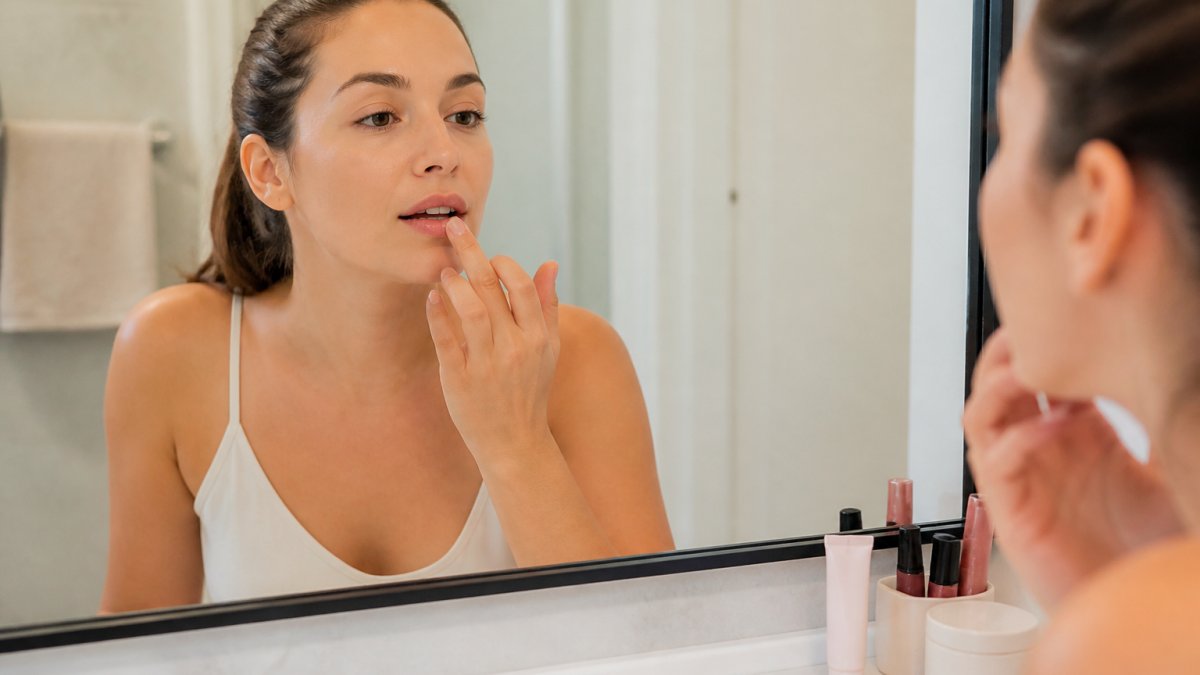
That last blot-and-reapply step is the one most guides skip. It sets the color into the base and adds real wear time.
A facial primer can help too if you want your whole look to hold. Our Flawless Finish Facial Primer smooths texture and controls shine on the face, so your lip color sits in a complete, polished look rather than floating on its own.

Troubleshooting Wear, Feathering, and Texture
If color feathers or bleeds into fine lines around the mouth: Feathering usually means color is traveling along the lip edge, not that the primer failed.
If color fades fast or disappears after eating: Check the base first.
If lips feel dry, tight, or flaky by midday: The primer is likely too mattifying for your lip condition, since oil-control bases can pull moisture away on dry lips.
If texture looks patchy or color settles into lip lines: Patchiness almost always starts with surface texture. Exfoliate gently once or twice a week, moisturize, blot, then prime.
If lips sting, tingle, or swell: Stop using the product.
A simple wear test tells you more than any product description.
Conclusion
Choosing the right lip primer is a matching game, and your skin type sets the rules. Oily skin needs oil control. Dry lips need hydration without slip. Sensitive lips need a short, gentle ingredient list. Get the match right and your lipstick finally stays where you put it.
At Charmstyle Beauty Cosmetics, we build lightweight, wearable lip formulas for everyday confidence, and we pair them with base products that make color last. Start with our Flawless Finish Facial Primer at $9.00 to smooth and mattify your base, then finish with a lip color that fits your routine.
Frequently Asked Questions
How do I choose a lip primer for my skin type?
Match the formula to how your skin behaves. Oily skin does well with mattifying, oil-control lip primers that stop color from sliding. Dry skin needs hydrating, non-greasy formulas that smooth flaky texture before lipstick goes on. Sensitive skin should skip fragrance and alcohol. Combination and normal skin can use a lightweight, gel-based primer. If your lips feel tight or irritated after application, switch formulas rather than layering more product.
What lip primer is best for dry lips?
Look for a hydrating lip primer with moisturizing ingredients and no drying alcohol. A primer that smooths texture lets lipstick sit evenly instead of catching on flakes. Prep matters as much as the product: exfoliate gently, apply a thin layer of balm, wait a minute, then blot before priming. Pair the primer with a creamy lipstick rather than a flat matte, which tends to emphasize every dry patch.
What is the difference between lip balm and lip primer?
Lip balm moisturizes and protects; lip primer creates a surface that helps lip color apply smoothly and last longer. Balm alone can make lipstick slide or fade faster because the waxy layer stops color from gripping. Many people use both: balm first to hydrate, blotted down, then primer for hold. If your lips are very dry, the balm step is not optional, but always blot before applying primer so the two layers do not fight each other.
Can lip primer prevent lipstick from feathering?
Yes, when applied correctly. A thin layer of primer fills in the texture around the lip line, giving lipstick less room to bleed into fine lines. Let the primer set for about a minute before applying color, and use a lip liner along the edge for extra insurance. Avoid over-applying primer, since a thick layer can actually make color migrate. Recheck the lip line after eating or drinking and touch up the edges first.