

Table of Contents
- Why Natural Alternatives to Traditional Lipstick Are Worth Trying
- Tinted Lip Balm: Sheer Color and Everyday Hydration
- Lip Stain: Transfer-Resistant Color That Lasts
- Lip Oil: High-Shine Finish With Nourishing Care
- DIY Natural Lipstick: Simple Recipes and Safety Notes
- Comparing Natural Lipstick Alternatives by Finish, Coverage, and Wear
- Conclusion
- Frequently Asked Questions
Last Updated: October 9, 2026
Why Natural Alternatives to Traditional Lipstick Are Worth Trying
If you have ever blotted a heavy lipstick before a meeting or avoided smiling for fear of smudging, you already know why natural alternatives to traditional lipstick have moved from niche to normal. At Charmstyle Beauty Cosmetics, busy professionals want color that looks like their lips, not a mask sitting on top of them.

The shift is practical, not just philosophical. Lighter textures, buildable color, and hydrating formulas work with your lips instead of against them, and the category now spans far more than one product type.
Below, we break down the main alternatives, how they compare by finish and wear, and how to choose the right one.
Tinted Lip Balm: Sheer Color and Everyday Hydration
The appeal is speed: you swipe, you go, and the color reads as a natural flush rather than a painted-on shade.
Where it falls short: wear time is limited, and most tinted balms fade within a few hours or after a meal.
- Best for: everyday makeup, no-makeup looks, dry lips
- Finish: soft, slightly dewy
- Coverage: sheer and buildable
Our Charmstyle Beauty Lip Balm sits in this category with a creamy, pigmented formula that glides on and keeps lips comfortable.

Lip Stain: Transfer-Resistant Color That Lasts
A lip stain deposits color into the lip surface rather than sitting on top of it, which is why stains resist transfer far better than traditional lipstick.
Stains start sheer and build with each layer, so you control the intensity.
- Best for: long workdays, coffee and lunch, minimal touch-ups
- Finish: natural to soft matte
- Coverage: sheer to bold, buildable
The Charmstyle Beauty Lip Stain and our Berry Lip Stain both deliver a lightweight, buildable tint with a just-bitten effect that stays put without feeling heavy or sticky.

Lip Oil: High-Shine Finish With Nourishing Care
The formula is typically built around plant oils and butters, so it conditions while it shines, a strong choice if your main complaint about lipstick is dryness.
For pigment and shine together, layer an oil over a stain or tinted balm: the oil adds dimension and gloss while the stain underneath holds the color in place.
- Best for: dry lips, glossy finishes, layering
- Finish: high-shine, dewy
- Coverage: sheer to clear
For a sheer rose tint with shine, Twilight Rose pairs a high-shine finish with a vegan, cruelty-free formula that feels creamy rather than sticky.
DIY Natural Lipstick: Simple Recipes and Safety Notes
Making your own lip color at home is appealing for ingredient control, and the basic method is simpler than most people expect. Still, a few safety rules matter more than the recipe.
A Basic Balm-to-Tint Formula
Most homemade lip color follows the same skeleton: a wax for structure, a butter for body, a liquid oil for glide, and a small amount of pigment for color. A workable starting ratio by weight is roughly:
- 1 part wax, beeswax, candelilla wax, or carnauba wax
- 2 parts butter, shea, cocoa, or mango butter
- 2 parts liquid oil, jojoba, sweet almond, or fractionated coconut oil
Melt the wax and butter in a double boiler over low heat, stir in the oil, then whisk in pigment until the color is even. Pour into a small tin or tube and let it set at room temperature for about an hour. The result is closer to a tinted balm than a full-coverage lipstick, and stays sheer unless you add more pigment.
Why the Ratios Matter
Wax keeps the product from melting in your bag: too little and it slumps, too much and it drags on application. Butter and oil control how the color feels and how long it stays comfortable. If a batch feels hard, add more oil next time; if greasy, nudge the wax up. Keep notes, small changes make a visible difference.
Safety Rules That Actually Matter
- Keep it small and fresh. Homemade products lack the preservative systems of commercial formulas, so make small batches and store them in a cool, dark place. A batch made with fresh oils is best used within a few weeks.
- Patch test first. Apply a small amount to your inner arm and wait a day before using it on your lips, especially if you have sensitive lips or known allergies. Lip skin is thin and reacts faster than most people expect.
- Use cosmetic-grade ingredients only. Craft-store pigments and food colorings are not formulated for lip use and may irritate. Look for mica and iron oxides sold specifically for cosmetics.
What DIY Cannot Do
DIY is a fun experiment, but not the most reliable route for daily wear. You will not get the shade range, color payoff, or shelf life of a formulated product, and replicating a specific shade is difficult because natural pigments vary batch to batch. If consistency matters, a formulated product serves you better.
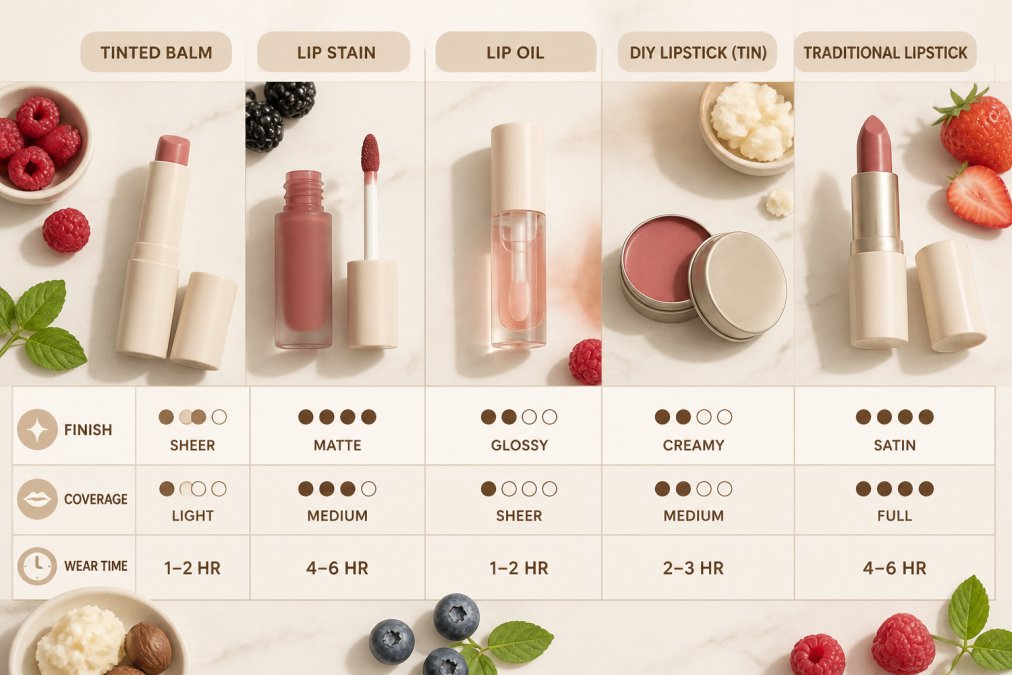
Comparing Natural Lipstick Alternatives by Finish, Coverage, and Wear
The fastest way to choose is to match the product type to the finish, coverage, and wear time you actually want. Here is how the main categories stack up.
Conclusion
Finding a lip routine that survives a real day, without the weight or transfer of traditional lipstick, comes down to matching the formula to your finish and wear needs. Whether you want a sheer tint, a long-wearing stain, or a high-shine oil, the right pick is the one you will actually reach for. Charmstyle Beauty Cosmetics offers lightweight, wearable lip products, including buildable lip stains, hydrating glosses, and nourishing balms, all designed to elevate your natural glow with ease.
Frequently Asked Questions
How can I make my own lipstick at home?
You can make a DIY natural lipstick by melting one tablespoon of beeswax, one tablespoon of shea butter, and one teaspoon of coconut oil in a double boiler. Once melted, stir in a quarter teaspoon of natural pigment like beetroot powder or cocoa powder. Pour the mixture into a small tin or empty lipstick tube and let it set for 30 minutes. This recipe yields a sheer, hydrating color you can customize. Always test on a small patch of skin first to check for irritation.
Can tinted lip balm replace lipstick?
Tinted lip balm can replace traditional lipstick for everyday, natural-looking makeup. It offers sheer coverage and a soft finish that enhances your natural lip color without heavy pigment. If you want a no-makeup look or need hydration with a hint of color, a tinted balm works well. For bold, opaque color or long-wear coverage, a lip stain or traditional lipstick is a better choice. Many people layer a tinted balm over a stain for extra moisture and shine.
What is the difference between lip stain and lipstick?
Lip stain is a lightweight, water or gel-based formula that dyes the lips with transfer-resistant color, while traditional lipstick is a wax-based product that sits on top of the lips with richer pigment. Stains typically last longer through eating and drinking, often four to six hours, and feel weightless. Lipstick provides more opaque coverage and a wider shade range but may smudge or fade faster. For a natural, just-bitten look, a lip stain is often the preferred alternative.
What are some ingredients in natural lipstick?
Natural lipstick formulas often use plant oils like jojoba, coconut, and castor oil for moisture, plus butters such as shea and cocoa for a creamy texture. Pigments come from mineral-based sources like iron oxides or botanical extracts such as beetroot and alkanet root. Many natural lipsticks are also vegan, cruelty-free, and free from synthetic fragrances. When shopping, look for short ingredient lists and certifications to verify clean claims.
How do I get a natural-looking lip color without lipstick?
To get natural-looking lip color without traditional lipstick, try a lip stain or tinted lip balm in a shade close to your natural lip tone. Apply a thin layer and blend with your fingertip for a soft, diffused effect. You can also dab a bit of cream blush or a DIY beetroot tint onto your lips. For extra shine and hydration, top with a clear or nude lip gloss. This approach gives a fresh, everyday look that never feels heavy.