

Table of Contents
- What Makes a Lip Gloss Actually Hydrating
- Ingredients to Look for in Lip Gloss
- Lip Gloss vs Lip Oil for Dry Lips
- Best Hydrating Lip Gloss Options for Dry Lips
- How to Choose a Moisturizing Lip Product
- Best Lip Care Routine for Hydration
- Conclusion
- Frequently Asked Questions
Last Updated: September 13, 2026
What Makes a Lip Gloss Actually Hydrating
A hydrating lip gloss uses moisturizing ingredients that draw water into the lips and seal it there, rather than just coating the surface with shine. The best hydrating lip gloss for dry lips delivers visible gloss and supports the lip barrier so lips feel softer over time, not just while the product is on.
Plenty of glosses look wet and glassy on the applicator but dry lips out within an hour because the formula is mostly shine agents with little moisture-binding content. Charmstyle Beauty Cosmetics offers lightweight, wearable formulas that keep lips comfortable.

So what separates a gloss that hydrates from one that just reflects light? Three things: the ingredient list, the texture, and how well the formula holds onto moisture once it's on your lips. Below, we break down each one, then compare options so you can match a formula to your lip condition.
Ingredients to Look for in Lip Gloss
The most effective lip glosses combine three ingredient categories: humectants that pull water into the lips, emollients that soften and smooth, and occlusives that lock moisture in. Skip any one and the formula underperforms, which is why reading the label beats trusting the marketing copy.
The U.S. Food and Drug Administration's cosmetic ingredient guidance notes that cosmetic labeling must list ingredients in descending order of concentration, so the first several entries tell you what a gloss is actually made of. If a "hydrating" gloss lists its moisturizers near the bottom, the hydration claim is doing heavy lifting.
Humectants, Emollients, and Occlusives
Humectants attract and hold water. Common examples include glycerin, hyaluronic acid, and honey. They're why a good gloss makes lips feel plump rather than tight.
Emollients fill the gaps between dry skin cells so lips feel smooth. Shea butter, jojoba oil, and vitamin E are standard emollients, and they give a gloss its slip and comfort.
Occlusives form a protective seal that slows moisture loss. Ceramides and waxes fall here. This is the category most budget glosses skimp on, and it's why some formulas feel great for ten minutes and then leave lips drier than before.
Look for all three in one formula. A gloss with humectants but no occlusive pulls moisture from deeper tissue and lets it evaporate, worsening dryness over a long day.
Why the Combination Matters More Than Any Single Ingredient
What determines whether a gloss helps chronic dryness is how the three categories interact, and that interaction is where most formulas fail.
A humectant without an occlusive is the classic trap. Glycerin and hyaluronic acid bind water, but in dry air they pull moisture from deeper lip layers and release it into the environment, leaving lips tighter by mid-afternoon. A humectant-forward formula needs an occlusive to keep that water from escaping.
An occlusive without a humectant is the opposite problem. Waxes and ceramides seal the surface, but with no water in the lip to trap, you are sealing in dryness, the pattern behind heavy balms that feel protective but never soften lips.
Emollients are the bridge. They neither add nor seal water, but they flatten flaky skin so the humectant spreads evenly and the occlusive forms a continuous film instead of sitting on flakes. A formula with a humectant and occlusive but no emollient looks patchy on chapped lips even when the chemistry is sound.
The practical takeaway: a well-built hydrating gloss has all three, and the occlusive should appear high enough on the label to do real work rather than act as a token ingredient.
Reading a Label in Practice
Scan the first five ingredients. A formula that leads with a humectant (glycerin, hyaluronic acid, honey), follows with an emollient (shea butter, jojoba, vitamin E), and includes an occlusive (ceramide, beeswax, candelilla wax) in that top group is built to hydrate. One that leads with shine agents, silicone, or fragrance and buries moisturizers near the bottom is a cosmetic gloss with a hydration claim attached.
Humectant draws water in, emollient smooths the surface, occlusive seals it down. Remove any one and the formula stops working the way the label promises.
Lip Gloss vs Lip Oil for Dry Lips
Lip gloss and lip oil both add shine, but they serve different needs when lips are dry. A gloss delivers more color, more cushion, and longer wear; a lip oil is thinner, more transparent, and absorbs faster with less staying power.
For genuinely dry, flaky lips, gloss usually wins on comfort because the thicker texture holds emollients against the lip longer. Lip oil suits mildly dry lips and a barely-there feel, but needs reapplying more often, especially after eating or drinking.
A tinted serum sits between the two, offering light color with treatment-style ingredients. For everyday wear, many people rotate a nourishing gloss for workdays and a lip oil for weekends.
| Format | Texture | Wear Time | Best For |
|---|---|---|---|
| Lip gloss | Cushioned, glossy | Longer | Dry lips needing color and comfort |
| Lip oil | Thin, transparent | Shorter | Mild dryness, natural finish |
| Lip balm | Waxy, protective | Varies | Overnight repair, barrier support |
Best Hydrating Lip Gloss Options for Dry Lips
Our top pick for dry lips is the Charmstyle Beauty Clear Shine Lip Gloss, which balances a glass-like finish with a non-sticky feel. It layers cleanly over lipstick or wears alone, without the heaviness that makes many "moisturizing" glosses uncomfortable.
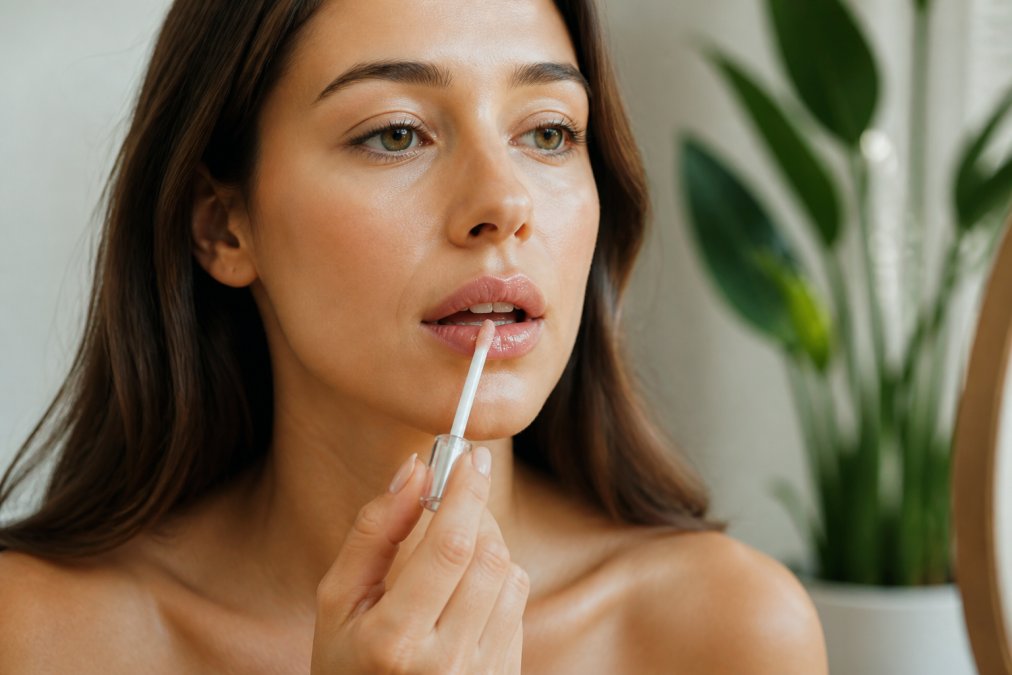
Here's how the Charmstyle line compares for different needs and budgets:
- Clear Shine Lip Gloss ($7.00): The everyday essential. Smooth, glass-like finish, no stickiness, layers over color.
- Hydration Lipgloss ($11.00): A step up in staying power, built for shine that lasts and lips that stay soft.
- Nude Pink Lipgloss ($7.00): Sheer color with a hydrating base, ideal if you want polish without a bold statement.
- Pom Pom Hydration Lipgloss ($14.00): High-shine with ultra-fine shimmer and a playful pom pom chain. Best for evenings or when you want shine to be the point.
- Twilight Rose ($7.00): A sheer rose tint with a creamy, non-sticky finish. Vegan and cruelty free.
For prep, the Kiwi Lipscrub ($5.00) and Strawberry Lipscrub ($5.00) gently remove flaky skin before gloss, and the Lip Balm ($10.00) handles overnight barrier support.

How the Formulas Compare
Choosing between them comes down to finish and how much color you want. Clear formulas suit everyone and never clash with your makeup. Tinted options like Twilight Rose flatter most skin tones because the pigment is sheer rather than opaque.
A practical tip: if lips are actively cracked, start with a scrub and balm for a few days before layering gloss. Gloss over raw, flaky skin looks patchy no matter how good the formula is.
How to Choose a Moisturizing Lip Product
Match the product to your lip condition first, then to your finish preference. That order prevents the most common buying mistake: choosing a gloss for its color and then wondering why lips still feel dry.
Start With Your Lip Condition, Not the Shade
Where your lips fall on the dryness scale should decide the format before you look at color.
Mildly dry lips, occasional tightness, no visible flaking, do fine with a lighter gloss or lip oil. The barrier is mostly intact, so you mainly need surface emollients and a little shine.
Chronically chapped lips, persistent flaking, cracking at the corners, tightness returning within an hour of applying anything, need a real occlusive plus gentle exfoliation and overnight repair. A thin oil alone will not hold up.
Sensitive or reactive lips, stinging, redness, or reactions to fragrance, benefit from fragrance-free, hypoallergenic options with fewer potential irritants. Fewer ingredients is usually better here.
The Gloss vs. Treatment Distinction
This is the part most buying guides skip, and it matters most for chronic dryness.
A cosmetic gloss is designed to make lips look a certain way, shiny, tinted, plumped. A treatment product changes the condition of the lip barrier over time. The two can overlap, but a gloss marketed as hydrating is not automatically doing treatment-level work.
If your goal is shine, a cosmetic gloss is the right tool. If your goal is to stop lips cracking every winter, you need a treatment, an occlusive high on the label, a humectant to draw water in, and enough emollient to keep the film continuous.
The practical move for chronically dry lips is to use both: a treatment-style balm or occlusive at night, and a hydrating gloss during the day for shine and top-up moisture.
Match the Finish to the Moment
High-shine formulas read as polished and pair well with minimal makeup; lower-shine nourishing formulas feel more like treatment and wear easily all day. Neither is better, they suit different moments. A high-shine gloss over a treatment balm gives you both the look and the barrier support in one layer.
Adjust for the Season
Seasonal shifts change which formula earns its place in your bag.
Winter and indoor heating pull moisture from lips faster than any other condition (the American Academy of Dermatology). Heavier occlusives matter most, a gloss layered over a ceramide or wax-based balm holds up better than a lightweight oil. Reapplication goes up, and overnight repair stops being optional.
Summer sun and air conditioning create their own drying effect. Lighter emollient-forward glosses feel better in heat, and layering with sun protection matters because UV exposure compounds dryness over time. A gloss with vitamin E and a sunscreen layer underneath covers both.
Transitional seasons, spring and fall, are when most people can rotate back to a single everyday gloss.
Check the Label Against the Three Categories
Finally, check the label against the three ingredient categories above. A gloss listing a humectant, an emollient, and an occlusive in its top ingredients is doing real work; one that leads with petroleum derivatives and fragrance is mostly cosmetic.
The American Academy of Dermatology's guidance on dry skin care consistently emphasizes sealing in moisture after it's applied, which is exactly what a well-formulated gloss does on the lips.
Best Lip Care Routine for Hydration
A consistent routine beats any single product. The best lip care routine for hydration follows a simple sequence: exfoliate gently, apply a humectant-rich layer, then seal it with an occlusive, daily, not only when lips crack.
Here's a routine that works for most people:
- Morning: Apply a hydrating gloss or balm before leaving the house.
- Midday: Reapply after lunch and coffee, since both strip the protective layer.
- Evening: Use a lip scrub two to three times a week to clear flaky skin.
- Night: Apply a thicker balm or occlusive layer before bed for overnight repair.
- Daily: Drink water consistently; hydration starts from within.
Seasonal shifts matter too. Winter air and indoor heating pull moisture from lips faster, so heavier occlusives earn their place from late fall through early spring. Summer sun and air conditioning create their own drying effect, which is why a gloss with vitamin E and SPF-friendly layering helps during warmer months.
One insider note: applying gloss over damp lips, right after a balm, helps humectants hold more water.
Conclusion
Dry lips are stubborn, and no single gloss fixes them overnight. The right approach combines a formula with humectants, emollients, and occlusives plus a routine that exfoliates gently and seals moisture consistently.
Charmstyle Beauty Cosmetics makes that routine easy with lightweight, wearable glosses designed for everyday confidence. The Clear Shine Lip Gloss and Hydration Lipgloss deliver glass-like shine without stickiness, while the Kiwi and Strawberry Lipscrubs and the overnight Lip Balm handle prep and repair. Every formula elevates your natural glow rather than masking it.

Get started with Charmstyle Beauty Cosmetics and build a lip routine that keeps you comfortable, polished, and confident from morning to night.
Frequently Asked Questions
What is a good hydrating lip gloss for dry lips?
A good hydrating lip gloss for dry lips should contain humectants like hyaluronic acid to draw in moisture, emollients like jojoba oil and shea butter to soften, and occlusives to seal it all in. Look for non-sticky, fragrance-free formulas. Charmstyle Beauty Hydration Lipgloss at $11 delivers shine and lasting hydration without the heavy feel.
Which lip gloss is most hydrating?
The most hydrating lip glosses combine multiple moisture-retention ingredients rather than relying on shine alone. Formulas with ceramides, peptide complex, and vitamin E provide translucent shine. Charmstyle Beauty Twilight Rose at $7 offers a sheer rose tint with creamy, non-sticky hydration, making it a strong everyday option for dry lips.
What do dermatologists recommend for very dry lips?
Dermatologists typically recommend looking for lip products with occlusive barriers like shea butter or ceramides, plus humectants like hyaluronic acid. They also suggest avoiding long-wear matte formulas that strip moisture and opting for dermatologist-tested, hypoallergenic options. A lip scrub used 2-3 times weekly followed by a hydrating gloss helps remove flakes and lock in moisture.
How can I tell if a lip gloss is truly hydrating?
Check the ingredient list for humectants (hyaluronic acid), emollients (jojoba oil, shea butter), and occlusives (ceramides, vitamin E). A truly hydrating gloss should feel non-sticky. If a gloss only provides high-shine finish without nourishing oils, it is likely cosmetic rather than treatment-focused.