

Quick Summary
To prep skin with facial primer, cleanse, then moisturize and let it absorb for 2 to 3 minutes. Apply sunscreen if it is day, let it set, then press a pea-sized amount of facial primer onto the face and let it dry before foundation.
- Cleanse first to remove oil, sweat and leftover product from yesterday.
- Wait 2 to 3 minutes after moisturizer so it absorbs before primer goes on.
- Apply sunscreen after moisturizer and before primer, letting it set a minute or two.
- Use a pea-sized amount of facial primer for the whole face, or less for the T-zone.
- Let primer dry to the touch, not tacky, for 1 to 2 minutes before foundation.
Table of Contents
- What Facial Primer Does and Whether You Need It
- Skin Prep Before Makeup Steps: A Timed Sequence
- How to Apply Face Primer After Moisturizer
- Skin Prep Before Makeup for Oily Skin
- Choosing a Primer by Skin Type and Makeup Goal
- How to Apply Primer, Foundation and Concealer in Order
- Troubleshooting Pilling and Patchy Makeup, and When to Skip Primer
- Start Your Primer Routine With the Charmstyle Facial Primer
- Frequently Asked Questions
What Facial Primer Does and Whether You Need It
Facial primer is a lightweight base you apply after skincare and before foundation. It is designed to smooth texture and help makeup grip the skin so it lasts longer. Not everyone needs it.
Here is what most primers do:
- Smooth the surface so foundation glides on evenly
- Control shine for oily areas, or add moisture for dry patches
- Help makeup last through a long day
Skip the primer if your skin is already smooth, your foundation is a heavy-coverage formula that grips well on its own, or you feel stickiness after applying it. Primer is a helper, not a requirement.
Skin Prep Before Makeup Steps: A Timed Sequence
Good prep starts well before you open the primer. The order and the wait times between layers matter more than the products themselves, because each layer needs to set before the next one goes on. Follow this sequence for the most reliable result.
- Cleanse (about 1 minute). Remove oil, sweat, and leftover product from yesterday. Pat dry rather than rubbing, and give your skin a moment to settle before the next step.
- Moisturize (about 1 minute). Apply a thin, even layer. If your skin is dry, use a richer cream; if it is oily, use a lightweight gel. Let it sink in fully.
- Wait (2 to 3 minutes). This is the step most people rush. Moisturizer needs time to absorb, and primer applied over wet or greasy skin is the most common cause of pilling later. A good test: touch your cheek, if it feels tacky or slippery, wait another minute.
- Apply sunscreen if it is day (about 1 minute). Sunscreen belongs after moisturizer and before primer. Let it set for a minute or two so the film forms; primer applied too soon can disturb the protection layer and cause the sunscreen to ball up.
- Apply primer (about 1 minute). Use a small, controlled amount, roughly a pea-sized dot for the whole face, or less if you are only targeting the T-zone.
- Wait (1 to 2 minutes). Let the primer set until it feels dry to the touch, not tacky. Foundation applied over wet primer can slide, separate, or look patchy by midday.
Rushing steps 2 through 4 is the most common reason primer looks patchy later. If you are short on time, the one wait you should never skip is the one after moisturizer, because that is where most layering failures begin.
Watch out: if you apply sunscreen and primer back-to-back without letting the sunscreen set, the primer can lift the sunscreen film and create a streaky, uneven base that no foundation will fix.
The article breaks the prep routine into timed steps, with waits between layers that matter as much as the products.
| Step | What to do | Time |
|---|---|---|
| Cleanse | Remove oil, sweat and leftover product | About 1 minute |
| Moisturize | Apply a thin, even layer and let it sink in | About 1 minute |
| Wait | Let moisturizer absorb before primer | 2 to 3 minutes |
| Sunscreen | Apply after moisturizer, before primer, if it is day | About 1 minute |
| Primer | Use a pea-sized dot for the whole face | About 1 minute |
| Wait | Let primer set until dry, not tacky | 1 to 2 minutes |
How to Apply Face Primer After Moisturizer
Start with clean, moisturized skin that has had a few minutes to absorb. Warm a pea-sized amount of facial primer between your fingertips. Pressing it onto the skin works better than rubbing it in hard.
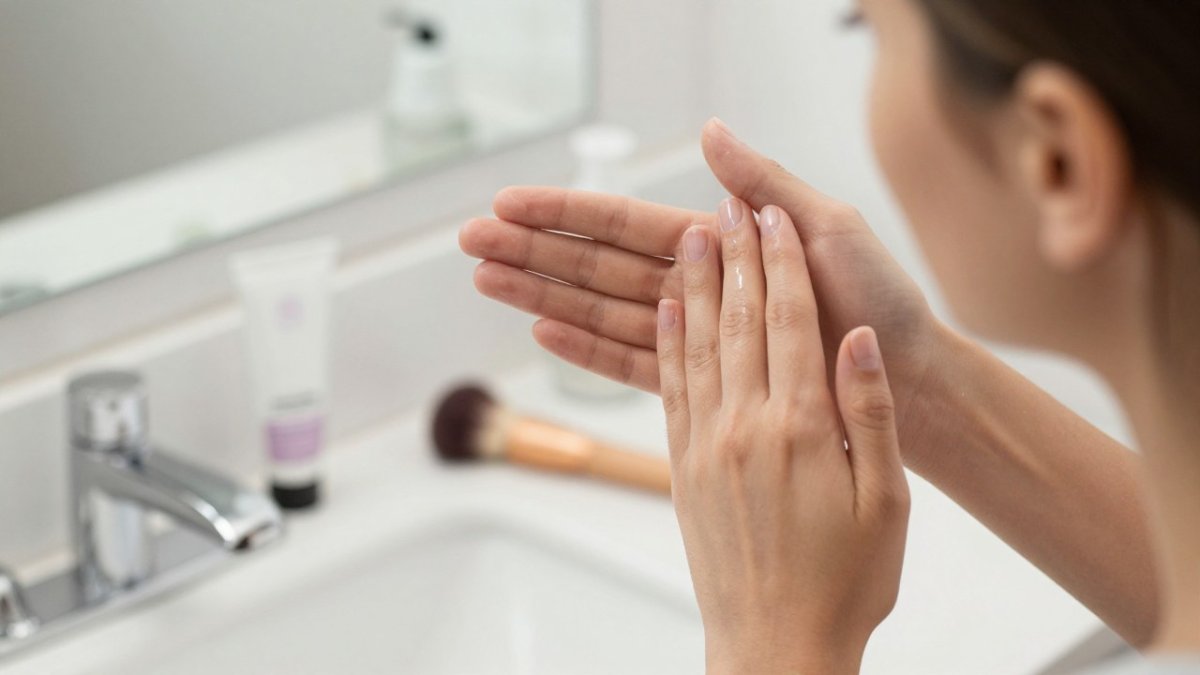
Focus on the areas that need it most, like the T-zone or around the nose. Use light taps and small circles, then let it set. This keeps the layer thin and even.
!Close-up of a woman's hands pressing a small amount of clear primer onto her cheek in a bright bathroom vanity
Skin Prep Before Makeup for Oily Skin
Oily skin needs a few changes to the routine. Use a lightweight gel moisturizer instead of a rich cream, since heavy layers can slide off by midday.
Blot excess oil with a tissue before you apply primer. Otherwise, the oil underneath can break the primer down.
Choosing a Primer by Skin Type and Makeup Goal
Match the primer to your skin and your finish:
- Dry skin: choose a hydrating primer that adds moisture and softness.
- Oily skin: choose a mattifying primer to control shine.
- Combination skin: use a mattifying primer on the T-zone and a hydrating one on dry areas.
- Glowy look: pick a primer with a light shimmer or radiant finish.
- Long wear: look for a primer that grips the skin and holds foundation in place.
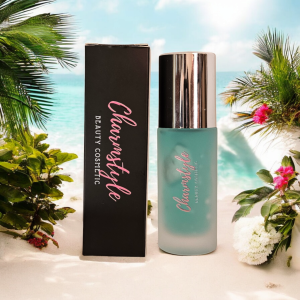
The Charmstyle Facial Primer is a flawless finish option. It is a lightweight, velvety formula that controls oil for a matte finish.
How to Apply Primer, Foundation and Concealer in Order
Layering in the right order keeps the base even:
- Primer on clean, moisturized skin.
- Foundation with a damp sponge or brush, starting in the center of the face.
- Concealer only where you need it, like under the eyes or on blemishes.
- Set with powder if you want longer wear.
Let each layer set for about a minute before the next. If the foundation drags or balls up, the primer is likely too thick.
Troubleshooting Pilling and Patchy Makeup, and When to Skip Primer
Pilling looks like tiny rolls or flakes of product sitting on top of the skin. It almost always comes down to one of three causes: too much product, not enough drying time between layers, or incompatible formulas. If your moisturizer is rich and your primer is silicone-heavy, the two can repel each other and ball up. The fix is to use less of each, wait longer after moisturizer, and press the primer on rather than rubbing it in. If pilling continues, try a water-based primer over a water-based moisturizer, or skip the primer on that area entirely. Because pilling often starts when layers are applied in the wrong order, EVERGRENE can help you think through how to layer skincare products correctly before adding primer.
Patchiness usually comes from uneven application or from applying foundation before the primer has set. Press the product on with light taps instead of swiping, blend the edges of each layer, and give the primer a full minute or two to dry before foundation. If foundation drags or balls up as you apply it, the primer is likely too thick or still wet.
Separation, where foundation breaks apart over the primer, often means the primer and foundation have mismatched bases (for example, a silicone primer under a water-based foundation). Let each layer set, and if separation persists, switch to a primer with a base that matches your foundation.
When to skip primer: primer is a helper, not a requirement. Skip it on days when your skin feels sensitive or irritated, when you are wearing only a light tinted moisturizer, or when your foundation is a heavy-coverage formula that already grips well on its own. A common pattern is that people with smooth, balanced skin get little visible benefit from primer and may find it makes makeup look heavier. If you are unsure, try going without primer for a week and compare how your makeup wears, that comparison will tell you more than any product claim.
Start Your Primer Routine With the Charmstyle Facial Primer
Ready to try a simple prep routine? The Charmstyle Facial Primer is priced at $9.00. You can get the Charmstyle Facial Primer and follow the timed steps above for a smoother base.
For a full guide to avoiding patchy color on your lips, read how to prevent patchy lip color. If you are building out your routine, you can also browse makeup bags to keep your products organized.
Frequently Asked Questions
How do you use face primer before makeup?
Cleanse your face, apply moisturizer, and wait a few minutes for it to absorb. Then dispense a small, pea-sized amount of facial primer, which is roughly the size of a pea for a full face. Warm it between your fingertips or press it onto your skin with your fingers, focusing on areas with visible pores, fine lines or oil. Let it set for about one to two minutes before applying foundation. Using too much primer is a common mistake, since excess product can cause pilling or make foundation slide around during the day.
Should primer go on before or after moisturizer?
Primer goes on after moisturizer, not before. Moisturizer hydrates and creates a barrier, and primer needs a moisturized surface to glide smoothly. Allow your moisturizer to absorb for a few minutes so the skin feels soft but not greasy. Applying primer over wet or heavy moisturizer often causes pilling, where the product rolls up into little balls. If you use sunscreen, apply it before primer and let it settle as well.
How much face primer should you use?
A small, pea-sized amount is enough for most faces. Start with less than you think you need, since you can always add a little more. Oily or textured areas may need a second, tiny layer, while dry areas usually need only the initial amount. Using too much primer can create a slippery base that breaks down foundation and shortens wear time. Check the product label, because some formulas are more concentrated and need an even smaller amount.
How long should you wait after applying primer before foundation?
Wait about one to two minutes after applying primer before adding foundation. This gives the primer time to set and form a smooth layer. If you apply foundation too soon, the two products can mix, which may cause patchiness or uneven coverage. If the primer still feels tacky after a couple of minutes, it is generally ready. Thin layers of primer dry faster than thick ones, so keeping the amount small also speeds up the process.
