

Table of Contents
- Why Long-Lasting Lip Tint Clings So Stubbornly
- What You'll Need for Effective Lip Tint Removal
- Step-by-Step: How to Remove Long-Lasting Lip Tint Effectively
- The Best Oil-Based Makeup Remover for Lips (and How to Use It)
- Gentle Exfoliation: Removing Dead Skin Cells Without Irritation
- How to Prevent Dry Chapped Lips After Tint Removal
- Post-Removal Barrier Repair: Restoring Your Lip Barrier
- Common Mistakes to Avoid When Removing Lip Tint
- Frequently Asked Questions
Last Updated: October 3, 2026
Why Long-Lasting Lip Tint Clings So Stubbornly
Long-lasting lip tint is built to stay put, and that is exactly why removing it takes more than a quick swipe.
At Charmstyle Beauty Cosmetics, we talk to customers every week who love how a tint survives coffee and lunch, then panic when it will not come off at night.

Here is the core problem: water alone will not break down a long-wear tint. You need a solvent that dissolves pigment, plus patience.
What You'll Need for Effective Lip Tint Removal
The right tools make lip tint removal fast and gentle. You do not need a drawer full of products. A few basics cover almost every formula.
Essential Tools and Products
- Oil-based cleanser or cleansing balm to break down pigment
- Dual-phase makeup remover for stubborn, long-wear tints
- Micellar water for a final clean pass
- A gentle lip scrub for built-up dead skin cells
Skip anything harsh. Avoid isopropyl alcohol on your lips, since it strips moisture and can leave them stinging. A makeup solvent made for the face is safer and works better.

Step-by-Step: How to Remove Long-Lasting Lip Tint Effectively
Learning how to remove long-lasting lip tint effectively comes down to three moves: loosen, wipe, repeat. The whole process takes about two minutes. Here is the routine we recommend.
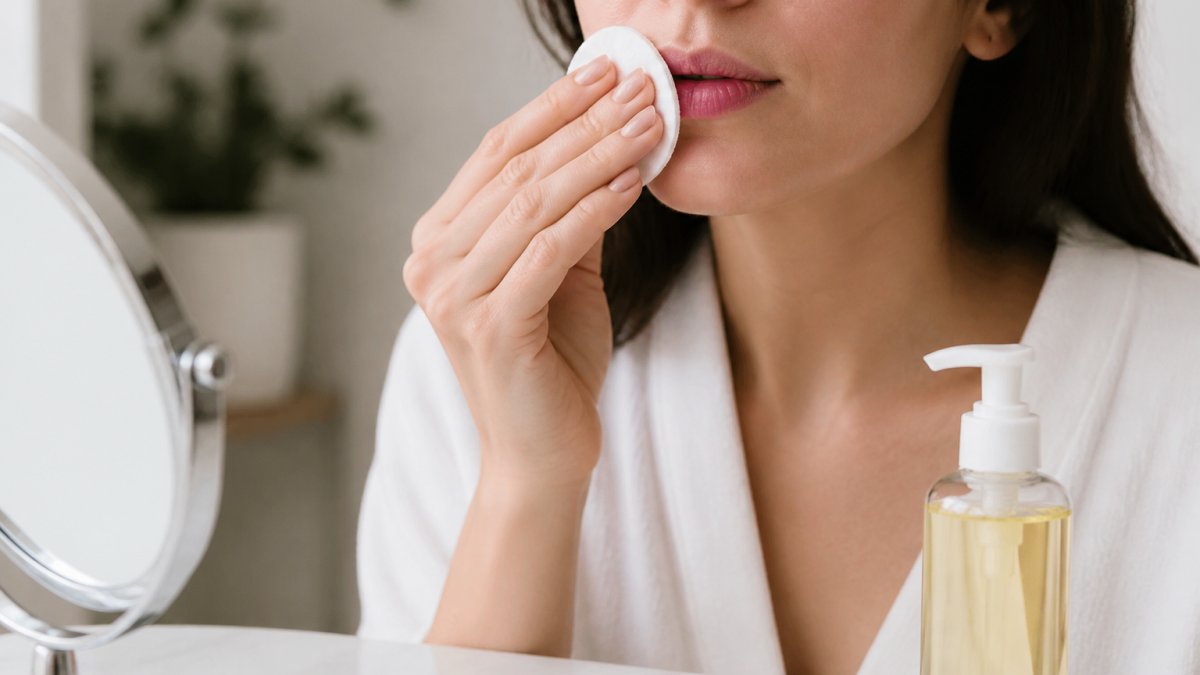
Step 1: Loosen the Pigment with an Oil-Based Cleanser
Apply an oil-based cleanser to dry lips and let it sit for 30 to 60 seconds. The oil needs time to dissolve the pigment and film. Do not rush this step.
Massage in small circles so the cleanser reaches every crease. You will see color start to lift onto your fingertips. That is the pigment breaking down.
Step 2: Wipe Away Without Tugging
Press a soft cotton pad against your lips and hold for a few seconds. Then wipe once, gently. Use a dabbing motion instead of dragging.
If color remains, do not scrub. Move to the next step and let the solvent do the work. Tugging is what causes irritation and chapping.
Step 3: Address Stubborn Residue with Dual-Phase or Micellar Formulas
Shake a dual-phase makeup remover and soak a fresh cotton pad. Press it to your lips and hold for 10 seconds, then wipe. The oil layer lifts the pigment while the water layer clears residue.
For a final pass, sweep micellar water over your lips. This removes any leftover film so nothing sits on your lip barrier overnight.
| Step | Product | Time | Goal |
|---|---|---|---|
| 1 | Oil-based cleanser | 30-60 sec | Dissolve pigment |
| 2 | Cotton pad | 10 sec | Lift color gently |
| 3 | Dual-phase or micellar | 10-20 sec | Clear residue |
The Best Oil-Based Makeup Remover for Lips (and How to Use It)
There is no single best remover, because long-wear tints are not all built the same way. Match the solvent to the formula and removal takes seconds instead of minutes. Mismatch it and you scrub, which is where irritation starts.
Identify Your Tint Type First
Read the ingredient panel or the product description and sort your tint into one of three families:
- Water-based stains (tints, waters, most Korean-style lip tints): These use water-soluble dyes that penetrate the top layer of lip skin. They fade unevenly and leave a pinkish halo. Water alone smears them around; oil lifts them cleanly.
- Oil-based and wax-based long-wear lipsticks: These rely on film-formers and waxes that sit on top of the lip. They survive water easily but break down fast under oil.
- Peel-off and transfer-proof tints: These form a flexible polymer film. They resist both water and plain oil, and usually need a dual-phase remover or a cleansing balm worked in for a full minute.
Match the Solvent to the Formula
| Tint type | Best first solvent | Why it works | Typical dwell time |
|---|---|---|---|
| Water-based stain | Cleansing oil or balm | Oil dissolves the dye carrier and lifts pigment from creases | 30-60 sec |
| Oil/wax long-wear | Cleansing balm | Balm melts wax and film-formers on contact | 30-45 sec |
| Peel-off / transfer-proof | Dual-phase remover | Oil phase breaks the polymer film, water phase rinses residue | 45-60 sec |
How to Pick a Product That Emulsifies
Look for a cleansing balm or oil that turns milky when you add water. That emulsifier is what lets you rinse clean instead of leaving a slippery film that traps pigment overnight.
- Cleansing balm: Best for dry or sensitive lips. Melts into an oil as you massage, then rinses without stripping.
- Cleansing oil: Lightweight and fast. Works on most water-based and wax-based tints.
- Dual-phase remover: The heavy hitter for waterproof and transfer-proof formulas. Shake before every use, because the layers separate.
The Order of Operations Matters
Apply to dry lips first. Oil and water do not mix, so adding water before the oil has done its work dilutes the solvent and weakens it. Massage for the full dwell time, then add a splash of water to emulsify, then wipe with a damp cotton pad.
A Note on Solvent Safety
A dedicated makeup solvent made for the face is the right tool. Isopropyl alcohol, acetone, and nail polish remover are not, they strip the lip barrier, sting on contact, and can leave lips raw for days. If a product is not labeled for use around the eyes or lips, keep it off your lips.
CHARMSTYLE BEAUTY KIWI LIPSCRUB →
Gentle Exfoliation: Removing Dead Skin Cells Without Irritation
Tint clings to dry, flaky patches, so gentle exfoliation keeps removal easy.
Our Charmstyle Beauty Kiwi Lip Scrub is made to buff away dry, flaky skin while it hydrates. Apply a small amount and massage in circles, then rinse.
For a berry-scented option, the Strawberry Lip Scrub follows the same routine. Either one preps your lips so color goes on smoother next time.
How to Prevent Dry Chapped Lips After Tint Removal
Knowing how to prevent dry chapped lips matters as much as the removal itself. Long-wear tints and solvents both pull moisture, so your lips need it back fast.
Follow these habits:
- Apply a hydrating balm within a minute of removing tint
- Avoid licking your lips, which dries them further
- Drink water through the day to support your lip barrier
- Skip matte, long-wear tints on days your lips already feel tight
Our Charmstyle Beauty Lip Balm delivers color and moisture together, so you can skip the drying tint on sensitive days. Swipe it on for a comfortable finish that still looks polished.

Post-Removal Barrier Repair: Restoring Your Lip Barrier
Your lip barrier is the thin outer layer that locks in moisture and keeps irritants out. Every tug, every harsh solvent, and every over-exfoliation chips away at it. The rebound dryness people blame on the tint is usually barrier damage from removal, not the tint itself. Repair is a protocol, not a single balm swipe.
What Barrier Damage Actually Looks Like
Catch it early and you can fix it in a night or two. Ignore it and you get cracked, stinging lips that make the next tint application look patchy.
- Tightness or a pulling sensation right after removal
- Flaking along the lip line, especially at the corners
- Stinging when you apply anything, even water
- Color that fades unevenly the next day because pigment sinks into rough patches
The Three-Step Recovery Protocol
Work in this order. Each step has a job, and skipping one weakens the next.
- Rehydrate with a humectant. Glycerin, hyaluronic acid, or panthenol pulls water into the lip surface. Apply to damp lips so the humectant has water to grab.
- Seal with an occlusive. A balm built on petrolatum, shea butter, or lanolin sits on top and stops that water from evaporating. This is the step most people skip, and it is why their lips stay dry even after they moisturize.
- Protect overnight. Lips renew while you sleep, so the heaviest layer goes on right before bed. A thick balm or a lip mask works better than a daytime swipe because it stays put for hours.
A Simple Nightly Routine
- Remove tint with the matched solvent from the section above
- Pat lips dry, do not rub
- Apply a humectant layer to slightly damp lips
- Top with an occlusive balm
Give Lips a Recovery Day
Once a week, skip long-wear tint entirely. Wear a tinted balm or a sheer lipstick instead. This gives the barrier a full day to rebuild without solvent exposure. Most people notice smoother application and longer wear the next time they use a long-wear tint.
When to Back Off and See a Professional
If lips stay cracked, bleeding, or sore for more than a few days despite consistent balm use, stop exfoliating and stop using long-wear tints. Persistent cracking at the corners can be angular cheilitis, which is a medical issue, not a cosmetic one. See a doctor or dermatologist rather than layering on more product.
Common Mistakes to Avoid When Removing Lip Tint
Most lip irritation comes from a handful of easy-to-fix mistakes. Watch for these:
- Scrubbing with a dry cloth. It tears at the lip barrier. Soak first.
- Using isopropyl alcohol. It strips moisture and stings. Choose a makeup solvent.
- Skipping the oil step. Water cannot break down long-wear pigment on its own.
- Exfoliating too often. Two to three times a week is plenty.
Frequently Asked Questions
What is the best way to remove stubborn lip stain?
Start with an oil-based cleanser or cleansing balm, massage it into your lips for 30 seconds to dissolve the pigment, then wipe gently with a cotton pad. If residue remains, follow with a dual-phase makeup remover. Avoid rubbing hard, as that damages your lip barrier. For extra stubborn stains, a gentle lip scrub used 2-3 times a week can help lift leftover color without irritation.
Can oil-based cleansers remove long-lasting lip tint?
Yes. Oil-based cleansers are the most effective first step for removing long-lasting lip tint because the oils break down the pigment and waxes that make tints adhere. Massage a small amount onto dry lips, let it sit for a few seconds, then wipe away with a soft cotton pad. For best results, choose a non-drying, fragrance-free formula and follow with a hydrating lip balm.
How do I remove lip stain without drying out my lips?
Avoid isopropyl alcohol and harsh wipes. Instead, use a two-step method: first an oil-based cleanser to dissolve pigment, then a micellar water or dual-phase remover for any remaining color. After removal, apply a thick layer of a moisturizing lip balm or lip therapy product to lock in moisture. This routine keeps your lip barrier intact and prevents chapping.
Is it safe to use makeup remover wipes on lip tint?
Makeup remover wipes can work in a pinch, but many contain alcohol or exfoliating textures that irritate the lips. If you use them, choose a gentle, non-drying formula and press the wipe against your lips for a few seconds before wiping. Follow immediately with a hydrating lip balm. For daily removal, an oil-based cleanser or dual-phase makeup remover is gentler and more effective on long-lasting lip tint.
Removing long-lasting lip tint should never leave your lips sore or dry. With the right oil-based cleanser, a gentle touch, and a little after-care, you can take color off as easily as you put it on. Charmstyle Beauty Cosmetics makes that routine simpler with lightweight, wearable lip products and nourishing after-care. Explore our lip scrub and lip balm to keep your lips soft, hydrated, and ready for your next shade.