

Table of Contents
- IT Cosmetics Lip Tint vs Natural: Key Differences at a Glance
- How We Compared Lip Tint Formulas
- Ingredients Breakdown: What Is in Your Lip Tint?
- Wear Time and Comfort: Which Lasts Through Lunch?
- Why pH-Reactive Formulas Change Color on Your Lips
- Natural Lip Tint Ingredients to Avoid
- Clean Beauty Lip Stain Brands Worth Trying
- Best Non Sticky Lip Gloss Formulas for a Natural Finish
- Frequently Asked Questions
Last Updated: September 5, 2026
IT Cosmetics Lip Tint vs Natural: Key Differences at a Glance
The it cosmetics lip tint vs natural debate really comes down to one question: do you want a formula engineered for maximum pigment payoff, or one that works with your skin's own chemistry for a softer, more personal result? A lip tint is a lightweight, water-based color product that stains the lips with a sheer wash of color rather than sitting on top like a traditional lipstick. In this guide from Charmstyle Beauty Cosmetics, we break down the ingredient lists, wear times, and color payoff of both approaches so you can choose the formula that fits your routine.

Most mainstream lip tints rely on high concentrations of synthetic pigments to deliver that uniform, almost painted-on look. Natural lip stains, by contrast, often use plant-derived pigments and pH-reactive ingredients that create a color unique to you. Neither is objectively wrong, but they suit different priorities. If you want a precise, repeatable shade every single time, a heavily pigmented tint delivers. If you prefer a revived-from-within flush that looks like your lips but better, a natural formula is the smarter pick.
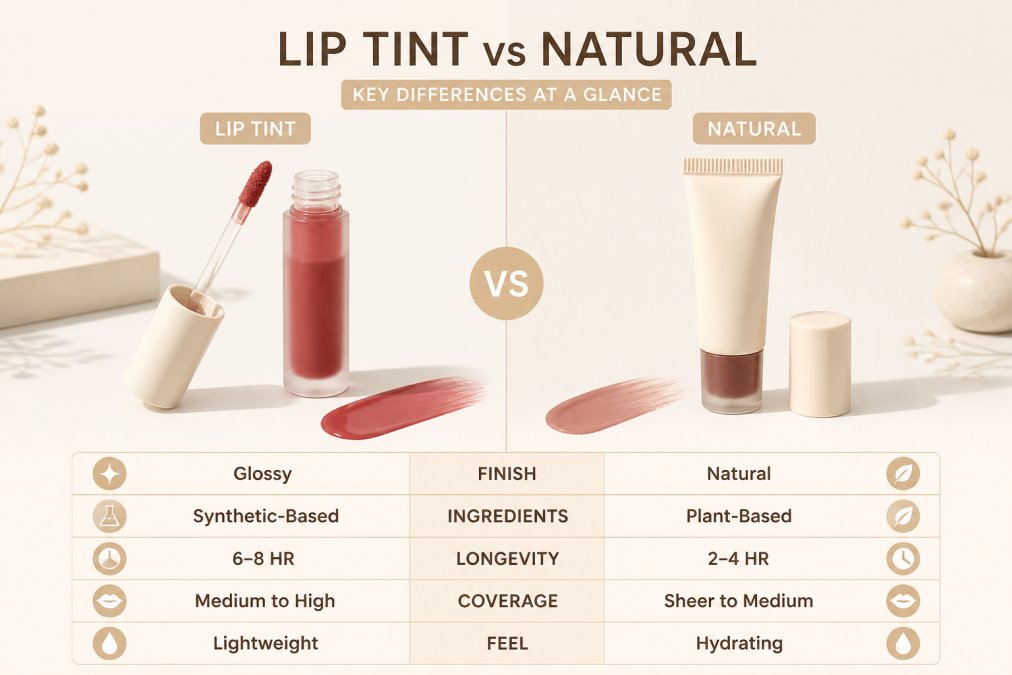
| Feature | Traditional Lip Tint | Natural Lip Stain |
|---|---|---|
| Color Mechanism | Synthetic pigments | pH-reactive, plant-based |
| Finish | Uniform, opaque | Sheer, personalized |
| Key Ingredients | Dyes, polymers | Fruit extracts, oils |
| Best For | Exact shade matching | Effortless, natural look |
How We Compared Lip Tint Formulas
We evaluated formulas across five criteria: ingredient transparency, wear time, comfort, color adaptability, and how well each product respects the lip barrier. A common mistake is judging a lip product only by its first swipe. The real test is how your lips feel after four hours, and whether the color fades evenly or leaves patchy remnants.
A quality natural lip stain should feel balm-like on application, then dries down to a transfer-proof finish. The best formulas use emollients like jojoba or shea to keep lips hydrated while the pigment sets. Synthetic tints often skip these moisturizing agents, which is why many women report that tight, dry feeling by mid-afternoon.

Ingredients Breakdown: What Is in Your Lip Tint?
The ingredient list separates these two categories faster than any marketing claim. Traditional lip tints typically contain synthetic dyes like Red 7 Lake or Blue 1 Lake, along with polymers that form a film over the lip. These deliver intense staining power and uniform color, but they offer little in the way of nourishment.
Natural lip stain ingredients to avoid include certain essential oils that can irritate sensitive skin, and some brands still use carmine, a pigment derived from crushed insects. For a genuinely clean formula, look for water-based stains with fruit-derived pigments. Many eco-conscious consumers now check whether a brand holds cruelty-free certifications and uses vegan ingredients exclusively, standards that the FDA's cosmetic labeling guidelines require to be disclosed accurately on packaging.
Wear Time and Comfort: Which Lasts Through Lunch?
Traditional tints win on raw longevity, often holding color through a meal with minimal touch-up. That staying power comes from film-forming polymers that bond tightly to the lip surface. The trade-off is comfort: those same polymers can feel drying by hour three, especially if you already have sensitive, dry lips.
Natural stains take a different approach. They penetrate the top layers of the lip rather than coating them, which is why the color fades gradually instead of disappearing in patches. A hydrating formula with natural oils keeps lips soft even as the pigment fades. For most workdays, a quality natural stain survives coffee and a sandwich, just with a softer finish by late afternoon. The best non sticky lip gloss formulas offer a middle path, giving you glass-like shine with zero of that heavy, tacky feel.
Why pH-Reactive Formulas Change Color on Your Lips
The most fascinating difference in the lip tint vs natural comparison is how pH-reactive stains work, and the science is more precise than a simple "adapts to your skin." These formulas contain colorless dye precursors, most commonly from the fluoran or xanthene dye families. When applied to your lips, the dye molecules come into contact with the slightly acidic moisture on your skin's surface. That acidity triggers a chemical reaction: a hydrogen ion binds to the dye molecule, changing its electron configuration so it absorbs and reflects light differently. The result is a visible shift to a rosy pink or berry hue.
The color you see is not random. Your lips' pH typically hovers between 4.5 and 6.5, and within that range, the dye's color intensity and undertone shift predictably (peer-reviewed research). Lower pH (more acidic) tends to produce brighter, cooler pinks, while higher pH pushes toward warmer, deeper berries. This is why the same tube can look like a soft petal pink on one person and a vivid raspberry on another, their skin chemistry is genuinely different. It is also why the color deepens over the first minute after application: the reaction takes time to reach equilibrium.
This chemistry is also why pH-reactive stains flatter nearly all skin tones. The color literally adapts to your biology, creating a flush that looks believable rather than painted on. Traditional tints cannot do this because their pigment is fixed before application. If you have ever wondered why a "universal" shade looks orange on your friend but berry on you, pH chemistry is the answer. This personalized color is the closest thing makeup offers to a custom shade, and it is the reason natural stains produce that coveted bitten look.
One trade-off worth knowing: because the color depends on your skin's pH, it is less predictable than a synthetic pigment. You cannot guarantee an exact match to a swatch photo. If your skin's pH shifts, due to hormonal changes, certain medications, or even what you ate, the same tube may wear slightly differently from week to week. For most users, that variability is part of the charm. For someone who needs a precise, repeatable shade for a special occasion, a traditional tint is the safer choice.
Natural Lip Tint Ingredients to Avoid
Even in the clean beauty space, not every ingredient earns its place. Some natural formulas rely on citrus essential oils for scent, which can cause photosensitivity on lips exposed to sun. Others use high concentrations of menthol or camphor for a plumping tingle that actually irritates the lip barrier over time. The ingredient most commonly overlooked is fragrance itself. Dermatologist-tested formulas skip synthetic fragrance entirely, since it is a leading cause of contact dermatitis on the delicate lip area.
Beyond the obvious irritants, there are three specific ingredients to scrutinize on a "natural" label:
- Carmine (CI 75470): A red pigment derived from crushed cochineal insects. It is natural, but it is not vegan, and it triggers allergic reactions in a small but meaningful percentage of users. If you see it on a label and have sensitive skin, proceed with caution.
- Lanolin: A common emollient derived from sheep's wool. It is deeply moisturizing, but it is also a known allergen for roughly 1-3% of people with sensitive skin. For those individuals, even a "clean" stain with lanolin will cause flaking and itching.
- Beeswax: While generally safe, beeswax can trap previous layers of product against the lip, which matters if you layer a stain over a balm. It is also not vegan, which conflicts with the clean beauty standards many eco-conscious consumers now apply.
A truly clean lip stain lists its plant pigments clearly, uses a simple emollient base, and avoids the long chain of unpronounceable polymers found in conventional tints. When you flip over a tube and recognize every ingredient, you know the brand is committed to lip health rather than just color.
How to Remove Long-Wear Stains Without Damaging Your Lips
Long-wear stains, whether natural or synthetic, are designed to bond to the lip surface. That same staying power makes them difficult to remove, and aggressive scrubbing damages the delicate lip barrier. The lip barrier is thinner than the skin on the rest of your face and has fewer oil glands, so it loses moisture faster and recovers more slowly.
After removal, always follow with a barrier-repairing balm containing ceramides or shea butter. This replenishes the lipids that the stain and the removal process stripped away. If you wear a long-wear stain daily, consider giving your lips one or two "bare days" per week to recover. A consistent removal and recovery routine prevents the chronic dryness and peeling that heavy stain users often report by the third week of daily wear.
Clean Beauty Lip Stain Brands Worth Trying
The clean beauty lip stain market has grown quickly, and several brands now offer formulas that rival conventional tints on both wear and color. What separates the best from the rest is whether they solve the two biggest complaints with natural stains: weak pigment and short wear time.
A standout option is the CHARMSTYLE BEAUTY LIP STAIN, priced at $14.00. It delivers a lightweight, buildable tint that goes on as a sheer wash and can be layered to a bolder statement without ever feeling heavy or sticky. The hydrating formula keeps lips soft through the day, and the transfer-resistant finish survives lunch. For a deeper berry tone, the CHARMSTYLE BEAUTY BERRY LIP STAIN offers the same comfortable wear at just $3.00. Both are vegan and cruelty-free, aligning with the growing consumer demand for clean beauty products.
Best Non Sticky Lip Gloss Formulas for a Natural Finish
If you want shine without the stain commitment, the best non sticky lip gloss formulas combine a gel-gloss texture with nourishing oils. The trick is finding a formula that delivers high-shine without that heavy, glue-like sensation that makes you want to wipe it off by noon.
The CHARMSTYLE BEAUTY TWILIGHT ROSE lip gloss nails this balance at $7.00. It gives a sophisticated, sheer rose tint with a shimmery, high-shine finish that enhances your natural lip color. The creamy, hydrating base is free of stickiness, making it comfortable for all-day wear. For an even lighter touch, the LIP Hydration Clear Gloss delivers a glass-like finish that works alone or layered over a stain for added dimension. Both formulas are vegan and built on safe, skin-friendly ingredients that keep lips looking healthy, not just colored.

Choosing between a traditional lip tint and a natural formula means weighing pigment precision against lip health and personalized color. The real winner is the formula that feels comfortable enough to wear daily and fades beautifully rather than crumbling. Charmstyle Beauty Cosmetics builds every stain and gloss around that standard, with lightweight, vegan, and hydrating formulas designed to elevate your natural glow without the heavy feel. Explore the collection and find a shade that works with your chemistry, not against it. Get started with Charmstyle Beauty Cosmetics and discover a lip routine that finally feels effortless.
=== FAQ ANSWERS (ARTICLE CONTENT, AUDIT EACH ONE SEPARATELY, SAME RULES) ===
[1] Q: What is the difference between a lip tint and a lip stain? A: Lip tints and lip stains both add color, but they work differently. A lip stain uses pigments that bond with your lip surface for a transfer-proof finish that fades gradually. A lip tint often has a gel or balm base that gives a sheer wash of color while moisturizing. Clean beauty lip stain brands like Charmstyle offer water-based stains that dry down without the added synthetic dyes.
[2] Q: Are natural lip tints as long-lasting as IT Cosmetics Vitality Lip Flush? A: Yes, when the formula is built around staining pigments rather than oils that slide off. The key is the pigment type and concentration. Plant-based pigments like beetroot extract can last through meals, though they may fade faster than synthetic dyes. Charmstyle Beauty Lip Stain costs $14 and delivers a long-lasting, transfer-resistant tint that stays put without the sticky feel. Apply to clean lips and let it dry for the best staying power.
[3] Q: What ingredients should I avoid in natural lip tints? A: Check the label for synthetic dyes like Red 40 or Yellow 5, which can irritate sensitive skin. Avoid petroleum-based ingredients like paraffinum liquidum, which sit on the surface without hydrating. Fragrance and artificial flavors often trigger reactions on lip skin. Some clean beauty lip stain brands skip these entirely and use plant-derived pigments, natural oils like jojoba, and vitamin E. If you have dry lips, also avoid alcohol-based formulas that pull moisture away.
[4] Q: Do pH-adjusting lipsticks actually work? A: Yes, pH-reactive lip products contain a dye that shifts color based on your skin's acidity level. That is why the same shade looks different on different people. The result is a personalized flush that adapts to your natural lip color. The trade-off? Color can vary unpredictably, and some formulas include dyes that may not suit sensitive lips. A natural lip stain gives you more control over the final shade.
[5] Q: What is the best natural alternative to IT Cosmetics lip tint? A: Charmstyle Beauty Berry Lip Stain is a strong alternative at $3. It uses a lightweight, buildable formula that creates a naturally flushed look without heavy or sticky layers. The water-based stain dries down quickly and resists smudging. For a glossier finish, Charmstyle Twilight Rose offers a sheer rose tint with hydration at $7. Both options are vegan, cruelty-free, and made with ingredients that support lip health rather than just color.
Frequently Asked Questions
What is the difference between a lip tint and a lip stain?
Lip tints and lip stains both add color, but they work differently. A lip stain uses pigments that bond with your lip surface for a transfer-proof finish that fades gradually. A lip tint often has a gel or balm base that gives a sheer wash of color while moisturizing. Clean beauty lip stain brands like Charmstyle offer water-based stains that dry down without the added synthetic dyes.
Are natural lip tints as long-lasting as IT Cosmetics Vitality Lip Flush?
Yes, when the formula is built around staining pigments rather than oils that slide off. The key is the pigment type and concentration. Plant-based pigments like beetroot extract can last through meals, though they may fade faster than synthetic dyes. Charmstyle Beauty Lip Stain costs $14 and delivers a long-lasting, transfer-resistant tint that stays put without the sticky feel. Apply to clean lips and let it dry for the best staying power.
What ingredients should I avoid in natural lip tints?
Check the label for synthetic dyes like Red 40 or Yellow 5, which can irritate sensitive skin. Avoid petroleum-based ingredients like paraffinum liquidum, which sit on the surface without hydrating. Fragrance and artificial flavors often trigger reactions on lip skin. Some clean beauty lip stain brands skip these entirely and use plant-derived pigments, natural oils like jojoba, and vitamin E. If you have dry lips, also avoid alcohol-based formulas that pull moisture away.
Do pH-adjusting lipsticks actually work?
Yes, pH-reactive lip products contain a dye that shifts color based on your skin's acidity level. That is why the same shade looks different on different people. The result is a personalized flush that adapts to your natural lip color. The trade-off? Color can vary unpredictably, and some formulas include dyes that may not suit sensitive lips. A natural lip stain gives you more control over the final shade.
What is the best natural alternative to IT Cosmetics lip tint?
Charmstyle Beauty Berry Lip Stain is a strong alternative at $3. It uses a lightweight, buildable formula that creates a naturally flushed look without heavy or sticky layers. The water-based stain dries down quickly and resists smudging. For a glossier finish, Charmstyle Twilight Rose offers a sheer rose tint with hydration at $7. Both options are vegan, cruelty-free, and made with ingredients that support lip health rather than just color.
This article was written using GrandRanker