

Table of Contents
- Lip Stain vs Lip Gloss: The Quick Comparison
- What Is a Lip Stain and What Is a Lip Gloss?
- Finish, Pigmentation, and Wear Time Compared
- How to Apply Lip Stain for a Natural Look
- Long-Lasting Natural Lip Makeup: What Actually Stays Put
- The Best Clean Beauty Lip Products for Everyday Wear
- Layering, Skin Tone, and Removal Tips
- Conclusion
- Frequently Asked Questions
Last Updated: September 16, 2026
Lip Stain vs Lip Gloss: The Quick Comparison
The lip stain vs lip gloss decision comes down to one trade-off: pigment that stays versus shine that moves. A stain soaks color into the lip surface for a soft, flushed result that survives coffee and lunch. A gloss sits on top, reflecting light and adding moisture, but transfers onto cups and needs regular touch-ups. This guide from Charmstyle Beauty Cosmetics breaks down how each behaves, where each wins, and how to layer them.

| Factor | Lip Stain | Lip Gloss |
|---|---|---|
| Finish | Semi-matte, natural | High-shine, glossy |
| Wear time | Hours, transfer-resistant | 1-2 hours before reapplication |
| Pigmentation | Buildable, sheer to bold | Sheer to medium, often tinted |
| Feel | Weightless, dries down | Emollient, cushioned |
| Best for | All-day color, low-maintenance days | Hydration, instant polish, layering |
| Touch-ups | Rare | Frequent |
What Is a Lip Stain and What Is a Lip Gloss?
A lip stain is a water- or gel-based color product that dyes the lip surface for long-wear, transfer-resistant results. A lip gloss is an oil- or wax-based product that coats the lips in shine and emollients without deeply setting color. The two work on different principles, which is why they behave so differently over a full day.

Lip Stain: The Flushed Tint
Stains use staining agents that bind color to the lip, so the result reads as a flushed tint rather than a painted layer. The finish is typically semi-matte, and the color looks like it's coming from your lips rather than sitting on them.
Lip Gloss: The High-Shine Finish
Gloss is built on emollients and oils that sit on the lip surface, giving a high-shine, non-sticky finish when well made. It hydrates, smooths the look of fine lines, and adds instant dimension.
Finish, Pigmentation, and Wear Time Compared
Wear time is where the two separate most sharply, and the reason is mechanical. A stain's color comes from dyes and pigments that bind to the surface cells of the lip, so once the carrier evaporates, the color is essentially part of the lip for the life of those cells, which is why a quality stain holds for hours and resists transfer.
Here is the practical breakdown:
| Factor | Lip Stain | Lip Gloss |
|---|---|---|
| How color attaches | Binds to lip surface cells | Sits in a film on top |
| Typical wear | Several hours, transfer-resistant | 1-2 hours, transfers on contact |
| Pigment range | Sheer to bold, buildable | Sheer to medium |
| Finish | Semi-matte, skin-like | Reflective, plumping look |
| Behavior on dry lips | Settles into texture, looks patchy | Smooths and masks texture |
| Reapplication | Rare; stacking causes patchiness | Frequent; easy to refresh |
How to Apply Lip Stain for a Natural Look
The natural look lives or dies on application technique. Stain applied straight from the applicator to the full lip reads as makeup. Stain pressed in with a fingertip and blurred at the edges reads as your own color.

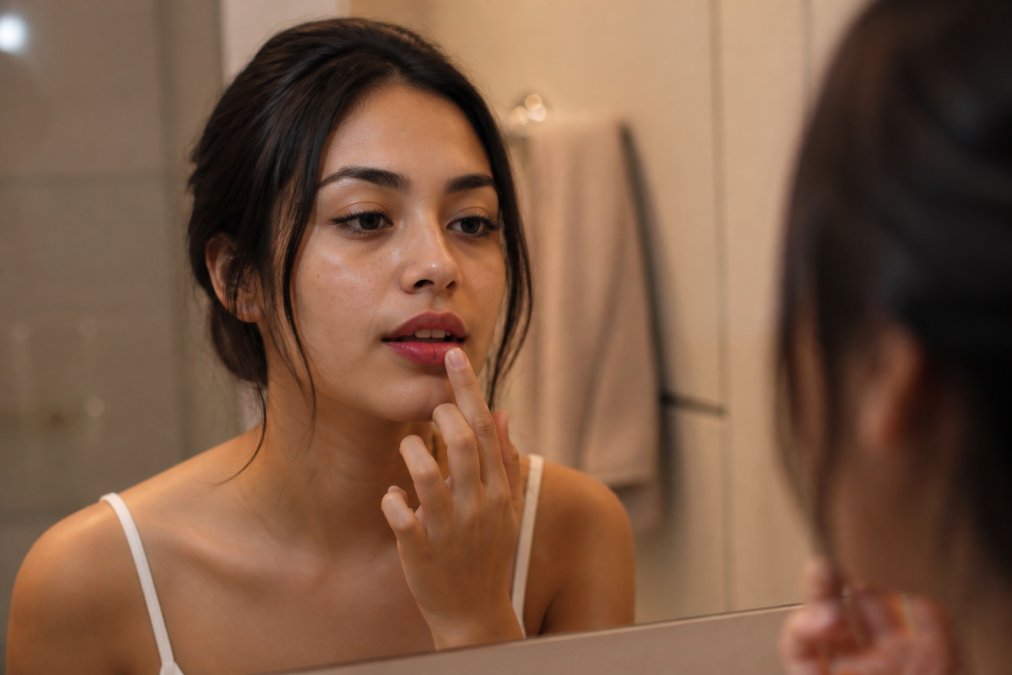
Here's the method that works consistently:
- Exfoliate gently and apply a thin layer of lip balm. Wait a minute, then blot the excess.
- Dot the stain in the center of your lower lip, not along the edges.
- Press and blend outward with your ring finger, fading the color before it reaches the lip line.
- Add a second layer only in the center if you want more depth.
- Let it dry fully before applying anything over it.
Long-Lasting Natural Lip Makeup: What Actually Stays Put
Long-lasting natural lip makeup depends less on the product category than on what you put underneath it. Hydrated lips hold color evenly; dry lips shed it in patches.
A few habits make the biggest difference:
- Prep with balm, then blot. Residual oil breaks down stain adhesion, so leave a thin layer, not a thick one.
- Let each stain layer dry completely before adding the next.
- Skip heavy lip liner for a natural finish. A blurred edge does the work instead.
- Carry a clear gloss for touch-ups rather than reapplying stain. Stacking stain on top of stain is what creates that uneven, patchy look people complain about.
The Best Clean Beauty Lip Products for Everyday Wear
The best clean beauty lip products for everyday wear share three traits: comfortable formulas, buildable color, and ingredients that support the lip barrier.
Layering, Skin Tone, and Removal Tips
Most comparisons stop at "stain for longevity, gloss for shine" and never address the three things that determine whether a natural look works on you: your undertone, how you combine the products, and how you remove a long-wear stain without wrecking your lips.
Match the shade to your undertone, not just your skin depth
A stain looks most natural when the shade sits one to two steps deeper than your bare lip color and shares your undertone. The failure mode is a mismatch in temperature, not depth: on cool or pink-based lips, a warm peach or brick stain can pull orange and read as makeup; on warm or golden-based lips, a cool mauve or berry can turn ashy and gray.
Build a hybrid routine: stain as the base, gloss as the highlight
Layering order is non-negotiable, stain first, gloss second, always. Reverse it and the gloss film blocks the stain from binding, so you lose the wear time you paid for and end up with color that slides off by lunch. The natural, multi-dimensional finish comes from placement, not piling on product:
- Prep: exfoliate gently, apply a thin balm, wait a minute, blot the excess. Residual oil breaks down stain adhesion, so leave a trace, not a coat.
- Stain: dot in the center of the lower lip, press outward with a fingertip, and fade the color before it reaches the lip line. Let it dry fully.
- Gloss: tap, don't swipe, a clear or nude gloss on the center of the upper and lower lip only. This gives a soft highlight and a hint of volume without turning the whole lip into a lacquered surface.
- Refresh: through the day, reapply gloss only. Stacking stain on top of stain is what produces the patchy, uneven result people complain about.
Remove a long-wear stain without stripping your lip barrier
Stains are engineered to resist transfer, which means they also resist a quick wipe, and scrubbing at them is how people end up with raw, chapped lips. The gentle method is to dissolve the pigment rather than abrade it: massage an oil-based cleanser, a cleansing balm, or plain jojoba or olive oil into the lips for about thirty seconds, let it sit, then wipe with a soft cloth.
Conclusion
The real challenge with a natural lip look isn't choosing between stain and gloss, it's finding products that let you use both without compromising comfort or wear time. Charmstyle Beauty Cosmetics makes that straightforward: buildable, transfer-resistant stains in light pink and berry, plus lightweight glosses in clear and nude pink that layer over them without stickiness. Start with a stain for base color, add gloss where you want shine, and touch up with gloss rather than more pigment.
Frequently Asked Questions
Which is better for a natural look: lip stain or lip gloss?
It depends on the finish you want. A lip stain gives a sheer, just-bitten effect that mimics your natural lip color and lasts through coffee and lunch. A lip gloss adds shine and hydration but needs more frequent touch-ups. For an effortless, low-maintenance look, many people reach for a stain first, then add a clear gloss on top for dimension.
Do lip stains last longer than lip gloss?
Yes. Stains use staining agents that sink into the lip surface, so color stays put for hours and resists transfer. Gloss sits on top of the lips and wears away when you eat, drink, or talk. If you need long-lasting natural lip makeup for a workday, a stain is the better base. A gloss can be reapplied quickly for shine without disturbing the color underneath.
Are lip stains drying compared to lip gloss?
Some traditional stains can feel drying, but modern formulas include emollients and hydrating ingredients. A water-based stain with glycerin or aloe keeps lips comfortable, while an oil-based gloss seals in moisture and adds a glossy texture. If your lips are sensitive or dry, look for a stain that lists hydrating ingredients, or layer a clear gloss over it to protect the lip barrier.
Can you layer lip stain and lip gloss for a natural effect?
Absolutely. Start with a thin layer of lip stain, let it dry for 30 seconds, then dab a clear or nude gloss just in the center of your lips. This gives you the longevity of a stain with the high-shine, non-sticky finish of a gloss. It is one of the easiest ways to get a blurred, flushed look that still feels polished and weightless.
How do I choose between a lip stain and a lip gloss for daily wear?
Think about your routine. If you want to apply once in the morning and forget it, choose a buildable lip stain with transfer-proof color. If you enjoy a hydrating, high-shine finish and do not mind quick touch-ups, a gloss is a great choice. For most busy professionals, a stain plus a clear gloss for layering covers both needs without extra effort.