

Table of Contents
- Understanding Sensitive Lips and Lipstick Irritation
- Lipstick Ingredients to Avoid for Sensitive Skin
- How to Test Lipstick With a Patch Test
- Identifying Your Undertone and Choosing Flattering Shades
- How to Treat Chapped Sensitive Lips Before Applying Color
- Formulas and Finishes That Work Best for Sensitive Lips
- Application Tips and Daily Lip Care Routine
- Conclusion
- Frequently Asked Questions
Last Updated: September 2, 2026
Understanding Sensitive Lips and Lipstick Irritation
Your lips lack oil glands and have thinner skin than the rest of your face, making them vulnerable to irritation from harsh ingredients like fragrances, preservatives, menthol, and synthetic dyes (peer-reviewed research). The challenge is finding a formula that won't leave your lips burning, drying, or peeling. At Charmstyle Beauty Cosmetics, we understand that choosing lipstick for sensitive lips means balancing aesthetics with comfort.
Irritation typically appears as redness, swelling, itching, or a burning sensation within minutes of application. Allergic reactions can cause blistering or significant swelling, while non-allergic irritation, the most common type, stems from ingredient sensitivity rather than a true allergy (peer-reviewed research). Understanding what triggers your specific sensitivity is the first step toward finding lipstick that actually works for you.
Lipstick Ingredients to Avoid for Sensitive Skin
Fragrance and flavor compounds are among the top irritants in lip products. Even "natural" fragrance oils can cause reactions. If a product lists "fragrance," "flavor," or "essential oils," skip it if you have sensitive lips.
Menthol and peppermint derivatives create a cooling sensation but are inflammatory. Menthol activates pain receptors and can leave your lips feeling raw hours after application (peer-reviewed research). Check ingredient lists for menthol, peppermint oil, and spearmint oil.
Synthetic dyes like D&C Red No. 7 are common culprits in sensitivity reactions and can trigger contact dermatitis. Mineral-based pigments are gentler alternatives that still deliver color without irritation risk.
Preservatives like parabens, formaldehyde releasers, and methylisothiazolinone (MIT) prevent bacterial growth but irritate sensitive tissue. Look for products with gentler preservation systems or shorter shelf-life formulas.
Camphor, salicylic acid, lanolin, and certain essential oils (tea tree, eucalyptus) can worsen sensitivity rather than improve it.
The safest approach: prioritize fragrance-free, dye-free formulas with minimal preservatives and nourishing ingredients like ceramides, hyaluronic acid, and plant butters.
How to Test Lipstick With a Patch Test
A patch test takes five minutes and can save you from hours of discomfort or a wasted purchase.
Step 1: Choose your test location. The inner wrist or behind the ear have similar skin sensitivity to your lips but are easier to observe.
Step 2: Apply a small amount. Use a clean applicator to apply a pea-sized amount. Don't rub it in; let it sit on the surface.
Step 3: Wait and observe. Set a timer for 15 minutes. Watch for any redness, itching, burning, or swelling. If nothing appears, apply a bit more and wait another 30 minutes.
Step 4: Leave it on overnight (optional). Apply the product before bed to reveal delayed reactions that a quick test might miss.
Step 5: Wash off and assess. Remove the product with gentle soap and water. Check the area again after 24 hours. Any lingering redness or irritation means this product isn't for you.
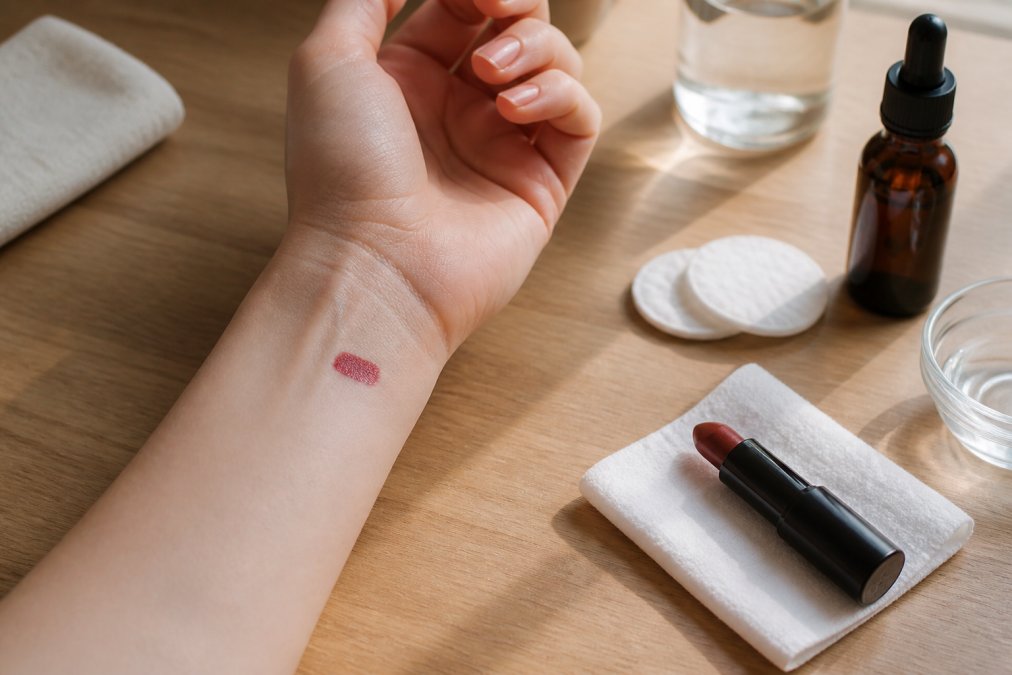
If your patch test passes, start with a thin layer on your lower lip first. If that feels comfortable after 10 minutes, apply to both lips. This graduated approach catches any lip-specific reactions before you've applied full color.
Identifying Your Undertone and Choosing Flattering Shades
Your undertone determines which lipstick shades will harmonize with your complexion. Many people with sensitive lips get stuck here: they find a formula that works but choose a shade that looks wrong on them.
Undertone basics: Your skin has warm, cool, or neutral undertones.
- Warm undertones (golden, peachy, olive) pair beautifully with terracottas, warm reds, coral, warm browns, and golden nudes.
- Cool undertones (pink, red, blue) shine with berry, plum, wine, cool reds, and pink nudes.
- Neutral undertones work with both warm and cool shades, giving you the most flexibility.
How to identify your undertone: Look at the veins on your inner wrist under natural light. Greenish veins indicate warm undertones; bluish or purple veins indicate cool undertones. If you can't decide, you're probably neutral. Alternatively, hold a gold bracelet and a silver bracelet next to your skin, whichever metal looks more flattering indicates your undertone.
Matching lipstick to natural lip color: Deeper natural lip colors can handle bolder, more saturated shades. Lighter natural lips often look better with sheer or muted tones. If you have warm undertones and light natural lips, a warm nude with sheer coverage looks polished. If you have cool undertones and deeper natural lips, a berry or wine shade with fuller pigmentation looks intentional and balanced.
Testing shades on your lip: Swatch the lipstick on your lip in natural daylight before committing. Wear it for at least five minutes to see how it settles and how your natural lip color influences the final shade.
How to Treat Chapped Sensitive Lips Before Applying Color
Applying lipstick over chapped, flaking skin is uncomfortable and looks patchy. Prep work is non-negotiable.
Gentle exfoliation is the first step. Use a soft lip scrub designed for sensitive skin. The Charmstyle Beauty Kiwi Lipscrub or Strawberry Lipscrub work gently to remove dead skin while infusing moisture. Massage in circular motions for 30 seconds, then rinse with lukewarm water.

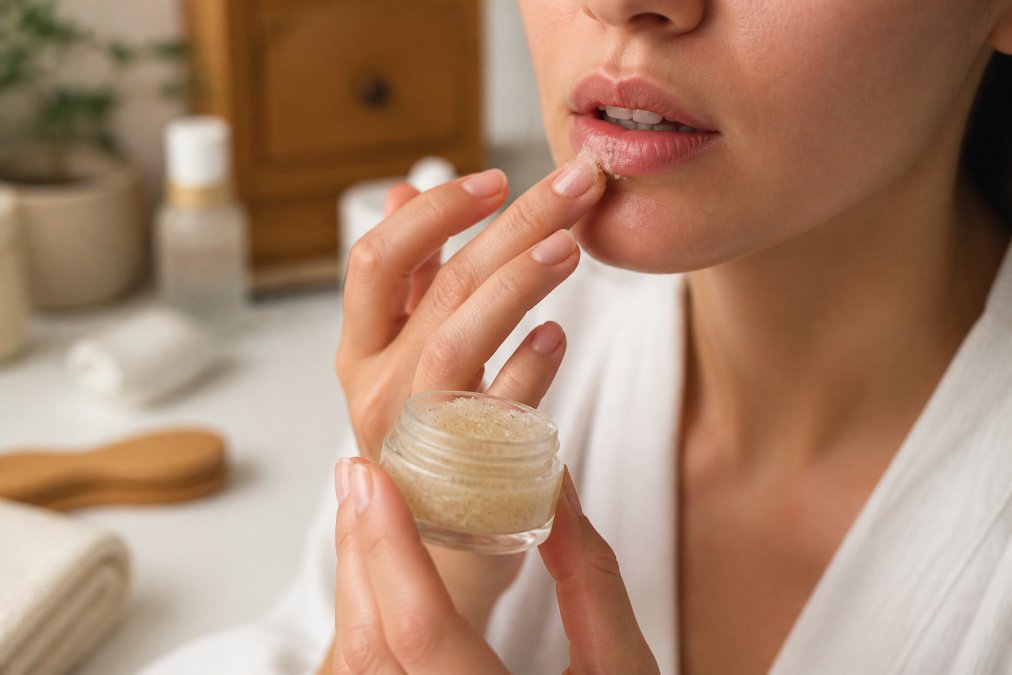
Hydration comes next. Apply a nourishing lip balm immediately after exfoliating, while your lips are still slightly damp. Look for balms with ceramides, hyaluronic acid, or plant butters like shea or cocoa butter. Avoid anything with menthol or fragrance.
Wait before color. Give your lips 5-10 minutes for the balm to set before applying lipstick. This creates a smooth, hydrated canvas that prevents color from clinging to dry patches.
Weekly intensive treatment: Once or twice a week, apply a rich lip mask before bed and leave it on overnight. This deep conditioning prevents the chapping cycle from returning.
Hydration from within matters too. Drinking adequate water throughout the day supports lip health, especially in dry climates or heated indoor environments.
Formulas and Finishes That Work Best for Sensitive Lips
Creamy formulas are generally gentler than matte finishes. They contain more oils and emollients that prevent drying and feel comfortable for hours. The trade-off is shorter wear time, but comfort is the priority.
Satin and semi-matte finishes offer a middle ground with more staying power than creamy finishes but less drying effect than full mattes.
Avoid ultra-matte and liquid lipsticks if you have sensitive lips. These formulas require ingredients that pull moisture from your lips, resulting in flaking, cracking, and irritation.
Tinted lip balms and stains are excellent for sensitive lips because they prioritize comfort over color intensity. Charmstyle Beauty's Hydration Lipgloss delivers shine and color while keeping lips smooth and hydrated with long-lasting wear.

Hypoallergenic formulas are formulated to minimize common irritants by excluding fragrance, certain preservatives, and synthetic dyes.
Nourishing oils and butters matter. Look for jojoba oil, argan oil, shea butter, or cocoa butter. These provide slip and nourishment so your lips feel comfortable, not stripped.
Application Tips and Daily Lip Care Routine
Prep your lips every morning. Apply a hydrating balm to maintain the lip barrier and prevent dryness that makes afternoon lipstick application uncomfortable.
Apply lipstick with a brush, not straight from the tube. A brush gives you control and allows thinner, more even layers. It also reduces bacterial contamination.
Use a lip liner in a matching shade. This prevents lipstick from feathering into fine lines and helps color last longer. Choose a liner formulated for sensitive skin, fragrance-free.
Build color in layers. Apply a thin layer, blot on a tissue, then apply a second thin layer. This creates better color payoff and feels less heavy on sensitive lips.
Remove lipstick gently. Use a makeup remover designed for lips or a gentle oil. Massage the remover on, let it sit for 10 seconds, then wipe gently. Follow with a hydrating balm.
Evening lip care: Before bed, apply a rich lip treatment or mask. Overnight treatments are more effective because the product stays in contact with your lips for hours.
Weekly treatment schedule:
- Daily: Morning balm + evening balm
- 2-3 times per week: Gentle exfoliation with a lip scrub
- 1-2 times per week: Intensive overnight mask
- As needed: Patch test new products before full application
Conclusion
Choosing lipstick for sensitive lips doesn't mean sacrificing color or comfort. It means understanding your skin's specific triggers, testing products carefully, and prioritizing formulas designed with sensitivity in mind.
Identify your undertone, patch test before committing, and choose creamy or satin formulas with nourishing ingredients. Prep your lips with exfoliation and hydration, apply in thin layers with a brush, and maintain a consistent lip care routine.
Charmstyle Beauty Cosmetics has created a complete system for sensitive lips. The Kiwi Lipscrub and Strawberry Lipscrub gently prepare your lips without irritation. The Hydration Lipgloss delivers shine and color while maintaining moisture. The Lip Balm offers rich, creamy color in a formula infused with nourishing ingredients.

Get started with Charmstyle Beauty Cosmetics and experience lipstick that actually feels good on sensitive lips.
Frequently Asked Questions
Q: What ingredients should I avoid in lipstick if I have sensitive lips?
A: Avoid synthetic dyes, fragrance, menthol, and certain preservatives like parabens. Look for products labeled fragrance-free and hypoallergenic. Check ingredient lists for alcohol, which can dry and irritate sensitive lips. Opt for formulas with nourishing oils and butters instead, which support your barrier repair.
Q: How do I perform a lipstick patch test before committing to a full application?
A: Apply a small amount of the lipstick to your inner wrist or behind your ear, areas with sensitive skin similar to your lips. Leave it on for 24 hours and watch for redness, itching, or swelling. If no reaction occurs, you can safely apply it to your lips. This simple lipstick patch test helps you choose products your skin tolerates.
Q: What's the best way to treat chapped sensitive lips before wearing lipstick?
A: Start with gentle exfoliation using a soft lip scrub or damp cloth to remove dead skin, this prevents patchy, uneven color application. Follow with a nourishing lip balm containing moisturizing ingredients like shea butter or hyaluronic acid. Wait 5-10 minutes for the balm to set before applying lipstick. A hydrated, smooth lip surface ensures better color payoff and comfort. Avoid matte formulas until your lips are fully conditioned, as they can emphasize dryness and feel uncomfortable on sensitive skin.
Q: What lipstick finish is most comfortable for sensitive lips?
A: Sheer, long-lasting formulas with non-drying finishes work best. Glosses and tinted balms provide hydration and comfortable wear without the matte texture that can feel tight or irritating. Look for hypoallergenic options infused with nourishing oils and butters. Avoid plumping agents and menthol, which can cause tingling or irritation. Lightweight, wearable formulas that deliver soft color payoff are gentler on sensitive lips than heavy, pigmented mattes.
This article was written using GrandRanker