

Table of Contents
- What an Allergic Reaction on the Lips Looks Like
- Common Lip Allergy Symptoms to Watch For
- Lip Balm Allergy: Ingredients That Trigger Reactions
- Food Allergens and Other Common Triggers
- How to Tell a Lip Allergy Apart From Chapped Lips
- Allergic Reaction on Lips Treatment and Self-Care
- How Long Does a Lip Allergic Reaction Last?
- When Lip Swelling Needs Emergency Care
- Frequently Asked Questions
Last Updated: October 19, 2026
What an Allergic Reaction on the Lips Looks Like
An allergic reaction on lips is an immune response that shows up as redness, swelling, itching, or a dry scaly rash along the lip line, often within hours of contact with a trigger.
A lip allergy (the clinical term is allergic contact cheilitis) targets the vermilion margin, the edge where lip skin meets regular skin.
Here is the key point most guides skip: an allergic reaction is not the same as irritation. Irritation burns right away.
Early Signs vs. Later Signs
Early signs appear within minutes to a few hours. Watch for:
- Tingling or a faint burning sensation
- Mild warmth and redness at the lip edge
- Slight puffiness you can feel more than see
- Itching that makes you want to press your lips together
Later signs show up over the next day or two. These include:
- Visible swelling, sometimes one-sided
- Dryness that turns into flaking and scaling
- Small cracks at the corners
- A rash that spreads to the skin around the mouth
Timing is your best clue. A reaction that peaks 24 to 72 hours after contact points hard toward allergy rather than a passing irritation.
Common Lip Allergy Symptoms to Watch For
Lip allergy symptoms range from mild discomfort to swelling that changes the shape of your mouth.
The most reported symptoms are:
- Redness and inflammation along the lip border
- Itching, tingling, or a burning sensation
- Dryness, flaking, and scaling
- Cracking that does not heal with normal balm use
- Hives or small bumps near the mouth
- Warmth in the affected area
Watery eyes and nasal congestion can join in when the trigger is something you also breathe in, like a fragrance. That combination is a useful clue.
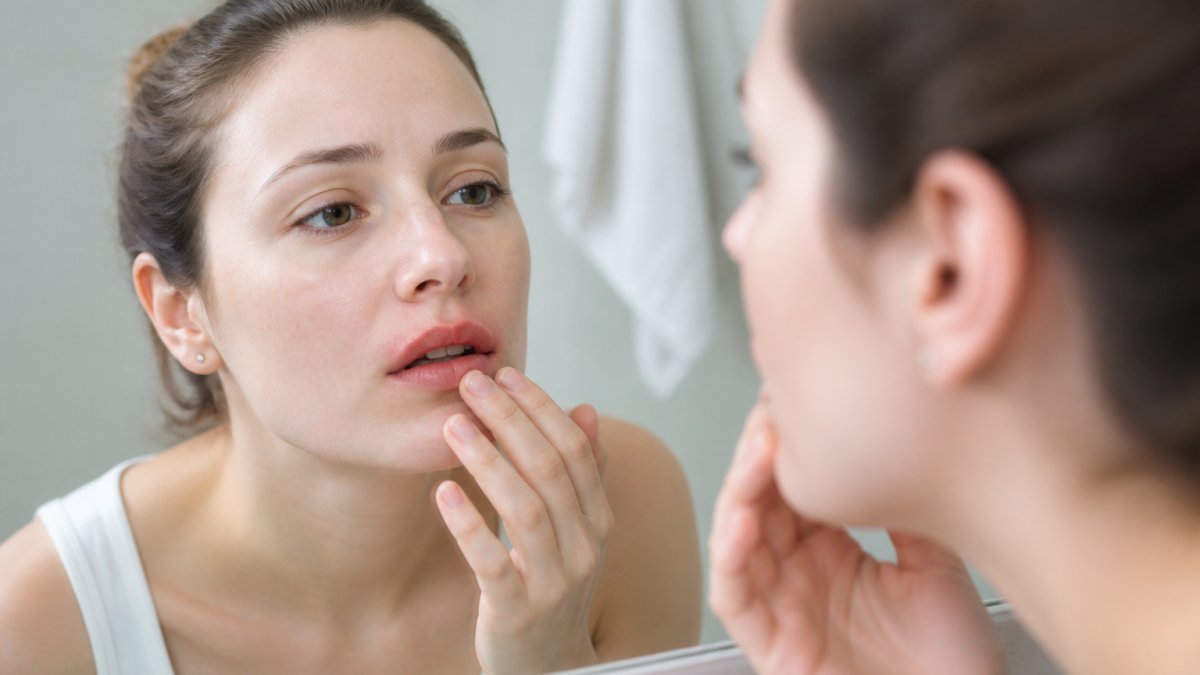
Swelling and Angioedema
Swelling is the symptom that worries people most, and rightly so. Angioedema is deep swelling under the skin, and on the lips it can look dramatic fast.
Mild swelling that stays on the lips and fades with treatment is common in contact allergy. Swelling that comes with throat tightness, a hoarse voice, or trouble swallowing is a different situation entirely.
Dryness, Scaling, and Cracking
Dryness alone rarely means allergy. Dryness plus a clear pattern does. Look for scaling that returns every time you use a certain product, or cracking at the corners that never quite heals.
Eczema-like changes, meaning rough, thickened, itchy patches, suggest chronic exposure. If your lips improve on a break from a product and flare when you restart it, you have your answer without a doctor's visit.
Lip Balm Allergy: Ingredients That Trigger Reactions
Lip balm allergy is one of the most common forms of lip reaction, and the culprit is usually an ingredient rather than the balm itself. Contact allergens hide in products marketed for sensitive lips, which is the part that frustrates people most.
Common ingredients to suspect:
- Fragrance and flavor oils, including peppermint and cinnamon
- Preservatives such as parabens and formaldehyde releasers
- Lanolin, a wool-derived emollient
- Beeswax and propolis in some people
- Nickel, found in metal applicators and cases
- Dyes and pigments, especially red shades
- Chemical sunscreens like oxybenzone
A common mistake is blaming the newest product. Allergy develops after sensitization, so the trigger is often something you have used for a long time.
Food Allergens and Other Common Triggers
Food allergens cause lip reactions in two ways: direct contact and ingestion. Direct contact is easy to miss. Mango skin, citrus peel, and cinnamon all trigger contact reactions in some people without any stomach symptoms.
Other common triggers include:
- Toothpaste and mouthwash, especially mint and cinnamon flavors
- Lip cosmetics, including "natural" and vegan lines
- Dental products and metal instruments containing nickel
- Fragrance in skincare that migrates to the lip border
- Sun exposure, which can set off a reaction on already sensitized lips
If your lips react to a food but your mouth and throat feel fine, contact allergy is more likely than a food allergy. That distinction changes the treatment.
How to Tell a Lip Allergy Apart From Chapped Lips
Chapped lips and a lip allergy look similar at a glance, but they behave differently. Chapped lips come from moisture loss: cold air, licking, dehydration. They feel dry and tight and improve with a plain occlusive balm.
A lip allergy follows exposure. It brings itching, tingling, or burning, and it flares each time you meet the trigger. Chapped lips do not itch or swell. An allergy often does both.
Here is a quick comparison:
| Feature | Chapped Lips | Lip Allergy |
|---|---|---|
| Main feeling | Dry, tight | Itchy, tingling, burning |
| Timing | Worsens with weather | Flares after contact |
| Swelling | Rare | Common |
| Response to plain balm | Improves | May worsen |
| Pattern | Gradual | Repeats with exposure |
Other Causes That Mimic a Lip Allergy
A reaction that does not fit the allergy pattern may have a different cause. The table below compares the most common look-alikes so you can judge whether your symptoms match contact allergy or point elsewhere.
| Condition | Typical appearance | Key clue |
|---|---|---|
| Irritant contact cheilitis | Redness, dryness, cracking, no itch | Starts right after a harsh product or licking; no delay |
| Allergic contact cheilitis | Itchy rash at the lip border, scaling | Delayed 24-72 hours; repeats with the same product |
| Cold sores (herpes labialis) | Cluster of fluid-filled blisters, often at the lip edge | Tingling before blisters; crusts and heals in about 7-10 days; contagious |
| Angular cheilitis (infection) | Cracks and redness at the mouth corners | Often linked to saliva, dentures, or yeast/bacteria; needs targeted care |
| Lip eczema | Rough, thickened, itchy patches | Chronic; may involve other eczema-prone skin |
| Medication-related swelling | Lip or facial swelling without a rash | Starts after a new drug; can be serious and needs medical review |
Two distinctions matter most. Irritant cheilitis burns immediately and does not itch the way allergy does. Cold sores blister and crust in a predictable cycle, while allergy produces a rash and scaling rather than blisters.
A Practical Trigger-Identification Workflow
If you suspect allergy, a structured approach beats guessing. Work through these steps in order.
- Start an exposure diary. For two to four weeks, note every product that touches your lips or mouth, plus foods, and record symptoms with times. Include lip balm, lipstick, gloss, toothpaste, mouthwash, dental floss, and any skincare that migrates to the lip border.
- Simplify to a baseline. Stop all lip products and switch to a plain, fragrance-free, flavor-free occlusive balm and a bland toothpaste. Give the lips one to two weeks to settle.
- Reintroduce one product at a time. Add back a single product and use it alone for about one to two weeks before adding another. If symptoms return, you have a suspect.
- Confirm on neutral skin. For a suspected contact allergen, apply a small amount to the inner forearm, cover it, and check at 48 and 72 hours. A reaction there supports contact allergy and gives you a shortlist for a dermatologist.
- Escalate if needed. If strict avoidance for three weeks does not clear the reaction, or episodes recur without a clear trigger, ask about patch testing.
Reintroduce products only when your lips are calm and only one at a time. If you have ever had swelling with breathing trouble, throat tightness, or a hoarse voice, do not attempt reintroduction on your own; seek medical guidance first.
A third possibility is infection, such as angular cheilitis at the corners, which needs different care. If a plain balm makes things worse rather than better, stop and treat it as a possible allergy.
Allergic Reaction on Lips Treatment and Self-Care
Allergic reaction on lips treatment starts with removal. Stop using every lip product, including balm, until the reaction settles.
Then follow this routine:
- Wash the area with lukewarm water and a mild, fragrance-free cleanser.
- Apply a plain occlusive balm with no fragrance, flavor, or dyes.
- Use a cool compress for ten minutes at a time to calm swelling and itching.
- Ask a pharmacist about an over-the-counter antihistamine for itching.
- Avoid licking your lips, which worsens irritation.
- Reintroduce products one at a time, weeks apart, to find the trigger.
For persistent or severe reactions, a doctor may prescribe a short course of topical steroids. Do not apply steroid cream to the lips without medical advice.
Once your lips are calm, choose formulas built for sensitive skin. Our lightweight, wearable glosses and stains are designed for everyday comfort.
How Long Does a Lip Allergic Reaction Last?
Most mild lip allergic reactions settle within one to two weeks once you remove the trigger. Swelling usually eases first, often within a few days. Dryness, scaling, and cracking take longer because the skin barrier needs time to rebuild.
Three factors stretch the timeline:
- Continued exposure, even in small amounts
- Repeated licking or picking
- A second trigger you have not identified yet
If symptoms last past three weeks with strict avoidance, see a dermatologist. Patch testing can identify the contact allergen and shorten the guessing game considerably.
When Lip Swelling Needs Emergency Care
Most lip swelling is uncomfortable, not dangerous. Some swelling is an emergency.
Call emergency services if lip swelling comes with any of these:
- Difficulty breathing or swallowing
- A swollen tongue or throat
- A hoarse voice or tight feeling in the throat
- Dizziness, faintness, or a rapid pulse
- Hives spreading across the body
Do not wait to see if it passes. The American Academy of Allergy, Asthma & Immunology publishes clear guidance on recognizing anaphylaxis, and the FDA's consumer information on allergic reactions explains when to seek care.
For non-urgent reactions, the American Contact Dermatitis Society maintains resources on patch testing and allergen avoidance that can help you plan your next steps.
Lip reactions are frustrating precisely because the cause hides in plain sight, often in a product you trust.
At Charmstyle Beauty Cosmetics, we built our line for people who want effortless lip color without a heavy, sticky feel.
Frequently Asked Questions
What are the first signs of an allergic reaction on the lips?
Most people notice tingling, itching, or a burning sensation at the lip line before anything visible appears. Within hours, redness, mild swelling, and warmth can develop along the vermilion margin. Some people also get small hives or a dry, scaly rash on one or both lips. If you have ever had a lip allergy before, symptoms often start faster on repeat exposure, so pay attention to early tingling and remove the suspected product right away.
How long does a lip allergic reaction last?
A mild allergic reaction on the lips usually settles within a few days to about two weeks once you stop contact with the trigger. Irritant reactions can clear faster, often in two to three days. Allergic contact cheilitis tends to linger longer because the skin barrier needs time to recover, and symptoms can flare again if you use the same ingredient. If swelling, cracking, or redness is not improving after two weeks of avoidance, see a doctor or dermatologist.
Can lip balm or lipstick cause an allergic reaction?
Yes. Lip balm allergy and lipstick reactions are common because these products sit on thin, exposed skin for hours. Frequent culprits include fragrances, flavorings, preservatives, dyes, and some waxes or sunscreen filters. A reaction may show up as itching, tingling, redness, swelling, or dryness and flaking. If you suspect a product, stop using it and switch to a short ingredient list while your lips recover. Patch testing by a dermatologist can help confirm which ingredient is responsible.
When is lip swelling from an allergic reaction an emergency?
Get emergency care right away if lip swelling comes on quickly, keeps spreading, or is paired with difficulty breathing, difficulty swallowing, throat tightness, hives elsewhere on the body, dizziness, or vomiting. These can be signs of anaphylaxis, which is a medical emergency. Mild swelling limited to the lips that appears gradually and improves with avoidance and self-care is less urgent, but any breathing or swallowing change should be treated as an emergency and evaluated immediately.