

Quick Summary
Cool-toned lipstick colors, especially cherry red and blue-based plum, make teeth look whiter because they create the strongest contrast against tooth color. Warm orange-leaning shades do the opposite and can make teeth look yellower. Choosing the right shade depends on your skin undertone and depth.
- Cool, blue-based shades create the most contrast and make teeth look whiter.
- Red with orange undertones warms the lip area and can make teeth look dull.
- Matte or satin finishes give a crisper color edge than glossy formulas.
- Test shades in daylight, since indoor light can shift how a color reads.
- Lipstick only changes how teeth look by contrast; it does not whiten them.
Table of Contents
- Which Lipstick Colors Make Teeth Look Whiter? Why Lipstick Color Changes How Your Teeth Look
- Best Lipstick Colors for Making Teeth Look Whiter
- Best Lipstick for Yellow Teeth
- Lipstick Shades to Avoid for White Teeth
- Choosing a Shade by Skin Undertone and Depth
- Makeup Tips for a Brighter Smile
- Testing Your Next Shade Before You Buy
- Frequently Asked Questions
Which Lipstick Colors Make Teeth Look Whiter? Why Lipstick Color Changes How Your Teeth Look
Most people choose a lipstick for the lip color alone, but the shade also changes how your teeth look. Lipstick color is one of the simplest, fastest ways to make your smile appear brighter. This guide explains which shades work best, why they work, and how to pick one for your own skin tone.
Color contrast drives the effect. A lipstick with blue undertones sits next to your teeth and makes them look whiter by comparison. A warm, orange-leaning shade does the opposite and can make teeth look yellower. For warm-toned reds, corals, and nudes that suit your undertone, see warm-toned lip shades. The difference shows up within seconds of applying the color.
Best Lipstick Colors for Making Teeth Look Whiter
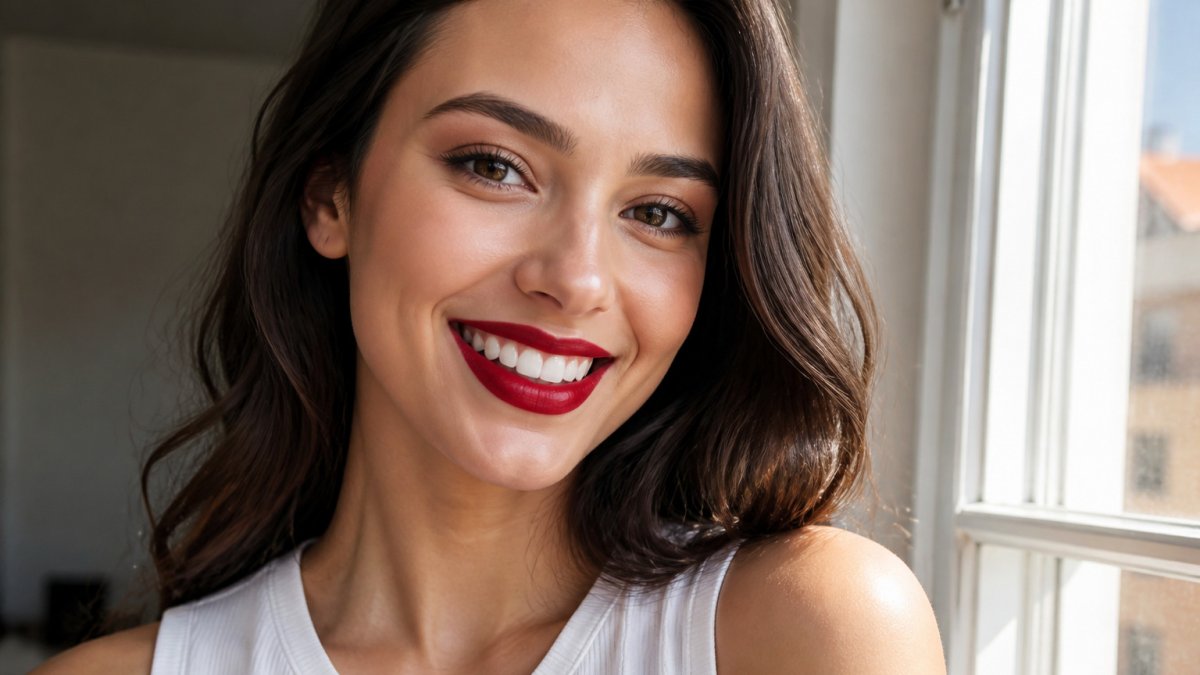
Cool-toned colors do the most for a whiter smile. Shades with blue or purple undertones create the strongest contrast against tooth color. We recommend starting with cherry red or a blue-toned plum, then testing a few others.
Cherry Red and Classic Blue-Based Red
A true red with blue undertones is the most reliable choice. It frames the teeth and draws attention to a bright, clean smile. Our pick from the current range is the CHARMSTYLEBEAUTY RED LIPSTICK, priced at $10.00. It delivers bold, highly pigmented color in a creamy formula that is meant to be swiped on for an instant statement.

Red with orange undertones does not work as well. It warms the lip area and can make teeth look dull, so check the undertone before you buy.
Blue-Toned Plum and Purple
Blue-toned plum and deep purple shades are another option to consider when comparing shades. The PINK LEMONADE LIQUID MATTE LIPSTICK at $12.00 is a matte, long-wear option in the range.
Cool-toned shades create the most contrast against tooth color, so this table summarises the main options the article compares.
| Shade | Best for | Key difference |
|---|---|---|
| Cherry red (blue-based) | Most reliable whitening choice | Frames the teeth and draws attention to a bright smile |
| Red with orange undertones | Not recommended for whitening | Warms the lip area and can dull teeth |
| Blue-toned plum or purple | Strong cool contrast | Another option to test against tooth color |
| Matte or satin finish | Crisp color edge | Glossy formulas can blur color near the teeth |
Best Lipstick for Yellow Teeth
Yellow-looking teeth often need the strongest contrast. A cool, clear red or blue-based plum usually gives the best result, because it pulls the eye away from the yellow tone. Brown and orange shades tend to make that yellow more obvious, so avoid them if whitening the smile is the goal.
Pick a matte or satin finish for a crisp edge. Glossy formulas can reflect light and blur the color near the teeth, which reduces the whitening effect.
Lipstick Shades to Avoid for White Teeth
Some shades work against you. Warm corals, orange-based reds, and brownish nudes can make white teeth look dull or slightly yellow. Pale pinks with yellow undertones have the same problem.
Test any new shade before you wear it out. Apply a swatch, smile in daylight, and compare it with natural light and indoor lighting.
Choosing a Shade by Skin Undertone and Depth
Most guides hand you one "universal" red and stop there. In practice, the best whitening shade depends on two variables: your skin undertone (cool, warm, or neutral) and your skin depth (fair to deep). The goal is a shade that creates contrast with your teeth without clashing with your complexion. Here is a practical shade guide. Refining these choices requires balancing the brightness of your smile against the underlying pigments of your skin, a process simplified by consulting this teeth whitening shade guide.
Cool Undertones
Cool undertones (blue or pink hints, veins that look blue or purple) suit blue-based shades well.
- Fair to light: A true blue-red or cherry red gives crisp contrast without overwhelming a light complexion. Avoid very dark plums, which can look severe on fair skin.
- Medium: Blue-toned berry and raspberry shades add contrast while staying flattering. For reds, berries, browns, and nudes suited to deeper complexions, see lipstick shades for dark skin tones. A blue-based red is the safest everyday pick.
- Tan to deep: Rich blue-toned plum, wine, and blackberry shades create strong contrast and suit deeper cool complexions. A blue-red still works but can read more formal.
Warm Undertones
Warm undertones (golden or olive hints, veins that look green) are trickier because the warm shades that flatter the skin are the same shades that can yellow the teeth. The workaround is to stay warm-adjacent but pull toward cool: a red with a slight blue lean, a warm berry, or a cool-leaning brick rather than a true orange-red.
- Fair to light: A cool-leaning strawberry or blue-based pink-red keeps the smile bright without fighting golden skin.
- Medium: A warm berry or muted cool red balances the complexion and the smile.
- Tan to deep: Deep berry, cool burgundy, and blue-toned plum flatter warm deep skin while preserving contrast. True orange and coral shades are the ones to test carefully.
Neutral Undertones
Neutral undertones can wear most cool and cool-leaning shades. Start with a blue-red or blue-toned plum and adjust based on depth: lighter neutrals suit cherry and raspberry, deeper neutrals suit wine and blackberry.
CHARMSTYLEBEAUTY RED LIPSTICK →
A Quick Depth Check
Skin depth changes how a shade reads more than most people expect. A plum that looks rich and bright on deep skin can look almost black on fair skin, and a cherry red that pops on fair skin can look flat on deep skin. When in doubt, match the shade's intensity to your depth: lighter complexions pair with brighter, clearer shades; deeper complexions pair with richer, more saturated shades.
A common pattern is that people buy the trend shade and then wonder why it does not brighten their smile. The fix is to treat undertone as the filter and depth as the dial, then choose the coolest shade within that range that still looks natural on you.
Makeup Tips for a Brighter Smile
Shade choice is only part of the result. Exfoliate and moisturize your lips before applying color so the shade looks even. Blot once after the first coat to remove excess product that could sit on the teeth.
Keep your overall look balanced. A bright lip with heavy, dark eye makeup can pull attention away from the smile.
Testing Your Next Shade Before You Buy
A lipstick that looks bright in the store can look dull in your bathroom mirror, and the reverse is just as common. The fix is a repeatable test that controls for lighting and hygiene. Competitors rarely spell this out, so here is a practical method.
Step 1: Do a Hygienic Swatch Test
Swatch the shade on the back of your hand or a clean tissue, then hold it next to your mouth and smile in a mirror. For undertone tests and shade guides to try before buying, see how to choose lipstick for your skin tone. If you are testing at home, apply a thin layer to your lips with a clean applicator and blot once.
Step 2: Check It in Neutral Light
Lighting is the biggest variable. Fluorescent office light adds a green cast that can make cool reds look harsh and warm shades look muddy. Incandescent light adds yellow, which flatters warm shades and can make teeth look yellower. Daylight is the neutral reference.
- Daylight (north-facing window): The most honest test. If the shade brightens your smile here, it will usually hold up elsewhere.
- Indoor warm light: Check whether the shade turns orange or brown. If it does, it will likely emphasize yellow in your teeth.
- Phone camera: Take a selfie in each light. Camera white balance can exaggerate or hide the effect, so compare the photo to what you see in the mirror rather than trusting the photo alone.
Step 3: Compare Against Your Natural Tooth Color
Tooth color varies from bright white to gray to yellow, and the same lipstick reads differently against each. If your teeth lean yellow, prioritize blue-based reds and plums. If your teeth lean gray, avoid very cool purples that can make the gray look stronger, and choose a clear blue-red instead. If your teeth are already fairly white, most cool shades will work, and you can choose based on skin flattery.
Step 4: Wear It for a Full Day
A shade that passes the mirror test can still fail over a full day. Wear it through a meal, a coffee, and a few hours of indoor light. Check whether the color fades to a warmer tone as it wears, which is common with some formulas, and whether the contrast holds up.
A Simple Testing Kit
Keep a small kit for testing: a hand mirror, a few clean applicators, and a note on your phone listing which shades looked best in daylight versus indoor light. Over two or three shopping trips, you will build a short list of shades that reliably brighten your smile, and you can stop guessing.
If you prefer to test at home, order two or three shades in the same color family and compare them side by side over a week. The CHARMSTYLE BEAUTY NUDE LIPSTICK at $10.00 is a softer everyday shade option.
Frequently Asked Questions
Does blue-based red lipstick really make teeth look whiter?
Yes, in the visual sense. Blue undertones in a red lipstick sit opposite the yellow tones in most teeth, so the contrast makes teeth appear brighter. This is a temporary color effect from the lipstick, not whitening. The teeth themselves do not change. Test the shade in natural daylight and in indoor light, because the effect is stronger in some lighting than others.
What color lipstick doesn't make teeth look yellow?
Cool-toned shades with blue or pink bases generally avoid making teeth look yellow. True reds, cherry reds and blue-toned plums are the usual choices. Warm orange-based browns and corals tend to bring out yellow tones in teeth, so they are more likely to make a smile look dull. Your skin undertone and tooth shade both affect the result, so compare two or three options before deciding.
What color red lipstick makes my teeth look whiter?
Cherry red and classic true red shades with a blue undertone usually give the strongest whitening contrast. Charmstyle Beauty's Signature Red Lipstick is a bold, highly pigmented red priced at $10.00, and its listing notes it is universally flattering on all skin tones. Apply a single coat first to check the effect against your teeth.
Can makeup tips really brighten a smile?
Yes, through contrast and finish rather than changing the teeth. Matte finishes can make teeth look less shiny, while a well-chosen cool shade lifts the overall look. Keep lip color away from the edges of the teeth, blot excess product so it does not coat the teeth, and check for color transfer after you eat or drink.
