

Last Updated: October 30, 2026
Quick Summary
The simplest lip scrub recipes combine one teaspoon of sugar with one teaspoon of coconut oil, massaged gently onto dry lips for about 30 seconds. This removes dead skin so your lips can absorb moisture better, and it works best two to three times per week.
- Mix 1 teaspoon of sugar with 1 teaspoon of coconut oil for a basic scrub.
- Massage the scrub in small, gentle circles for about 30 seconds.
- Exfoliate two to three times per week, with at least one rest day between sessions.
- Use a fine sugar and avoid citrus juice, which can sting cracked lips.
- Apply a lip balm after scrubbing to lock in moisture.
Table of Contents
- Why a Homemade Lip Scrub Works for Dry, Flaky Lips
- Homemade Lip Scrub Recipes You Can Make in Minutes
- Three-Ingredient Lip Scrub: The Simplest Option
- How to Exfoliate Lips Naturally, Step by Step
- How Often to Exfoliate Lips Without Causing Irritation
- Ingredient Safety, Storage, and When to Skip the Scrub
- Aftercare and Next Steps for Softer Lips
- Frequently Asked Questions
Dry, flaky lips are one of the most common complaints in winter, and a simple homemade lip scrub is one of the easiest fixes. This guide shows you how to make a DIY lip scrub for smooth lips at home, using ingredients you probably already have in your kitchen. A good lip scrub gently removes dead skin so your lips can take in moisture.
Why a Homemade Lip Scrub Works for Dry, Flaky Lips
Lips have no oil glands, so they dry out faster than the skin on your face. Flakes form when dead skin builds up on the surface. A lip scrub removes that layer gently, which lets a lip balm or oil work better.
Most homemade scrubs combine a fine sugar with a moisturizing oil. The sugar buffs away flakes, and the oil softens what remains.
Tip: Always use a gentle hand. Rough scrubbing can leave lips red and sore.
Homemade Lip Scrub Recipes You Can Make in Minutes
Here are three simple options to try:
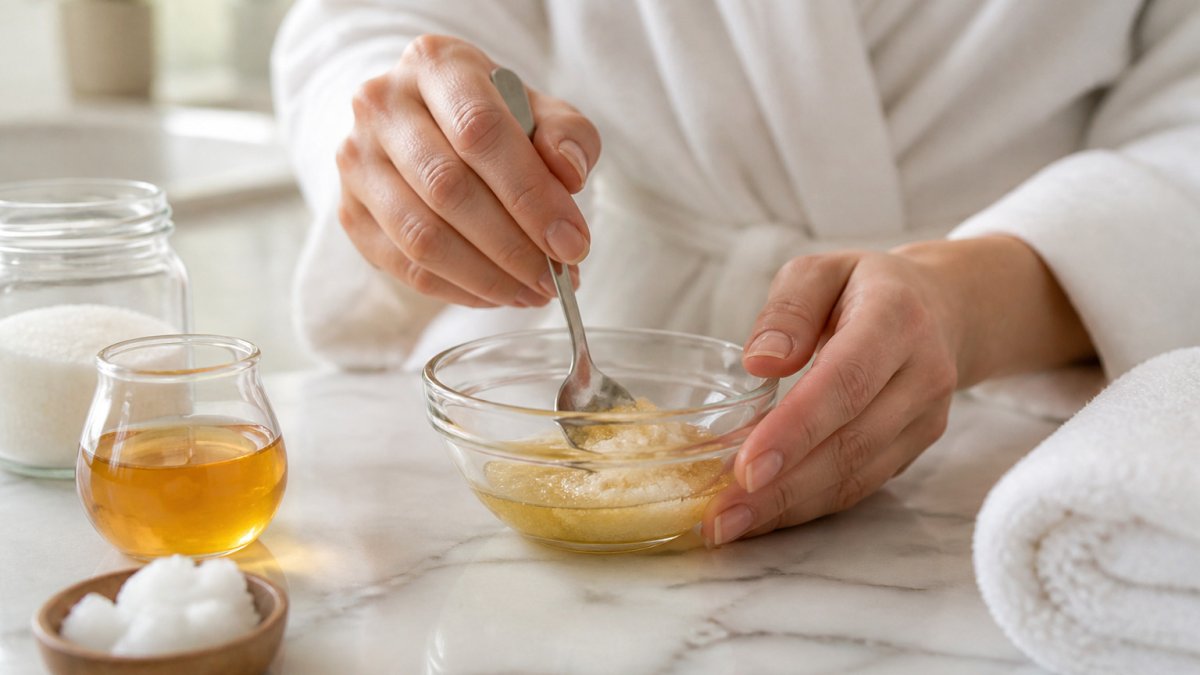
- Sugar and coconut oil: 1 teaspoon of sugar mixed with 1 teaspoon of coconut oil
- Brown sugar and honey: 1 teaspoon of brown sugar mixed with 1/2 teaspoon of honey
- Sugar and almond oil: 1 teaspoon of sugar mixed with 1/2 teaspoon of almond oil
Start with the smallest amount you need and add more until the mix holds together. If you want a ready-made option, the CHARMSTYLE BEAUTY KIWI LIPSCRUB is available for $8.00.

Three-Ingredient Lip Scrub: The Simplest Option
If you want the fewest steps possible, use this three-ingredient recipe:
- One teaspoon of fine granulated sugar
- One teaspoon of coconut oil, softened
- A few drops of vanilla extract for scent
Stir until it forms a soft paste. Use it right away, since homemade scrubs do not last long. If you want a ready-made option, the Strewberry Lip Scrub from Charmstyle Beauty is available for $8.00.

How to Exfoliate Lips Naturally, Step by Step
Follow these steps for the best results:
- Wash your lips with a damp cloth to remove any lipstick.
- Scoop a small amount of scrub onto your fingertip.
- Massage it onto your lips in small, gentle circles for about 30 seconds.
- Rinse with lukewarm water or wipe away the excess with a soft cloth.
- Pat dry and apply a lip balm or oil.
Watch out: Do not scrub hard. Pressing too firmly on cracked or bleeding lips can cause more irritation.
CHARMSTYLE BEAUTY KIWI LIPSCRUB →
How Often to Exfoliate Lips Without Causing Irritation
Frequency is the most common way people accidentally damage their lips with a homemade scrub. The right schedule depends on your lip condition, the abrasiveness of your scrub, and how your lips respond, not a fixed calendar.
A practical frequency framework
- Maintenance (normal lips): 2 to 3 times per week, with at least one rest day between sessions. This is enough to remove flakes without thinning the lip barrier.
- Recovery (dry or flaky lips): Once per week for 2 weeks, then reassess. If flakes persist, add moisture with a fragrance-free balm rather than scrubbing more often.
- Sensitive lips: Once every 7 to 10 days, using a fine sugar (not coarse turbinado) and a gentle oil base.
- Never daily: Daily scrubbing removes the thin layer of dead cells that protects lips and can trigger a cycle of dryness, micro-cracks, and more flaking.
Technique cues that prevent irritation
- Pressure: Use the weight of your fingertip only, about the pressure you would use to apply eye cream. If the sugar feels sharp, you are pressing too hard.
- Duration: 20 to 30 seconds per session. Set a timer the first few times; most people scrub for over a minute without realizing it.
- Motion: Small circles in one direction, not back-and-forth scrubbing. Avoid the lip corners, which are thinner and crack easily.
- Rinse temperature: Lukewarm water only. Hot water strips oils and worsens dryness.
Stop signals, when to pause
Stop the session and skip the next scheduled scrub if you notice any of the following:
- Stinging or burning that continues after rinsing
- Visible redness that lasts more than 10 minutes
- Tightness or a “stretched” feeling
- New flaking within 24 hours of scrubbing
- Any bleeding or pinpoint cracks
The mechanism behind over-exfoliation
Lips lack sebaceous glands, so they rely on the products you apply and on moisture from saliva and the environment. The outer layer is only a few cell layers thick. Repeated scrubbing disrupts that barrier, increasing transepidermal water loss and leaving lips more vulnerable to irritants like saliva, spicy foods, and cold air.
The article recommends a schedule based on lip condition, so this table summarises how often to scrub each type.
| Lip condition | How often | Key guidance |
|---|---|---|
| Maintenance (normal lips) | 2 to 3 times per week | At least one rest day between sessions |
| Recovery (dry or flaky lips) | Once per week for 2 weeks | Reassess; add fragrance-free balm if flakes persist |
| Sensitive lips | Once every 7 to 10 days | Use fine sugar, not coarse turbinado |
| Daily scrubbing | Never | Removes protective dead-cell layer and triggers dryness |
Ingredient Safety, Storage, and When to Skip the Scrub
A homemade lip scrub is only as safe as its ingredients and how you store it. The following guidance covers the most common risks, safer substitutions, and clear stop signals.
Ingredient risks and safer swaps
- Citrus juice and peel: Lemon, lime, and orange contain limonene and citric acid that can sting cracked lips and increase sun sensitivity.
- Essential oils: Peppermint, cinnamon, and eucalyptus oils are common flavor additions but are among the most likely to cause contact irritation on lips. Use no more than one drop per tablespoon of scrub, or omit entirely for sensitive lips.
- Nuts and honey: Almond oil and honey are popular bases, but both are common allergens. If you have a nut allergy, substitute sunflower or grapeseed oil. If you avoid honey, use maple syrup or agave nectar at the same 1/2-teaspoon ratio.
- Fresh fruit: Mashed strawberry or kiwi adds flavor but also introduces water, which shortens shelf life and invites mold. Use within 3 days and keep refrigerated.
Storage and shelf life
- Batch size: Mix only what you will use in one to two weeks, typically 1 to 2 tablespoons total. A small 2-ounce jar is a practical container.
- Container: Use a clean, dry, airtight glass or plastic jar. Avoid metal tins, which can react with acidic ingredients.
- Refrigeration: Store scrubs containing fresh fruit, honey, or water in the refrigerator. Pure sugar-and-oil scrubs can stay at room temperature for up to 2 weeks but last longer refrigerated.
- Discard signals: Throw out the scrub if it smells sour or rancid, changes color, grows mold, or has separated liquid that will not stir back in.
- Application hygiene: Scoop with a clean spoon or dry finger rather than dipping wet fingers into the jar.
When to skip the scrub entirely
Do not exfoliate if your lips are:
- Cracked with visible bleeding or open sores
- Swollen, inflamed, or warm to the touch
- Sunburned or blistered
- Affected by a cold sore (herpes labialis), scrubbing can spread the virus and delay healing
- Reacting to a new product with redness or itching
If dryness or cracking does not improve after 7 to 10 days of gentle care and fragrance-free balm, or if you notice persistent sores, white patches, or bleeding that does not heal, see a dermatologist or healthcare provider. These can be signs of conditions that need professional evaluation rather than home exfoliation.
Aftercare and Next Steps for Softer Lips
After scrubbing, apply a lip balm with ingredients like shea butter or petroleum jelly to lock in moisture. Drink enough water and use lip protection outdoors to help prevent dryness from coming back. For more ideas, read 5 Steps to Protect Lips from Windburn, How to Prevent Dry Chapped Lips: 2026 Guide, or follow the full routine in Vegan Lip Care Routine for Dry Lips: 7 Steps.
Ready to start? Mix a small batch today and see how your lips feel after a week of gentle, regular care.
Frequently Asked Questions
How do you make a three-ingredient lip scrub?
Combine one tablespoon of granulated or brown sugar with one teaspoon of honey and one teaspoon of coconut oil in a small bowl. Stir until the mixture holds together but still feels slightly grainy. Apply a small amount to damp lips, massage gently in small circles for about 30 seconds, then rinse with lukewarm water and pat dry. Use a fresh portion each time.
How often should you exfoliate your lips?
Most people do well exfoliating two to three times per week. Lips that are already cracked, peeling or irritated should be scrubbed less often, or not at all, until the skin has healed. Over-exfoliating can strip the lips of their natural protective layer and make dryness worse. If your lips sting or look red after scrubbing, reduce frequency and use a gentler recipe with a finer sugar.
What should you put on your lips after exfoliating?
Apply a simple, fragrance-free lip balm or a thin layer of petroleum jelly after rinsing and patting your lips dry. This seals in moisture while the skin recovers. Avoid heavy tingling products, strong menthol or spicy balms right after scrubbing, since they can sting freshly exfoliated skin. Reapply throughout the day as needed.
Can lip scrubs make dry or chapped lips worse?
Yes, if they are used too often, scrubbed too hard, or applied to lips that are cracked or bleeding. Sugar is abrasive, so gentle pressure and short contact time matter. Skip scrubbing when lips are sore, sunburned or actively split, and switch to a balm until the skin heals. Patch-test any new ingredient on a small area of skin first if you have sensitive lips or known allergies.
