

Last Updated: November 10, 2026
Quick Summary
For lip eczema, avoid essential oils, fragrance, menthol and camphor, citrus extracts, lanolin, balsam of Peru, sulfates like SLS, propylene glycol, formaldehyde-releasing preservatives, and synthetic dyes. Choose fragrance-free, dye-free balms built on occlusives like shea butter, cocoa butter, and beeswax. Patch test new products on your inner arm for two days before using them on your lips.
- Essential oils such as peppermint, lavender, tea tree, eucalyptus, and citrus are among the most common contact allergens in cosmetics.
- A sulfate-free toothpaste is often the single biggest improvement for a rash that hugs the lip line.
- Stop all lip products for a week, including balms, scrubs, and lipstick, to find your baseline.
- Ingredients are listed in descending order of concentration until the 1% mark, so the first five matter most.
- Fragrance-free means no fragrance was added, while unscented may contain a masking fragrance.
Table of Contents
- Why Natural Doesn't Mean Safe for Lip Eczema
-
8 Natural Ingredients to Avoid for Lip Eczema
- Essential Oils and Fragrance
- Citrus Extracts and Acidic Foods
- Lanolin, Balsam of Peru, and Other Hidden Allergens
- Peppermint, Menthol, and Cooling Agents
- Sulfates and Cleansing Agents
- Propylene Glycol and Penetration Enhancers
- Chemical Preservatives and Formaldehyde Releasers
- Synthetic Dyes and Colors
- The Cross-Reactivity Map: When Food Becomes a Lip Trigger
- Lip Balm Ingredients to Avoid for Eczema: What to Check Before You Buy
- Choosing a Natural Lip Balm for Eczema That Actually Helps
- Lip Eczema Home Remedies That Support the Lip Barrier
- Toothpaste for Lip Eczema: What to Switch and Why
- How to Read Ingredient Labels and Spot Hidden Names
- Build a Lip Routine That Keeps Your Barrier Calm
- Frequently Asked Questions
Why Natural Doesn't Mean Safe for Lip Eczema
If you have lip eczema, you know the sting, flaking, and maddening itch.
A "pure" balm can still make lips worse. The culprit is often a plant extract, essential oil, or fragrance compound framed as gentle.
Below, we break down the natural ingredients to avoid for lip eczema, how to spot them under hidden names, and how to build a routine that calms your lips.
8 Natural Ingredients to Avoid for Lip Eczema
The eight offenders below commonly appear in "clean" lip balms, scrubs, and glosses. None are evil in general, they are simply wrong for an inflamed lip barrier.
Essential Oils and Fragrance
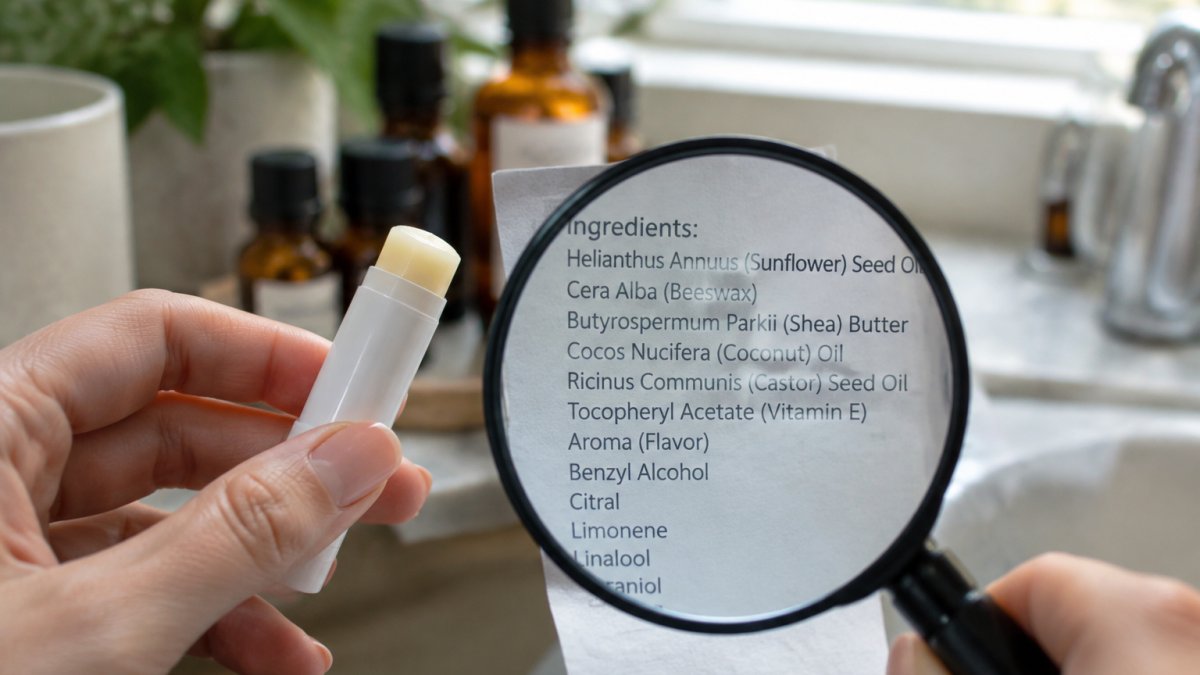
Essential oils are concentrated plant compounds, and many are among the most common contact allergens in cosmetics. Peppermint, lavender, tea tree, eucalyptus, and citrus oils all carry fragrance molecules that trigger flare-ups on sensitive lips.
Essential oils contain terpenes and aldehydes, small molecules that penetrate the thin lip barrier and bind to skin proteins, which is how contact allergy develops.
Citrus Extracts and Acidic Foods
Lemon, lime, orange, and grapefruit extracts add a fresh scent and a dose of acids. On intact skin, that is fine. On cracked lips, citrus extracts sting and strip the barrier further.
There is a second layer most people miss: citrus cross-reacts with balsam of Peru, a natural fragrance resin used in many balms.
Lanolin, Balsam of Peru, and Other Hidden Allergens
Lanolin is a wax from sheep wool. It is an excellent moisturizer for many people, but it is also a recognized allergen, and dermatologists flag it often in lip and face products.
Balsam of Peru bridges diet and topical care: the resin contains compounds also found in cinnamon, cloves, vanilla, cola, and citrus, so a person sensitized by a fragranced balm may suddenly react to foods eaten for years, and vice versa.
Peppermint, Menthol, and Cooling Agents
Peppermint oil and its main component, menthol, cause the "tingle" balm marketers sell as efficacy. On eczematous lips, that cooling sensation is a mild chemical burn in progress. Camphor, often paired with menthol in medicated balms, is a known irritant and should be avoided entirely on broken lip skin.
Sulfates and Cleansing Agents
Sodium lauryl sulfate (SLS) is the foaming agent in many toothpastes, lip scrubs, and cleansers, and it is a well-documented irritant even on healthy skin. On lips with eczema, SLS strips the lipid barrier and leaves the surface more permeable. It hides in products that do not foam, some lip scrubs use it as an emulsifier, and it can appear as "sodium dodecyl sulfate." A sulfate-free toothpaste is often the single biggest improvement for a rash that hugs the lip line.
Propylene Glycol and Penetration Enhancers
Propylene glycol is a humectant and penetration enhancer in everything from lip balm to topical medication. It is generally well tolerated but is a recognized contact allergen, and its penetration-enhancing property pulls other ingredients deeper into compromised skin. Watch for it as "PG" or "1,2-propanediol."
Chemical Preservatives and Formaldehyde Releasers
Parabens get the headlines, but the preservatives most often flagged in lip products are formaldehyde releasers, DMDM hydantoin, quaternium-15, diazolidinyl urea, and imidazolidinyl urea. They release small amounts of formaldehyde, a known contact allergen. Preservative-free balms usually rely on anhydrous formulas, which is why plain occlusives are often safest during a flare.
Synthetic Dyes and Colors
Dyes such as FD&C Red 40, Yellow 5, and Blue 1 add color with no benefit to a healing lip, and some people react to them with a contact dermatitis that looks like chapped lips. The reaction is less common than fragrance allergy, but it is easy to overlook because the dye is often listed at the very end of the ingredient list.
The Cross-Reactivity Map: When Food Becomes a Lip Trigger
This is the piece most guides leave out.
Balsam of Peru is the second major cross-reactor, linking balm fragrance to cinnamon, vanilla, cola, and citrus in the diet. Citrus is a third: the limonene that scents a balm is present in the peel and juice.
Lip Balm Ingredients to Avoid for Eczema: What to Check Before You Buy
Before you buy any balm, flip the tube and scan for the shortlist below. This is the fastest filter you can use in a store aisle or on a product page.
- Fragrance and "parfum": an umbrella term that can hide dozens of allergens
- Essential oils: peppermint, lavender, tea tree, eucalyptus, citrus
- Menthol and camphor: the cooling agents in medicated balms
A good rule: fewer than ten ingredients, no fragrance, no color. If you cannot pronounce half the list, look each name up before you commit.
Choosing a Natural Lip Balm for Eczema That Actually Helps
The best natural lip balm for eczema is fragrance-free, dye-free, and built on simple occlusives and emollients that seal moisture in rather than pull it out.
Here is what to prioritize:
- Occlusives like shea butter, cocoa butter, and beeswax to lock in moisture
- Emollients like jojoba or sunflower oil to soften and smooth
- Fatty alcohols like cetyl alcohol, which moisturize rather than dry
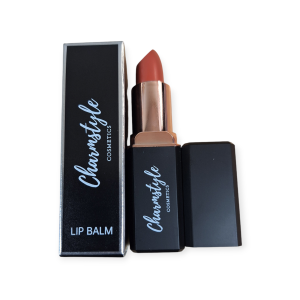
Our Charmstyle Beauty Lip Balm is designed for comfortable, hydrating wear. If you are wondering whether a natural balm can hold up through a full workday, this breakdown of whether natural lip balm is effective all day answers that directly.
Lip Eczema Home Remedies That Support the Lip Barrier
The goal of any home routine is skin barrier repair, not quick fixes. A calm lip routine is boring on purpose: gentle cleansing, heavy moisturizing, and hands off the flakes.
Try these steps:
- Stop all lip products for a week, including balms, scrubs, and lipstick, to find your baseline.
- Apply a plain occlusive like petroleum jelly or a fragrance-free balm several times a day, especially before bed.
- Skip exfoliating while lips are cracked. Scrubbing broken skin makes it worse.
- Use a humidifier at night if your home air is dry.
- Do not lick your lips. Saliva evaporates and dries the barrier further.
- Patch test any new product on your inner arm for two days first.
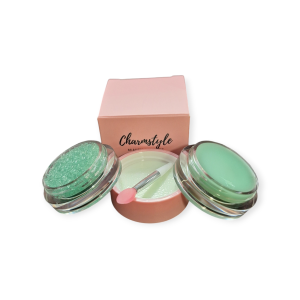
Once your lips have calmed, a gentle exfoliating step can help maintain softness. The Charmstyle Beauty Kiwi Lipscrub is designed to gently buff away dry, flaky skin and prep lips for color. For a full gentle sequence, this vegan lip care routine for dry lips walks through seven steps you can follow at home.
Toothpaste for Lip Eczema: What to Switch and Why
Toothpaste for lip eczema is a trigger most people never suspect.
The usual suspects are sulfates, especially sodium lauryl sulfate, plus flavorings like cinnamon, peppermint, and menthol. When you brush, a little paste sits on your lips for a minute or two, enough to sting broken skin and delay healing.
What to switch to:
- A sulfate-free toothpaste, often labeled SLS-free
- A mild or unflavored option if mint burns
- A fluoride toothpaste you tolerate, since fluoride itself is not the usual irritant
If the rash near your mouth persists after switching, see a dermatologist. A patch test can pinpoint the exact allergen.
How to Read Ingredient Labels and Spot Hidden Names
Ingredient labels are written for chemists, not shoppers, and "natural" ingredients often hide behind unfamiliar names. Learning a few is the single most useful skill for keeping lip eczema calm.
The 'Natural' Fallacy on a Label
"Natural" has no legal definition in cosmetics labeling, and neither do "clean," "botanical," or "plant-based." A balm can be 100% natural and still contain peppermint oil, citrus extract, and balsam of Peru, three of the most common lip allergens.
"Hypoallergenic" is similarly unregulated, a marketing claim, not a test result, and a product labeled hypoallergenic can still contain fragrance or essential oils. "Dermatologist-tested" does not mean it was tested on people with eczema.
Glossary of Hidden Names
Use this as a lookup while you shop. The left column is what you might see on a label; the right column is what it actually is.
- Fragrance / parfum / aroma / essential oil blend, umbrella terms that can hide dozens of allergens, including limonene, linalool, citral, geraniol, and eugenol. None of these need to be listed individually under current labeling rules.
- Balsam of Peru / Myroxylon pereirae / Peru balsam, a natural fragrance resin and one of the most common contact allergens in lip products. Cross-reacts with citrus, cinnamon, vanilla, and cola.
- Lanolin / wool wax / wool alcohol / adeps lanae, a wax from sheep wool; an excellent moisturizer for many, a recognized allergen for others.
How to Read the List in Order
Ingredients are listed in descending order of concentration until the 1% mark, after which they can appear in any order.
Shorter lists are easier to audit, but short does not automatically mean safe. A three-ingredient balm of beeswax, olive oil, and peppermint oil is short and still a poor choice for eczema.
Patch Testing at Home
Before committing a new balm to your lips, patch test it on the inner forearm for two days, then on the edge of the lip line for another two. A reaction can be delayed up to 72 hours, so a product that feels fine on day one is not cleared yet. If you have reacted to multiple products, a dermatologist can patch test with a standard series including balsam of Peru, fragrance mix, lanolin, and nickel.
For a deeper walkthrough of decoding labels and spotting problem chemicals, read our guide on harmful chemicals in lip products and how to spot them.
Watch out: "fragrance-free" and "unscented" are not the same thing. A product labeled unscented may contain a masking fragrance to neutralize the smell of raw ingredients, while fragrance-free means no fragrance was added.
Build a Lip Routine That Keeps Your Barrier Calm
A routine that protects your lip barrier beats any single product. The pattern that works is simple: cleanse gently, moisturize heavily, protect constantly, and add nothing new while lips are angry.
Here is how we would structure a day:
| Time | Step | Why It Helps |
|---|---|---|
| Morning | Rinse with water, apply fragrance-free balm | Seals moisture before the day starts |
| Midday | Reapply balm after eating or drinking | Restores the barrier after food contact |
| Evening | Gentle cleanse, thick occlusive layer | Supports overnight skin barrier repair |
| Weekly | Patch test any new product on inner arm | Catches allergens before they hit your lips |
Keep a short list of products you trust, and resist trying every new launch. Sensitive lips reward consistency.
Lip eczema is frustrating, but it is manageable once you know which natural ingredients to avoid and which to keep.
Frequently Asked Questions
What natural ingredients can trigger lip eczema?
Essential oils like peppermint and lavender, citrus extracts, balsam of Peru, lanolin, and propylene glycol are common triggers. Even ingredients labeled natural can cause contact dermatitis on the thin lip barrier. Check labels for fragrance-free and hypoallergenic claims, and patch test new products on your inner arm for 48 hours before applying to lips.
How can you tell whether a lip product is causing a reaction?
Watch for redness, scaling, cracking, or a burning sensation within hours to days of use. Stop the product and switch to a plain occlusive balm for two weeks. If symptoms clear and return when you reintroduce the product, that is a strong clue. A dermatologist can confirm with patch testing if reactions persist.
Is natural lip balm for eczema always safer than synthetic options?
No. Botanicals like essential oils, citrus, and balsam of Peru are among the most common allergens in lip products. A fragrance-free balm with few ingredients, whether natural or synthetic, is often gentler. Look for hypoallergenic formulas and avoid menthol, camphor, and added fragrance regardless of origin.
When should you see a dermatologist about lip eczema?
See a dermatologist if symptoms last more than two weeks, keep returning after you remove suspected triggers, or involve severe cracking, bleeding, or pain. A doctor can run patch testing to identify specific allergens like formaldehyde releasers or neomycin sulfate and recommend a topical treatment plan.
