

Table of Contents
- What Organic Lip Stain Actually Is
- How Organic Lip Stain Differs From Conventional Formulas
- Long-Lasting Color and Staying Power
- Hydrating Lip Stain for Dry Lips
- How to Apply Lip Stain for a Natural Look
- Best Luxury Clean Lip Makeup Brands and What to Look For
- Ingredient Safety and What to Avoid
- Frequently Asked Questions
Last Updated: October 6, 2026
What Organic Lip Stain Actually Is
Organic lip stain benefits for lips start with what makes a stain different from lipstick or gloss. At Charmstyle Beauty Cosmetics, our lip stain offers buildable color intensity, from a sheer wash to a bolder statement.

In cosmetics, "organic" refers to ingredients derived from plants, minerals, or other naturally occurring sources, processed without synthetic pesticides or artificial additives. But "organic" on a label doesn't guarantee the whole formula is organic, it often means a significant portion of the ingredient list is natural.
Lip stains deposit pigment directly onto your lips, bonding to lip tissue rather than sitting on top, so the tint outlasts many glosses. That's why organic lip stain benefits for lips include staying power without traditional lipstick's heaviness. The best formulas pair natural pigments with nourishing oils and butters.
How Organic Lip Stain Differs From Conventional Formulas
Conventional lip products rely on synthetic dyes, petroleum-derived emollients, and chemical preservatives for color stability and shelf life. Organic formulations swap these for plant-based pigments, natural waxes like beeswax, and botanical extracts.
The key trade-off is longevity versus ingredient purity. Organic formulas prioritize skin safety and comfort, so wear time is often slightly shorter, typically 6-10 hours depending on eating, drinking, and lip moisture.
Natural pigments behave differently than synthetic dyes. Plant-based colorants like beetroot extract, alkanet root, or carmine (from insects) produce softer, more nuanced shades and are less likely to stain teeth or leave harsh lines. Synthetic pigments deliver more uniform, intense color but can look flat across skin tones.
The ingredient list tells the story. An organic lip stain features recognizable components: cocoa butter, jojoba oil, honey, beeswax. A conventional formula might list dimethicone, CI 15985, or phenoxyethanol.

Long-Lasting Color and Staying Power
Staying power depends on formula and application technique. Quality organic stains deliver 6-10 hours of noticeable color, fading gradually rather than vanishing.
Charmstyle Beauty Cosmetics Lip Stain uses transfer-resistant pigments that stay put through eating, drinking, and talking, and its hydrating formula prevents the dryness common to long-wear products. Build layers with multiple thin coats rather than one thick coat.
Humidity, lip moisture, and friction (eating, drinking, touching) all reduce wear time. Matte finishes last longer than glossy ones because there's less slip. For maximum longevity, avoid fatty foods right after applying and use a matching lip liner to anchor the stain.
Hydrating Lip Stain for Dry Lips
Dry lips are the enemy of any lip product, especially stains, which can emphasize texture. A hydrating lip stain for dry lips needs emollient oils and humectants that draw moisture into lip tissue and seal it in.
Look for nourishing oils like babassu, jojoba, or argan combined with butters such as cocoa or shea. Honey and glycerin act as humectants, pulling water into your lips, while beeswax creates a protective barrier without silicone's heaviness.
For dry lips, prep with a gentle exfoliant, then apply a hydrating balm and let it set for a minute. Apply the stain with a light hand, pressing gently rather than swiping, to avoid emphasizing dry patches.
If your lips tend toward dryness, skip matte finishes; satin or glossy stains contain more emollients.
How to Apply Lip Stain for a Natural Look
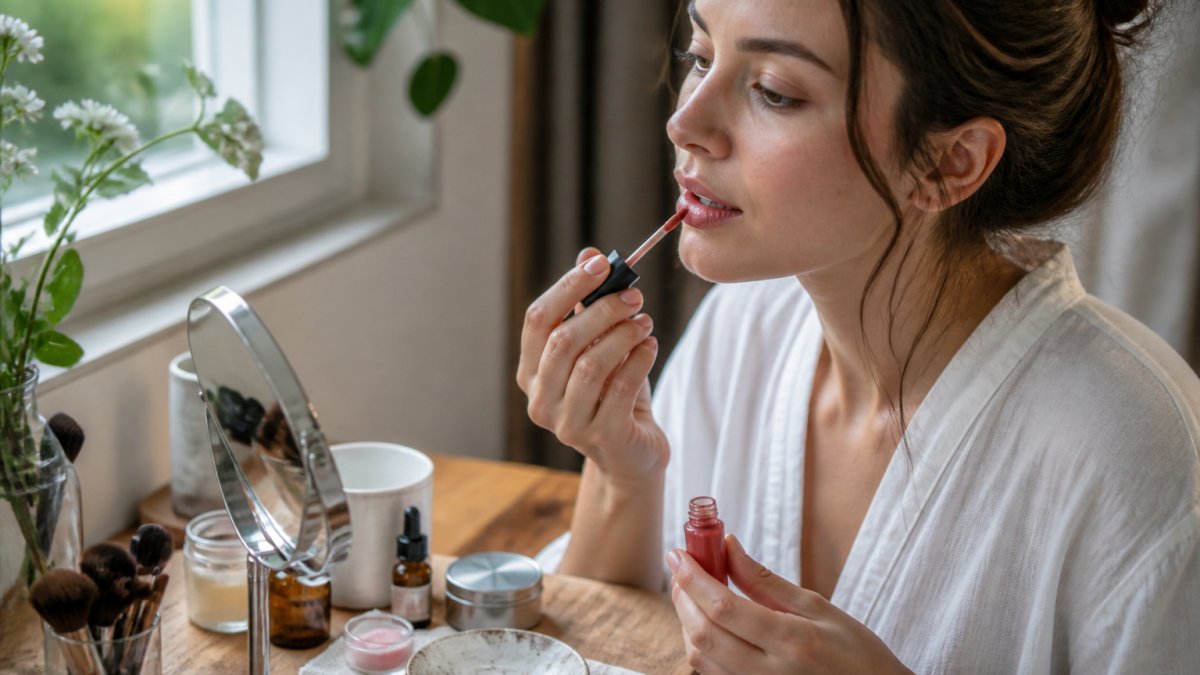
A natural flush comes from placement and blending, not the product alone. This technique works for most liquid and gel stains.
Prep the canvas
Start with clean, moisturized lips. A light exfoliation with a damp cloth or sugar-and-oil scrub removes flakes that would catch pigment and create patchy color. Follow with a hydrating balm and wait about 30 seconds so it absorbs; stain applied over slick balm slides and fades faster.
Apply from the center out
Using the applicator, start at the center of your lower lip and press gently outward. Pressing rather than swiping deposits pigment where you want intensity and keeps edges soft. Repeat on the upper lip, focusing on the cupid's bow. For a sheer, just-bitten effect, stop here; for more intensity, wait 30 seconds and add a second layer to the center only.
Blend the edges
Use your fingertip or a small lip brush to tap and blend the edges where stain meets bare lip, softening hard lines into a gradient. For a fuller look, blend a touch of stain just past your natural lip line, then blur it with your finger.
Layer for finish and comfort
- For shine: a clear or nude balm over the top deepens the color slightly and adds comfort without disturbing the stain.
- For definition: a matching lip liner applied lightly around the edges anchors the color and helps prevent feathering.
- For a matte look: blot with a tissue and skip the balm. Expect a slightly drier feel and shorter wear.
- For a gloss effect: a dab of clear gloss in the center only adds dimension without breaking down the stain underneath.
Test wear through a real day
Wear time varies by formula and by you. Wear it through a normal day with coffee, water, and a meal, and note where it fades first, usually the inner lip and center of the lower lip.
For longer wear, apply a thin layer, let it set, then add a second thin layer. Avoid pressing your lips together right after application, which transfers pigment and creates uneven color.
Remove it gently
Lip stains cling by design, so removal takes more care than a tissue wipe:
- Oil-based cleanser or balm: massage a small amount onto dry lips, let it sit for 20 to 30 seconds, then wipe with a soft cloth. The oil breaks down the pigment and the waxes together.
- Micellar water: saturate a cotton pad, press it against your lips for a few seconds, then wipe gently. This works well for lighter stains.
- Gentle exfoliation: if a faint tint remains, a soft cloth with a little oil will lift the rest without scrubbing.
Avoid harsh scrubbing or alcohol-based removers, which strip the lip barrier and leave you prone to dryness. If lips feel tight after removal, apply balm and wait a few hours before reapplying stain.
Best Luxury Clean Lip Makeup Brands and What to Look For
The more useful exercise is learning to read a claim, because the gap between "organic," "natural," and "plant-derived" is where shoppers get misled.
What "organic" actually means on a cosmetic label
In the U.S., "organic" on a cosmetic is regulated differently depending on use (the FDA). The USDA National Organic Program governs agricultural ingredients and the USDA Organic seal, which a cosmetic can carry only if its agricultural ingredients meet the program's standards and the product meets certification thresholds. If a brand uses "organic" to describe a single ingredient, such as organic jojoba oil, that's a statement about the ingredient, not the finished product.
The FDA, which regulates cosmetics labeling, doesn't define or certify "organic" for cosmetics the way the USDA does for food, so "organic" on a lip stain can legally describe one botanical component while the rest is synthetic.
"Plant-derived" is the most literal: an ingredient started as a plant and was processed into cosmetic form, which can include significant chemical modification. Castor oil turned into hydrogenated wax is still plant-derived, but not the same as cold-pressed oil.
How to verify a claim before you buy
- Look for a certification mark, not a word. The USDA Organic seal is the clearest third-party signal for agricultural content; COSMOS, NSF, and NPA have their own standards and logos. A brand claiming "certified organic" without a certifier's mark is asking you to take its word.
- Read the ingredient list in order. Ingredients are listed by weight, so the first five tell you what the product mostly is. Oils, butters, and waxes first means a genuinely botanical-heavy formula; dimethicone, synthetic wax, and a colorant first means the "organic" claim is doing heavy lifting.
- Check the colorant system. Plant pigments like beetroot extract, alkanet root, and annatto give softer, less uniform color; FDA-approved FD&C and D&C dyes deliver brighter, more consistent shades. Neither is inherently unsafe, but the choice shows what the brand prioritized.
- Ask what the preservative is. Truly preservative-free lip stains are rare and short-lived. Most clean formulas use phenoxyethanol, sodium benzoate, or naturally derived alternatives; a brand that can't name its preservative isn't being transparent.
- Check cruelty-free and vegan claims separately. Neither equals organic. Carmine, a red pigment from insects, is natural and organic-compatible but not vegan, so confirm the pigment source if vegan matters to you.
What to look for in a luxury clean formula
A well-built clean lip stain balances pigment load, emollient content, wear time, and preservative system. The best formulas sit in the middle and let you build intensity.
Look for nourishing oils such as jojoba, argan, or babassu; butters such as shea or cocoa; and waxes such as beeswax or candelilla. These give the stain slip, cushion, and a barrier that slows moisture loss.
Testing before you commit
Swatching on your hand tells you about texture and shade, not how the stain behaves on your lips, which have a different pH, more moisture, and constant friction. Ask for a sample or buy the smallest size, then wear it a full day before deciding. Note how it feels at hour two, hour five, and after a meal, real-world data worth more than any "clean beauty" badge.
Ingredient Safety and What to Avoid
Ingredient safety requires separating myth from reality. Many ingredients labeled "chemicals" are safe; many "natural" ones cause sensitivity. Dose, concentration, and individual sensitivity matter far more than whether something is synthetic or plant-derived.
Common irritants in lip stains include fragrance (natural and synthetic), essential oils, and high concentrations of menthol or cinnamon. If your lips are sensitive, avoid these ingredients entirely.
Natural pigments like carmine, beetroot, or alkanet are gentler alternatives, though carmine comes from insects and isn't vegan.
Preservatives deserve attention. If you prefer paraben-free, look for phenoxyethanol or natural preservatives, though these may shorten shelf life.
The safest approach: patch test any new lip product first. Apply it to your inner arm or behind your ear for 24 hours before using it on your lips.
Finding the right organic lip stain benefits for lips means balancing ingredient integrity with real-world performance: color that lasts, comfort that endures, and transparency about what's inside.
Frequently Asked Questions
Are lip stains good for your lips?
Yes, when formulated with hydrating and nourishing ingredients. Organic lip stains designed with plant-based oils, cocoa butter, and botanical extracts can moisturize while delivering color. The key is choosing a formula that includes hydrating components rather than harsh chemicals that dry lips out. Look for stains labeled non-drying and transfer-resistant to ensure comfortable, all-day wear without the sticky or heavy feeling.
How do organic lip stains differ from conventional formulas?
Organic lip stains use plant-based pigments and natural binders instead of synthetic chemicals. They typically feature ingredients like babassu oil, honey, and botanical extracts that nourish lips while delivering color. Organic stains are designed to provide long-lasting, transfer-resistant color while keeping lips soft and comfortable, making them ideal for sensitive or dry lips.
What ingredients should I avoid in lip stains?
Avoid lip stains containing parabens, phthalates, and synthetic dyes if you have sensitive lips. Skip products with artificial fragrances or heavy waxes that feel sticky. Instead, choose stains with natural pigments, nourishing oils, and hydrating ingredients like cocoa butter and honey. If you have allergies, check the full ingredient list and patch-test before applying to your lips.
Is it okay to wear lip tint every day?
Yes, organic lip stains formulated with hydrating ingredients are safe for daily wear. Since they're lightweight and designed for all-day comfort, they won't damage your lips when used correctly. Remove the stain gently at night using a soft cloth or makeup remover, and apply a nourishing lip balm before bed. Daily use of a quality organic lip stain won't cause harm, especially if the formula includes moisturizing botanicals and natural oils that protect and soften lips.