

Last Updated: November 6, 2026
Quick Summary
To store clean makeup, keep it in a cool, dry, dark spot away from steam, heat, sunlight and humidity, such as a bedroom drawer or closet shelf rather than the bathroom. Keep lids tight, leave products in their original opaque packaging, and sanitize hands and tools before every use. Track each product's open date and check texture, odor and color monthly.
- The bathroom is the worst room for clean makeup because shower steam settles into powders, creams and lip products.
- Twist caps until they stop and press compacts until they click to limit air exposure.
- Clean brushes weekly with a gentle soap and spot-clean applicators between uses.
- Drop serum or oil into your palm first instead of pumping the dropper against skin or rim.
- A 6M period-after-opening symbol means six months after you first open the product, not from manufacture.
Table of Contents
- Step 1: Pick a Cool, Dry, Dark Spot Away From Steam
- Step 2: Keep Lids Tight and Products in Their Original Packaging
- Step 3: Sanitize Hands, Brushes and Applicators Before Every Use
- How to Tell If Makeup Has Expired: Texture, Odor and Color Clues
- Can I Store Lipstick in the Refrigerator? When Cold Helps and When It Hurts
- Where to Store Makeup in Your Bedroom (and How a Makeup Organizer Helps)
- Pack a Travel Bag That Protects Your Products From Temperature Swings
- Build a Simple Shelf-Life Tracking Routine for Your Collection
- Frequently Asked Questions
Step 1: Pick a Cool, Dry, Dark Spot Away From Steam
Learning how to store clean makeup to extend shelf life starts with one decision: where to store clean makeup. Clean makeup often skips the heavy preservative systems found in conventional products, so it has less protection against heat, light, and moisture (FDA guidance on cosmetics and shelf life).
That makes your storage spot matter more, not less.
Look for a spot that stays below room temperature swings, stays dry, and stays out of direct sun. A bedroom drawer or closet shelf beats a windowsill every time.
Why the Bathroom Shelf Works Against You
The bathroom is the worst room in the house for clean makeup. Every shower fills the air with steam, and that humidity settles into powders, creams, and lip products.
Warm, wet air speeds up texture changes and invites bacteria. A steamy bathroom can shorten product life fast, even when lids are closed tight. Move your everyday products to a dry environment and keep only what you are using that morning on the counter.
Heat, Sunlight and Humidity: The Three Fastest Spoilers
Three things break down clean formulas faster than anything else:
- Heat: melts creams, separates emulsions, and softens lipstick bullets
- Sunlight: UV exposure fades color and degrades oils in natural cosmetics
- Humidity: feeds bacteria and turns powders cakey
Keep products away from radiators, lamps, and sunny windows. A dark cabinet or an interior drawer handles all three at once. If you want deeper guidance on sun exposure, our sun protection for lips guide covers how UV affects delicate lip skin and the products you wear on it.
Step 2: Keep Lids Tight and Products in Their Original Packaging
Air is the quiet enemy of clean makeup. Every time a jar sits open, oxygen gets in and moisture gets out. Tightly closed lids slow that process.
Twist caps until they stop. Press compacts until they click. Wipe the threads of cream jars so product doesn't build up and break the seal.
Why Opaque Containers and Air-Tight Seals Matter for Clean Formulas
Clean makeup often comes in opaque containers for a reason. Light exposure breaks down natural oils and plant-based pigments. An opaque bottle blocks that damage.
Air-tight seals do the other half of the job. They limit air exposure, which slows oxidation and keeps bacteria out.
Keep products in their original packaging whenever you can. If you are still weighing whether clean formulas justify the extra care, our guide on whether clean beauty is worth it breaks down what clean beauty actually means.
Step 3: Sanitize Hands, Brushes and Applicators Before Every Use
Contamination starts with contact. Clean hands and clean tools are the cheapest insurance your collection has.
Wash and dry your hands before you touch any product. Clean brushes weekly with a gentle soap, and spot-clean applicators between uses. Replace sponge applicators often, since they trap moisture and bacteria.
Droppers, Wands and Fingers: How Contamination Starts
A common mistake is pumping a dropper against the skin or rim. That pushes bacteria back into the bottle.
Mascara wands should never be pumped in and out of the tube. That motion pushes air in and bacteria down.
Fingers carry oils and germs straight into cream products. If you use fingers, wash them first, or use a small spatula.
How to Tell If Makeup Has Expired: Texture, Odor and Color Clues
Expired makeup usually announces itself before it causes a problem. Texture, odor, and color change are the three reliable clues.
Watch for these signs:
- Texture: separated, grainy, clumpy, or dried-out formulas
- Odor: a sour, rancid, or chemical smell that wasn't there before
- Color change: fading, darkening, or uneven patches
Discard anything with these signs, even if the expiration date hasn't passed. If you are worried a reaction is more than spoilage, our guide on signs of an allergic reaction on lips explains how to tell the two apart.
Can I Store Lipstick in the Refrigerator? When Cold Helps and When It Hurts
Yes, you can store lipstick in the refrigerator, and it helps in some cases. Cold slows oxidation and keeps cream formulas firm. That is useful for natural cosmetics with delicate oils.
But cold is not a blanket fix. Here is when it helps and when it hurts:
- Helps: cream products in hot, humid climates, and backup products you won't touch for months
- Hurts: everyday lipstick, because constant temperature swings from fridge to purse cause condensation and texture changes
- Hurts: powder products, which pick up moisture and cake
If you refrigerate, keep the product in a sealed container and let it reach room temperature before use. Never freeze makeup.
Where to Store Makeup in Your Bedroom (and How a Makeup Organizer Helps)
The bedroom is usually the best home for clean makeup. It stays cooler and drier than the bathroom, and a drawer or closet shelf gives you the dark environment clean formulas need. But where you put a product inside that drawer matters as much as the drawer itself, because clean formulas vary widely in how much protection they need. Keeping each formula in a spot suited to its storage needs can make organizing makeup in small spaces easier without sacrificing the cool, dry conditions that help clean makeup last.
Match Storage to Packaging and Preservative System
Clean makeup is not one category. The packaging and preservative system tell you how vulnerable a product is.
- Airless pumps: these limit air exposure and contamination, so they hold up well in a drawer with a closed lid. Keep the pump clean and avoid storing it on its side where product can clog the nozzle.
- Droppers: glass droppers let you see the product but expose it to air every time you open the bottle. Store upright, away from light, and never let the dropper touch skin or the bottle rim.
- Jars: open jars are the most contamination-prone packaging. Keep the lid tight, use a small spatula instead of fingers, and store in a closed drawer rather than on an open shelf.
Choose an Organizer That Protects Clean Formulas
Pick an organizer with these features:
- Closed drawers or a lid: blocks light and dust
- Divided compartments: stops products from knocking together and keeps droppers upright
- Easy-clean surfaces: wipes down without trapping residue
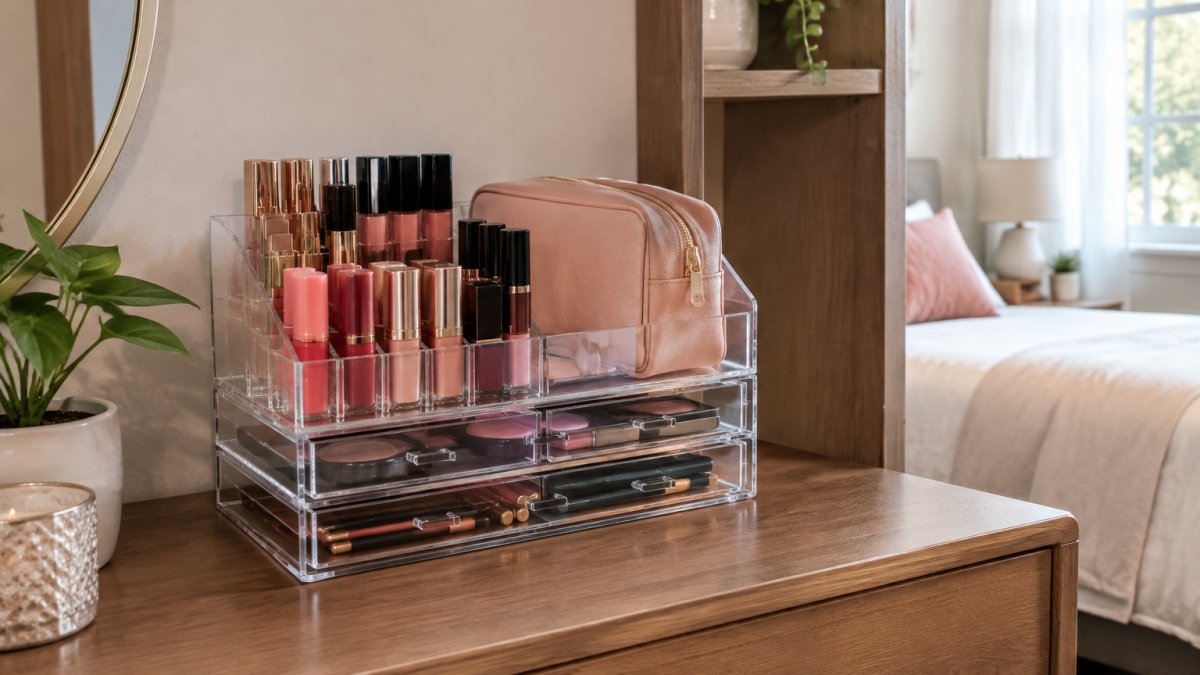
Our Charmstyle cosmetic bag works as a portable organizer for daily products, with durable materials and a compact design that keeps makeup and skincare secure. Keep the bag in a drawer, not on a sunny shelf.

Pack a Travel Bag That Protects Your Products From Temperature Swings
Travel is where clean makeup takes the most abuse. Cars heat up fast, checked luggage gets cold, and bags get tossed around. A little planning keeps formulas intact.
Pack these habits into your routine:
- Keep products in a sealed cosmetic bag instead of loose in a tote
- Carry makeup in your carry-on, not checked luggage
- Never leave the bag in a hot car
For a full walkthrough, our guide on how to organize your makeup bag for travel covers packing order and protection in detail.
Build a Simple Shelf-Life Tracking Routine for Your Collection
A tracking routine takes ten minutes to set up and saves products from an early discard. The goal is not to memorize dates but to create a system you will actually follow. Here is how to build one that works for clean formulas.
Read the Period-After-Opening Symbol Correctly
Most makeup carries a small open-jar symbol with a number and the letter M inside it. That number is the period after opening, or PAO, expressed in months. A 6M symbol means the product is at its best for six months after you first open it, not six months from the manufacture date.
Treat the period-after-opening symbol as the outer limit and let texture, odor, and color be the final judge.
Record the Open Date in a Way You Will Actually Check
Write the open date on the base of the product with a fine-tip marker or a small sticker. If you prefer a digital system, a simple note on your phone with the product name and open date works just as well.
Group products by formula type so creams, liquids, and powders are easy to scan. Keep a running list of the earliest open dates and check it once a month.
Rotate by Formula Type, Not Just by Date
A practical rotation looks like this:
- Liquids and creams: use first, since they degrade fastest and carry the most contamination risk
- Mascara: replace on the shortest cycle, typically every three months after opening
- Powders: use last, since they hold up longest when kept dry
A quarterly check for texture, odor, and color changes catches anything the dates miss. Discard anything past its window without guilt.
| Product Type | Typical PAO Window | Rotation Priority |
|---|---|---|
| Mascara | 3M | Replace first, never share |
| Liquid foundation and concealer | 6M to 12M | Use before creams |
| Cream blush, bronzer, and lipstick | 6M to 12M | Use before powders |
| Serums and facial oils | 6M to 12M | Keep opaque and sealed |
| Powder products | 12M to 24M | Use last, keep dry |
Typical PAO Window
Track what you open, and you will stop guessing. The system only works if you check it, so put the monthly review somewhere you will see it, like a reminder on your phone or a note inside the drawer.
Frequently Asked Questions
How should you store clean makeup to extend its shelf life?
Keep clean makeup in a cool, dry, dark place such as a bedroom drawer or closet shelf, away from steamy bathrooms and direct sunlight. Close every lid tightly after use and keep products in their original opaque packaging, which shields formulas from light and air. Wash your hands and clean brushes and applicators regularly so bacteria never reach the product. Together these habits slow oxidation, prevent contamination and help you get the full period after opening printed on each package.
Can I store lipstick in the refrigerator?
You can store lipstick in the refrigerator, but it is rarely necessary. Cool temperatures slow melting and oxidation, which helps in hot, humid climates or for backup shades you will not touch for months. The downside is condensation: moving cold lipstick into warm air draws moisture onto the bullet, and repeated temperature swings can change texture. If you do refrigerate, keep the lipstick in a sealed bag and let it reach room temperature before applying.
How can you tell if makeup has expired?
Check texture, odor and color first. Expired cream products often separate, turn grainy or smell rancid, while powders may develop a hard film or change shade. Mascara that flakes or smells sour should be discarded immediately. Compare what you see against the expiration date and period after opening symbol on the packaging. When a product's texture, smell or color has clearly changed, discard it rather than trying to revive it, since contamination and bacteria are not always visible.
Where should you store makeup in your bedroom?
A dresser drawer, closet shelf or dedicated makeup organizer on a shaded surface works well. Choose a spot away from windows, radiators and lamps that generate heat, and keep the area dry rather than next to a humidifier or ensuite door. A makeup organizer with dividers keeps products upright so lids stay sealed and droppers do not leak. Rotate older items to the front so you use them first, and store backups in a closed bin to limit light exposure.
